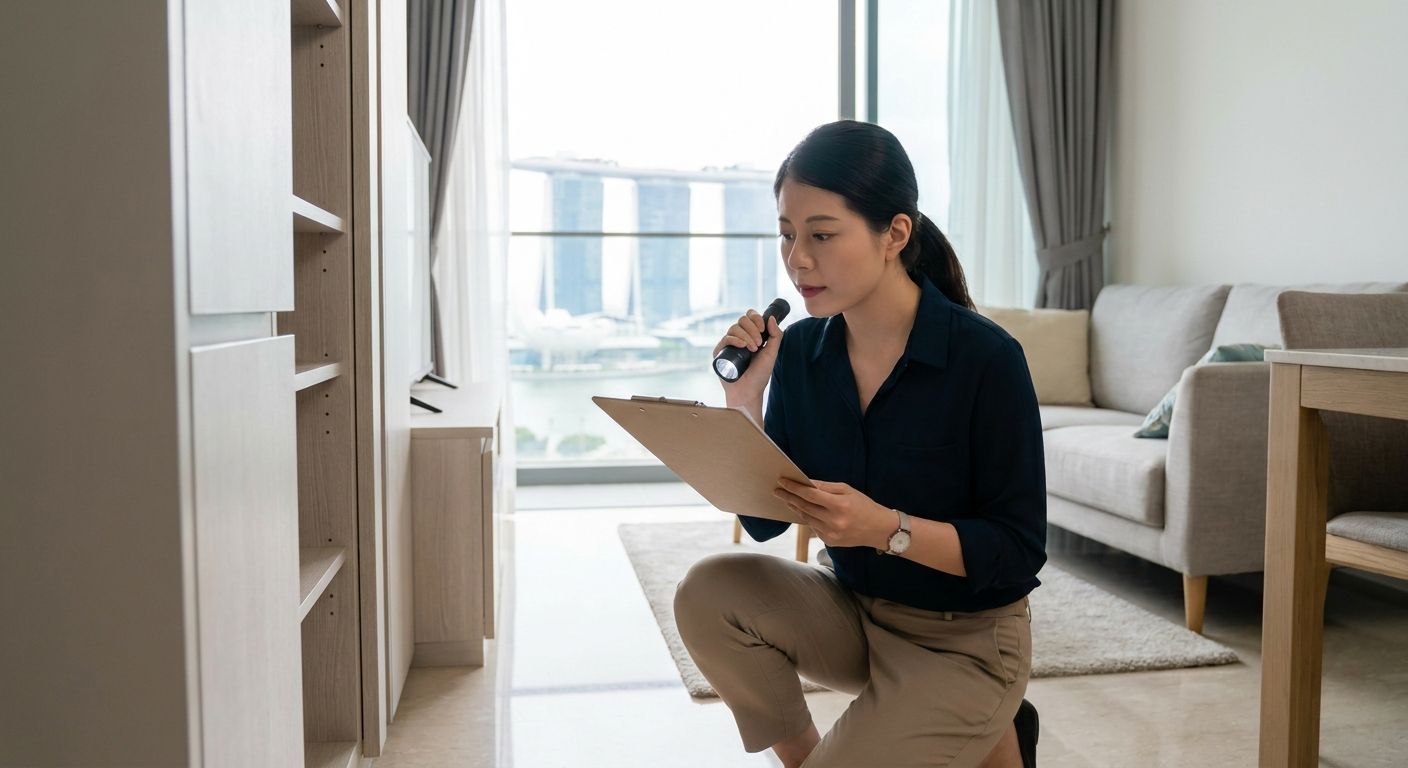
Walk the unit yourself before you sign anything, and check what you see against the inventory list line by line — that document, not memory, is what protects your deposit when you move out.
- Inspect a condo before signing a Singapore lease by matching every fixture, fitting and appliance against the inventory list.
- Aircon units, water pressure and internet wiring cause more deposit disputes in 2026 than paint scuffs.
- Singapore leases run 2 years standard, with a deposit of 1-2 months rent, so mistakes get locked in.
- Photograph every defect with a date stamp from the day you view, not the day you move in.
Why this matters
Most Singapore tenancy agreements in 2026 still run on a 2-year term, and the deposit — usually one month's rent per year of lease — only comes back if the unit returns in the condition noted at check-in. If you don't document a hairline crack in the bathroom tile or a rattling aircon compressor before you sign, that defect quietly becomes yours to fix at the end of the lease.
I've seen tenants lose weeks of back-and-forth with a landlord over a stained rug that was already there at move-in but was never written down. Renting a condo in Singapore as an expat means the paperwork does the arguing for you later, so the inspection has to happen while you can still walk away or ask for repairs.
How to inspect a condo unit before signing a Singapore lease
Do this in order, ideally during the same viewing where you decide to make an offer:
- Request the inventory list before the viewing, not after. Compare it item by item against what is physically in the unit.
- Test every aircon unit in every room — cooling speed, water leakage under the fan coil, and any grinding noise from the compressor.
- Run every tap and flush every toilet to check water pressure and drainage. Weak pressure on a high floor is common in older condos and worth flagging before you sign.
- Check for damp patches near windows and ceilings. Singapore's climate makes this a recurring issue in ground-floor and top-floor units.
- Photograph existing damage with your phone's date stamp visible — scuffed walls, chipped counters, worn flooring — and email the photos to the landlord or agent the same day.
- Test the internet point and every built-in appliance — oven, washer-dryer, fridge — by switching them on, not just looking at them.
- Confirm what is excluded from the inventory in writing, so nothing ambiguous shows up as a missing-item charge later.
| Area | What to test | Why it matters |
|---|---|---|
| Aircon | Run each unit 10 minutes, check for leaks | Servicing clauses, often every 3 months, put upkeep cost on the tenant |
| Plumbing | Flush toilets, run taps in every bathroom | Weak pressure or leaks are expensive to argue about after move-in |
| Walls and floors | Look under furniture, behind curtains | Landlords deduct from deposit for anything undocumented |
| Appliances | Switch on every built-in unit | A fridge or washer that fails in week 2 becomes a dispute over who pays |
What to check room by room
Go through the unit systematically rather than trusting a general impression:
- Living and dining areas: even flooring, working light switches, and any visible mould near aircon vents.
- Kitchen: test the hob, oven and extractor fan, then open every cabinet and check under the sink for water damage.
- Bedrooms: wardrobe doors and tracks, plus window locks — a genuine safety point on higher floors.
- Bathrooms: flush, run the shower, and note any musty smell that could mean a slow drain or hidden leak.
- Balcony or yard: check drainage grates are clear, a common cause of water pooling during Singapore's wetter months.
If someone else is signing off on the unit for a corporate assignment, the same checklist applies before approval in a rental search for corporate assignees in Singapore — the paperwork risk sits with whoever's name is on the lease, not the company booking it.
Why inspection priorities vary from unit to unit
Not every condo needs the same level of scrutiny. What you focus on depends on:
- Building age — developments 15 years and older need closer checks on plumbing and aircon compressors than new launches.
- Floor level — top floors run hotter and are more leak-prone; ground floors see more damp and pest entry points.
- Furnishing status — a fully furnished unit carries far more items on the inventory list, so the walkthrough takes longer.
- Facing direction — west-facing units run hotter and put more strain on aircon across a 2-year lease.
- Vacancy history — a unit empty for months can have plumbing issues from disuse that only show when you run the taps.
- Who manages the unit — how fast issues get fixed after move-in depends heavily on whether the landlord uses an agent or self-manages.
If you would rather not run this checklist solo, it is one of the steps covered when you engage a property agent in Singapore before signing. A second set of eyes at the viewing catches what a first-time renter misses.
Get a second opinion before you sign
A local agent flags defects and negotiates repairs before you commit to a 2-year lease.
What happens if I don't inspect before signing?
You inherit every existing defect the moment the lease and inventory list are countersigned without corrections. Landlords in Singapore routinely deduct from the deposit for damage that was never documented, and disputing it after move-out is far harder than flagging it during the viewing.
Can I ask for repairs before signing the lease?
Yes — repair requests before signing are standard practice in Singapore's rental market, and most landlords will fix a faulty aircon unit or a broken cabinet hinge rather than lose a tenant over it. Put the request in writing with an agreed completion date, not a verbal promise on viewing day.
Do I need to inspect a new launch condo the same way?
Yes, a new launch still needs a full inspection, even though defects there are usually cosmetic rather than mechanical. Check paint finish, tiling grout lines, and that every fitting matches the inventory list.
The inspection matters more once you have already done the work to negotiate rent as an expat in Singapore — a lower rent does not help if you end up paying for someone else's damage in 2028 when the lease ends.
FAQ
How do I inspect a condo before signing a lease in Singapore?
Test every aircon unit, tap and appliance while matching the unit against the inventory list. Photograph existing damage the same day and get any repair request confirmed in writing before you sign.
What is the inventory list in a Singapore tenancy agreement?
It is the document recording every fixture, fitting and item of furniture in the unit at move-in. It is the reference point used to decide deposit deductions at the end of the lease, so accuracy at signing matters more than anything else.
How long is a standard lease in Singapore?
A standard Singapore lease runs 2 years, and many include a diplomatic clause allowing an exit after 12 months with notice. That 2-year commitment is exactly why a defect missed at the start stays your responsibility for the full term.
How much is the security deposit for a condo rental in Singapore?
The security deposit is typically 1-2 months rent, scaled to the length of the lease. It is returned in full only if the unit's condition at move-out matches the inventory list from move-in.
Who pays for aircon servicing in a Singapore rental?
Tenants usually pay for routine aircon servicing, often on a clause requiring service every 3 months, while landlords cover major repairs. Testing every unit before signing separates pre-existing faults from wear you would otherwise be billed for.
Is it better to inspect a condo with a property agent?
An agent is not required, but they catch plumbing and aircon issues a first-time renter misses. They also sit between you and the landlord when negotiating repairs before the lease is signed.
What should I photograph during a condo viewing in Singapore?
Photograph scuffed walls, chipped counters, worn flooring, stained upholstery and any water marks, with the date visible. Email the set to the landlord or agent the same day so there is a timestamped record.
Can I still negotiate after the inspection?
Yes. Defects found during the inspection are legitimate grounds to ask for repairs, replacement of an appliance, or a rent adjustment before you sign in 2026.
One last thing
The defect that costs tenants the most in 2026 is not a cracked tile — it is an aircon compressor that seemed fine on a cool viewing day and starts grinding the first hot week after move-in. Run every unit for a full 10 minutes during the viewing, not a quick blast of cold air, and you catch the fault while it is still the landlord's problem to fix.