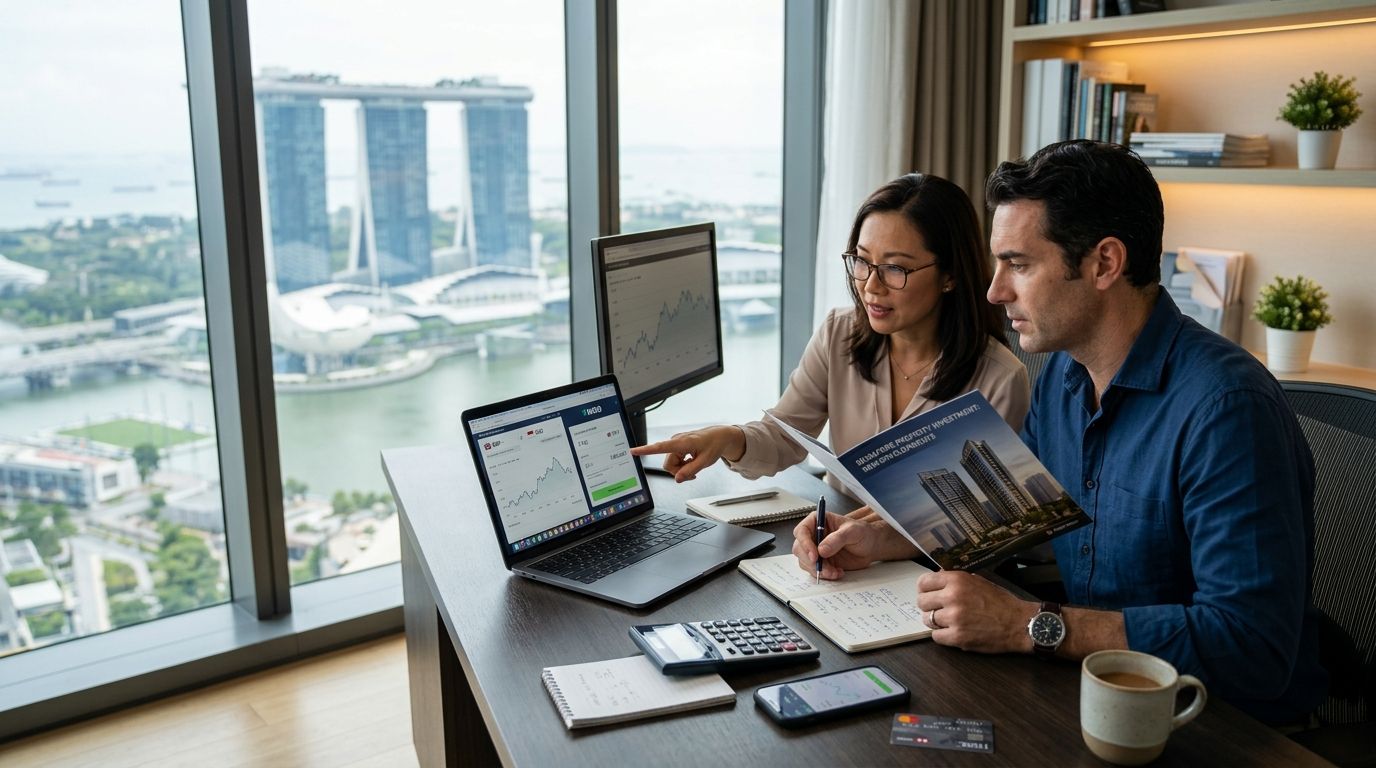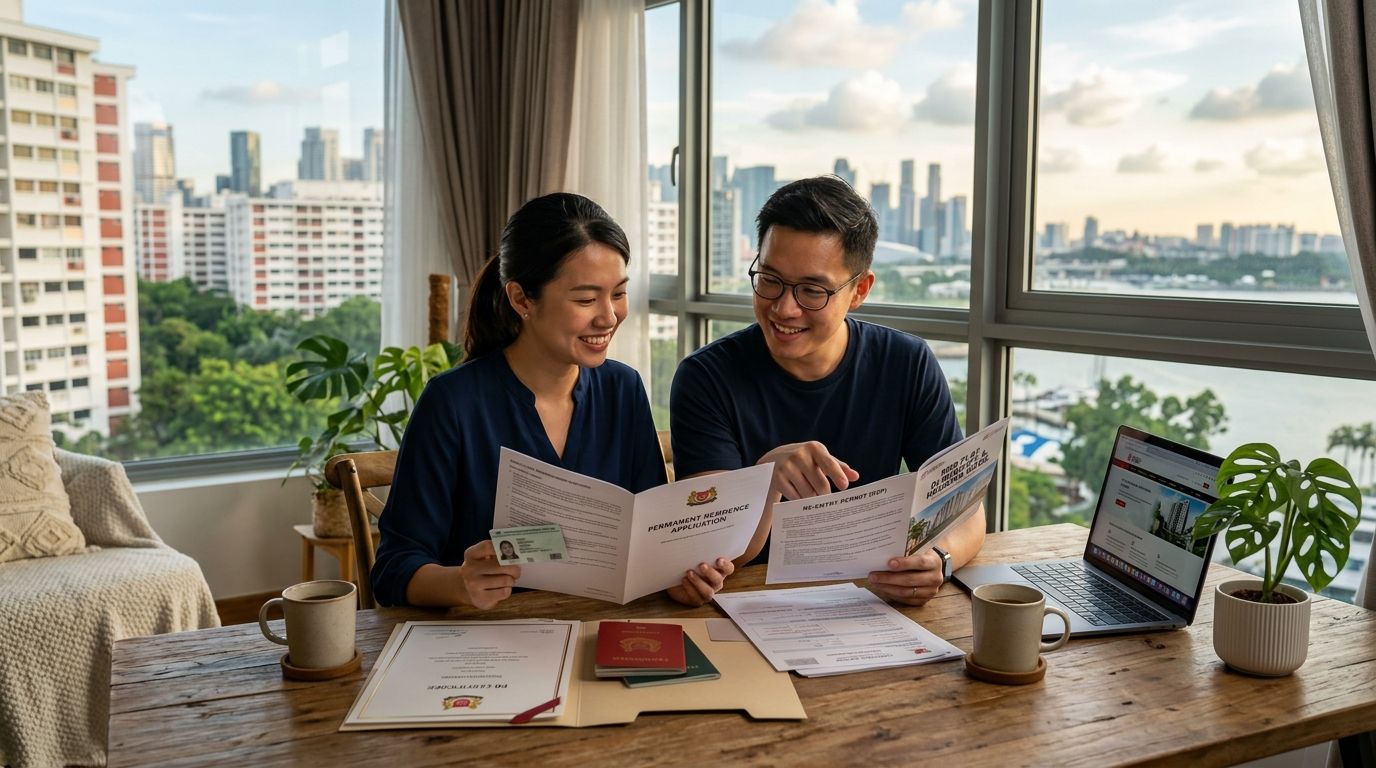
Retirement changes what you want from property. You're not chasing the highest possible return anymore — you want income that arrives on time, a tenant pool that doesn't disappear in a downturn, and a building you're not fixing at 70. Singapore can deliver all three, but only if you pick the right segment and know the tax traps before you sign.
- Foreign retirees face a 60% Additional Buyer's Stamp Duty on any Singapore property purchase since April 2023 — factor it into yield before you buy.
- Singapore Citizen retirees buying a second property pay 20% ABSD, third property 30% — property investment for retirees Singapore works best on property number one or a fully paid-up HDB flat.
- Condos near tech hubs and diplomatic postings hold occupancy better than family-sized units — Buy the small-footprint, corporate-tenant play over the big family unit.
- Bank loan tenure shortens once the borrower turns 65, cutting your loan-to-value ratio from 75% to 55% — plan the cash portion accordingly.
- HDB flats stay off-limits to foreign owners entirely — Singaporean retirees with a paid-up flat past MOP have the cleanest entry point.
Why this matters
A retiree's balance sheet looks nothing like a 35-year-old investor's. You've likely got a fixed pool of capital, a shorter runway to recover from a bad bet, and less appetite for a vacant unit eating into savings for six months. The tenant demand data behind pages like condo rental for tech expats in Singapore matters here — tech and finance employment pass holders churn through one- and two-bedroom condos on 12-month leases, and that steady churn is exactly the kind of predictable income a retiree portfolio needs.
Singapore's property tax and stamp duty rules also treat retirees differently depending on citizenship. A Singapore Citizen retiree buying a second home pays 20% ABSD; a third property costs 30%. A Permanent Resident pays 30% on a second purchase, 35% on a third. A foreign national — retired or not — pays a flat 60% ABSD on any residential purchase, a rate that has held since 27 April 2023. That single number changes whether a foreign retiree should even be buying versus renting long-term through options like serviced apartments for short-term expats in Singapore.
Who this is for
This guide is for two overlapping groups: Singaporean and Permanent Resident retirees sitting on CPF savings or a paid-up flat who want a second income-generating property, and foreign retirees or soon-to-retire expats with cash capital who want a Singapore-based asset even though they'll pay the 60% ABSD to get in. Both groups share the same priorities — stable rent, low hassle, and an asset they can sell without a fire-sale discount if plans change.
What to look for in property investment for retirees in Singapore
Rental yield stability over headline growth
Capital appreciation is a bonus, not the plan, once you're living off the income. Singapore private condo rental yields have generally sat in the 3% to 4% gross range through recent market cycles — a number that won't excite a growth investor but that a retiree can budget against with confidence.
Tax and stamp duty exposure
ABSD isn't a one-time inconvenience — it's a drag on your effective yield for as long as you hold the asset, since it raises your entry cost without raising your rent. A foreign retiree paying 60% ABSD on a $1.5 million condo needs the rental math to work on a $2.4 million cost basis, not the sticker price.
Loan eligibility at your age
MAS lending rules tie loan tenure to age. If your loan runs past your 65th birthday, the maximum loan-to-value ratio drops from 75% to 55% for a first mortgage. That means retirees typically need more cash upfront than a 40-year-old buyer chasing the same unit — plan the shortfall before you fall in love with a listing.
Management effort versus passive income
A long-lease corporate tenant who renews for three years is a different proposition from a short-stay tenant who needs turnover, cleaning, and re-marketing every few months. Retirees who want to travel or simply not think about the property should weight this criterion heavily.
Exit liquidity
Can you sell this in six months if your circumstances change? Mainstream condos in established districts move faster than landed property (which foreigners generally can't buy anyway outside approved developments) or niche new launches still years from completion.
Talk through your Singapore property options
I'll map out ABSD exposure, loan limits and tenant demand for your situation.
Top tenant segments for retiree landlords
1. Tech and finance expats — the steady-yield pick
The hook: consistent 12-month leases, low drama, predictable renewal cycles. One- and two-bedroom condos near one-north, Tanjong Pagar and the CBD fill this demand, and the condo rental for tech expats in Singapore segment turns over reliably because employment pass holders relocate on set contract cycles. Verdict: Buy for a retiree who wants hands-off, predictable rent.
2. Diplomats and embassy staff — the low-vacancy pick
The hook: multi-year leases, often with corporate or government guarantees behind the rent. Postings typically run two to three years, meaning fewer vacancy gaps than the average private tenant. Check condo rental for diplomats and embassy staff in Singapore for the districts this demand clusters around. Verdict: Buy if you can secure a unit near an embassy cluster.
3. Families relocating to Singapore — the space play
The hook: bigger units, bigger absolute rent, but longer vacancy between tenants because family moves take longer to line up. A 3- or 4-bedroom unit near an international school commands premium rent under condo rental for families relocating to Singapore, but the bigger cheque means a bigger gap if the market slows. Verdict: Consider if you have the cash buffer to absorb a longer vacancy window.
4. HDB rental to expats — the cleanest entry for citizen retirees
The hook: no ABSD if it's your paid-up flat past the five-year Minimum Occupation Period, and expat tenant demand for HDB flats is real given the rent gap versus condos. See HDB rental for expats in Singapore for how this demand behaves. This only works for Singapore Citizen or PR owners — foreigners cannot own HDB flats at all. Verdict: Buy for citizen retirees with a flat past MOP; Skip entirely if you're a foreign national, since ownership isn't legally possible.
5. Short-term serviced apartment tenants — the high-touch pick
The hook: higher headline rates per night or week, but constant turnover, cleaning costs, and active management that doesn't suit a retiree who wants to stop working. This segment, covered under serviced apartments for short-term expats in Singapore, rewards active landlords, not passive ones. Verdict: Wait unless you're planning to manage it yourself or through an operator, in which case treat it as a small business, not a retirement asset.
What to avoid
- New launches years from completion. A unit that only receives Temporary Occupation Permit in 2030 ties up capital with zero rental income for years — the opposite of what a retiree needs.
- A third property under your own name if you're a Singapore Citizen. The 30% ABSD on a third purchase erodes years of net yield before the tenant even moves in.
- Landed housing as a foreign national. The Residential Property Act bars foreigners from most landed property outright, and the narrow exceptions (like Sentosa Cove) come with approval requirements that add friction you don't need at this stage of life.
Verdict comparison table
| Tenant segment | Yield stability | Vacancy risk | Management effort | Verdict |
|---|---|---|---|---|
| Tech and finance expats | High | Low | Low | Buy |
| Diplomats and embassy staff | High | Very low | Low | Buy |
| Families relocating | Medium | Medium-high | Low-medium | Consider |
| HDB to expats (citizen-owned) | High | Low | Low | Buy (citizens only) |
| Short-term serviced stays | Medium | Low | High | Wait |
FAQ
Can foreigners buy property in Singapore as retirees?
Yes, foreign nationals can buy private condominiums and apartments in Singapore, but not HDB flats or most landed housing. Expect to pay 60% Additional Buyer's Stamp Duty on top of the purchase price, a rate in place since 27 April 2023.
What is ABSD for foreign retirees buying Singapore property?
Foreign buyers, retired or not, pay a flat 60% ABSD on any residential property purchase in Singapore. Singapore Citizens pay 0% on a first home, 20% on a second and 30% on a third; Permanent Residents pay 5%, 30% and 35% respectively.
Can retirees get a home loan in Singapore?
Yes, but loan tenure shortens with age under MAS rules, and if the loan extends past age 65 the maximum loan-to-value ratio drops from 75% to 55% for a first mortgage. Retirees typically need a larger cash component than younger buyers for the same unit.
Is rental income from Singapore property taxable for retirees?
Yes, rental income is taxable under Singapore income tax rules regardless of the owner's retirement status or residency. Non-resident owners are taxed differently from resident owners, so check your specific residency status before filing.
What is the rental yield on Singapore condos in 2026?
Singapore private condo rental yields have generally tracked in the 3% to 4% gross range across recent market cycles. Actual yield depends heavily on district, unit size and tenant segment, so a one-bedroom near a tech hub often outperforms a large family unit on a per-dollar basis.
Can retirees buy HDB flats in Singapore?
Only Singapore Citizens and, in limited cases, Permanent Residents can own HDB flats — foreigners cannot buy them at all. Citizen retirees who already own a flat past its five-year Minimum Occupation Period can rent it out to expat tenants without ABSD exposure.
Is Singapore property a good retirement investment for expats?
It can work well for expats who want a stable, low-drama income asset, but the 60% ABSD means the entry cost needs to be weighed against long-term yield, not just capital growth potential. Renting long-term through serviced or condo options is often the lower-friction path for expats who aren't planning to stay permanently.
One last thing
The detail retirees underestimate most isn't the tax — it's the loan tenure cliff at 65. Two buyers can look at the identical unit and identical rent roll, and the older buyer needs a materially larger cash deposit purely because the bank's loan-to-value ratio drops from 75% to 55% once the loan crosses that age line. Run the loan math before you run the yield math, not after.
Property investment for retirees in Singapore rewards patience and the right tenant match far more than it rewards chasing the highest headline yield on a listing site. Match the unit to a stable tenant segment, know your ABSD bracket before you sign, and treat the loan tenure limit as a planning input, not a surprise at the bank.