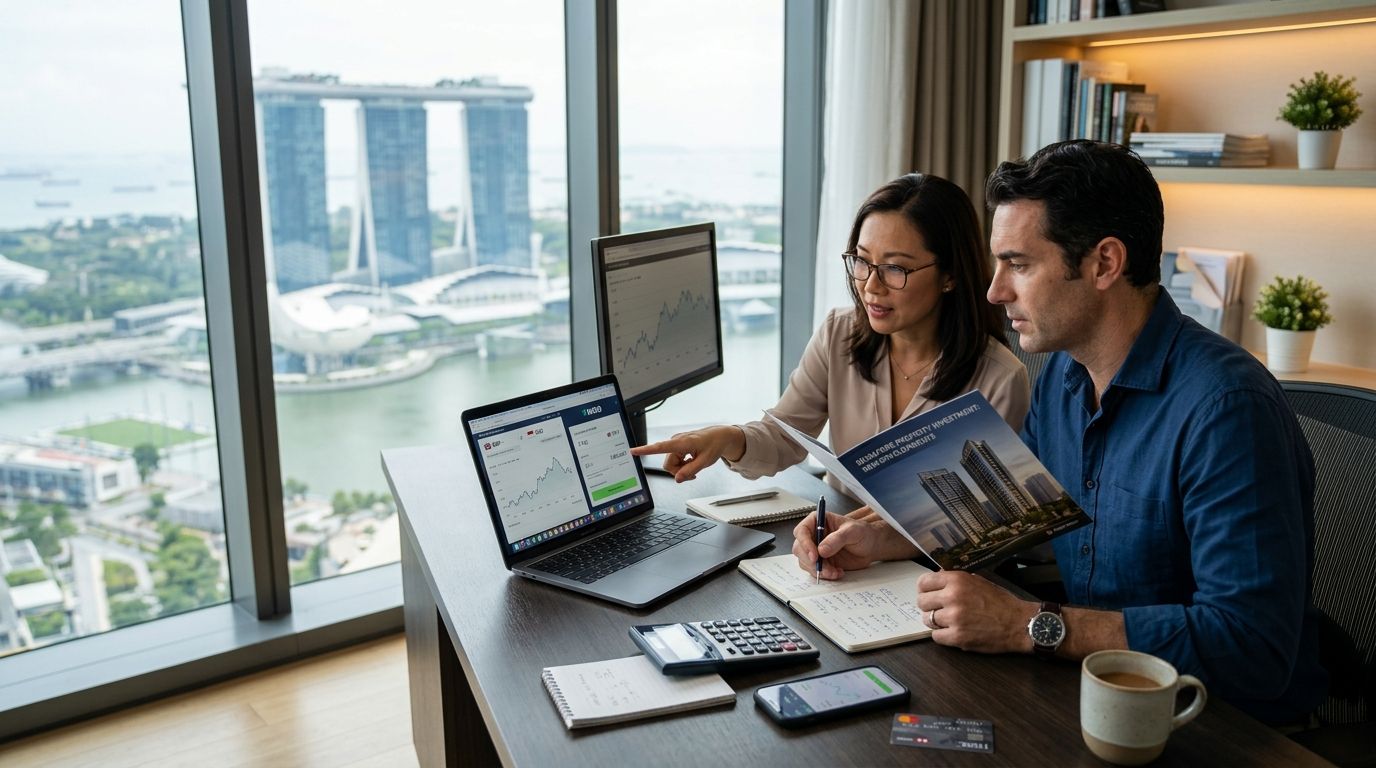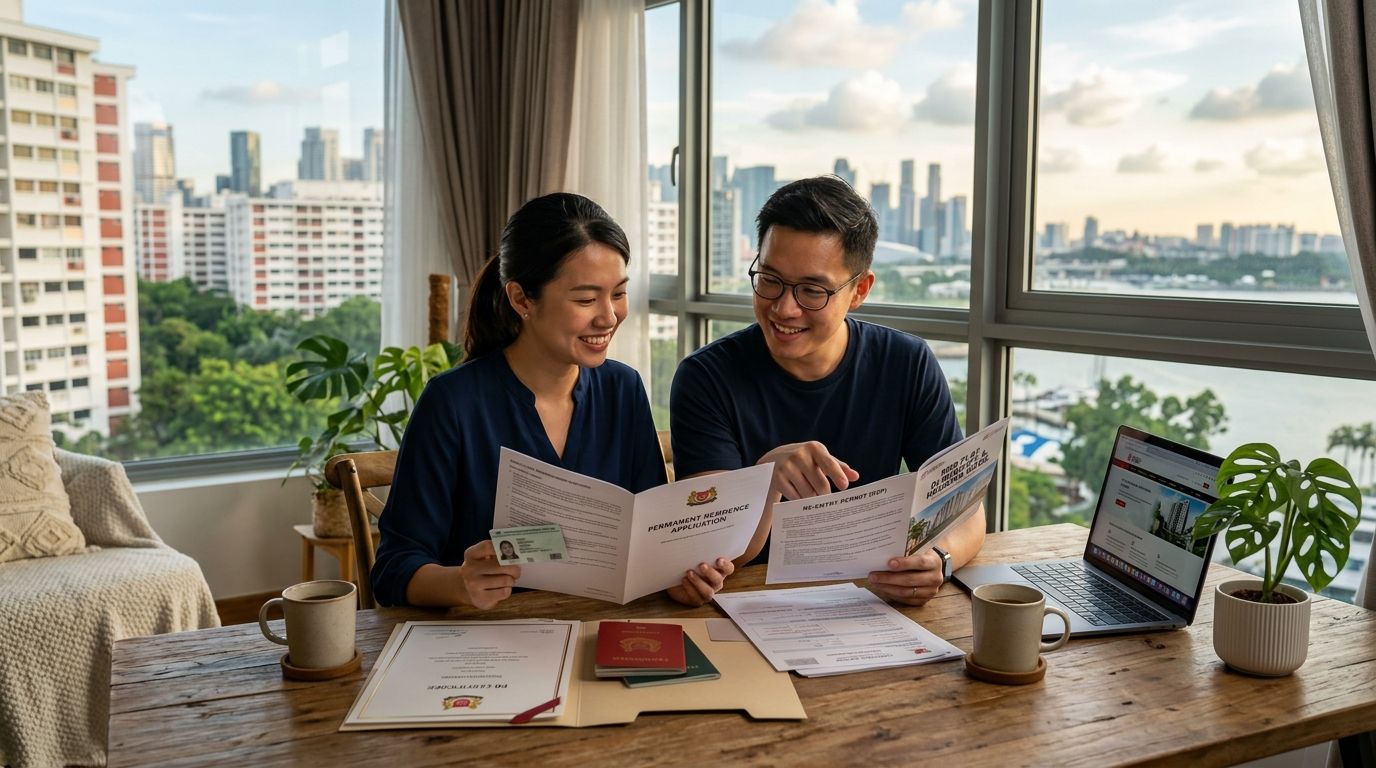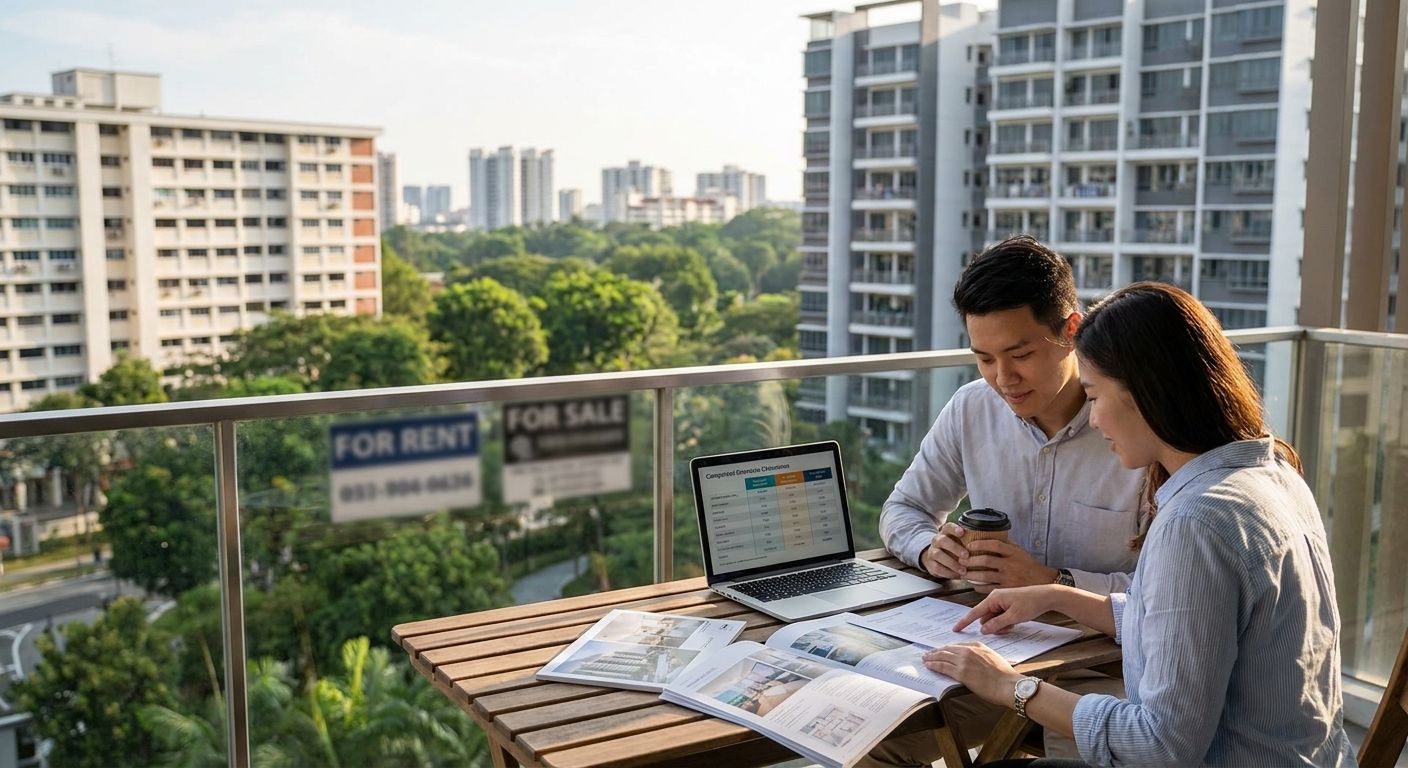
Renting wins for most expats in Singapore, and buying only starts to make financial sense once you have Permanent Residence or plan to stay past the five-year mark. The number that decides this for almost everyone is the Additional Buyer's Stamp Duty (ABSD): foreigners pay 60% on top of the purchase price for any residential property in Singapore, a rate that has held since it was raised in April 2023 and is still in force in 2026.
- Foreigners pay 60% ABSD on Singapore property purchases in 2026 - renting avoids this entirely.
- Permanent Residents pay 5% ABSD on a first home, which narrows the renting vs buying singapore expat math considerably.
- Foreigners cannot buy HDB flats and need approval for most landed housing under the Residential Property Act.
- Selling within 3 years of purchase triggers Seller's Stamp Duty on top of ABSD, punishing short-term ownership.
- Renting keeps an Employment Pass holder mobile if the contract, job, or country changes within a few years.
Why this matters
Most expats I work with land in Singapore assuming buying is the "grown-up" move and renting is just a placeholder. In this market that logic is backwards. The ABSD alone means a foreigner buying a S$2 million condo pays S$1.2 million extra in stamp duty before legal fees or renovation. Renting a comparable condo in Singapore costs a fraction of that over the same holding period, and it keeps you free to leave when the posting ends.
The calculation flips once your visa status changes. A Permanent Resident buying a first home pays 5% ABSD instead of 60%, and a Singapore Citizen spouse can sometimes hold the title to avoid ABSD altogether. Visa status, not personal preference, is what actually drives this decision in 2026.
Renting vs buying in Singapore as an expat: the comparison
| Factor | Renting | Buying |
|---|---|---|
| Upfront cost | 1-2 months deposit, agent commission if unrepresented | 60% ABSD (foreigner) or 5% ABSD (PR), legal fees, stamp duty |
| Property access | HDB flats, condos, landed (with approval) all available to rent | Foreigners barred from HDB; landed housing needs Singapore Land Authority approval |
| Flexibility | Standard lease is 1-2 years, break clauses negotiable | Selling within 3 years triggers Seller's Stamp Duty on top of ABSD |
| Financing | No mortgage exposure, currency risk limited to rent | Foreign buyers get lower loan-to-value ratios than citizens or PRs |
| Best for | Employment Pass holders, first 1-3 years, uncertain tenure | PRs, long-term stayers, those buying for family or investment reasons |
Renting is the default answer for anyone on a work pass who hasn't decided they're staying five-plus years. Buying only overtakes renting once ABSD is reduced by PR status or the holding period is long enough to absorb the duty.
Renting in Singapore as an expat: no ABSD, full flexibility
Renting carries no stamp duty for the tenant, no financing restrictions, and no property-type limits. You can rent an HDB flat, a condo, or (for landed housing) a bungalow, subject to the usual approvals landlords handle themselves.
Most leases run 12 to 24 months with a diplomatic clause that lets corporate tenants exit early if the employer terminates the assignment. That single clause is why rental search for corporate assignees matters more than the headline rent: a flexible lease is worth more than a slightly cheaper unit with a rigid contract.
Renting verdict for 2026: Buy less risk, keep mobility - rent for the first posting, almost always.
Buying in Singapore as an expat: 60% ABSD changes the math
A foreign national buying any residential property in Singapore in 2026 pays 60% ABSD, on top of the Buyer's Stamp Duty every purchaser pays regardless of nationality. That single line item is why buying rarely beats renting for someone on a two- or three-year Employment Pass contract.
The picture changes if:
- You hold Singapore Permanent Residence (5% ABSD on a first property, 25% on a second)
- You're married to a Singapore Citizen and structure the purchase around their eligibility
- You're buying purely as a long-term investment and can hold past the 3-year Seller's Stamp Duty window
- You qualify under a bilateral Free Trade Agreement exemption (Nationals of the US, and a handful of other countries under specific FTAs, are treated as Singapore Citizens for ABSD purposes)
If none of those apply, buying property in Singapore as a foreigner still works, it's just an investment decision with a 60% tax cost baked in, not a housing decision.
Buying verdict for 2026: Buy only if you have PR status, an FTA exemption, or a 5+ year horizon that absorbs the ABSD. Otherwise, wait.
Why the renting vs buying decision varies by person
- Visa status - Employment Pass and S Pass holders face 60% ABSD; PRs face 5-25%; Citizens (including a Citizen spouse) face 0-20% depending on prior properties
- Length of assignment - a confirmed 5+ year posting changes the math; a 2-year contract almost never justifies ABSD
- Property type - HDB flats are off-limits to foreigners entirely, which pushes most first-time expat buyers toward condos by default
- Exit plan - if there's any chance you sell within 3 years, Seller's Stamp Duty stacks on top of ABSD and erodes any gain
- Financing terms - banks apply lower loan-to-value ratios to foreign buyers than to citizens, which raises the cash needed upfront
- Family situation - a Citizen or PR spouse can sometimes structure the purchase to avoid or reduce ABSD, which is worth checking before ruling out buying
Not sure which side of the line you're on
Get a straight answer on your ABSD exposure and rental options before you decide.
Can foreigners buy HDB flats in Singapore?
No, foreigners cannot buy HDB flats under any circumstance in 2026 - HDB ownership is restricted to Citizens and, for resale flats, Permanent Residents who meet a minimum residency period. Expats on Employment Pass or S Pass status who want an HDB-style unit need to rent one instead, which is where HDB rental for expats becomes the relevant search, not a purchase.
Is renting cheaper than buying in Singapore for expats?
Renting is cheaper in almost every case for a foreigner without PR status, because the 60% ABSD alone usually outweighs several years of rent on a comparable unit. The exception is a buyer with an FTA exemption or a Citizen spouse, where the ABSD cost drops to 0-5% and the math can favor buying over a long enough horizon.
How long should I rent before considering a purchase?
Most expats should rent through at least one full lease cycle - typically the first 12 to 24 months - before evaluating a purchase, because visa renewal, PR eligibility, and job stability all become clearer in that window. Buying before that point usually means paying 60% ABSD on a decision you're not yet certain about.
“The ABSD isn't a fee you negotiate around - it's the number that tells you whether you should be renting or buying this year.”
FAQ
What is ABSD and how much do foreigners pay in Singapore in 2026?
ABSD (Additional Buyer's Stamp Duty) is 60% of the purchase price for foreign buyers of residential property in Singapore in 2026, on top of the standard Buyer's Stamp Duty every purchaser pays. Permanent Residents pay 5% on a first home and 25% on a second.
Can an Employment Pass holder buy a condo in Singapore?
Yes, Employment Pass holders can buy private condos in Singapore, but they still pay the full 60% ABSD as a non-citizen, non-PR buyer. HDB flats and most landed housing remain off-limits regardless of pass type.
Is it better to rent or buy in Singapore as a US expat?
Renting is usually better for US expats in the first few years, though US nationals are exempt from ABSD under the US-Singapore Free Trade Agreement, which changes the calculation compared to most other nationalities. That exemption is worth confirming before assuming ABSD applies.
How much notice do I need before breaking a rental lease in Singapore?
Most Singapore leases include a diplomatic clause allowing termination with 2 months' written notice after a minimum 12-month stay, though terms vary by landlord. Always confirm the exact clause before signing.
Do foreigners need approval to buy landed property in Singapore?
Yes, foreigners need approval from the Singapore Land Authority to buy landed property (bungalows, terrace houses), and approval is granted selectively. Condos and apartments do not require this approval.
What happens if I sell my Singapore property within 3 years?
Selling within 3 years of purchase triggers Seller's Stamp Duty on top of any ABSD already paid, at rates that decline the longer you hold the property. This is the main reason short-term buying rarely makes sense for expats.
Can a Permanent Resident avoid ABSD entirely?
No, a Permanent Resident still pays 5% ABSD on a first residential property and 25% on a second in 2026, though this is significantly lower than the 60% foreigners pay. Only Citizens buying a first home pay 0% ABSD.
One last thing
The detail most expats miss isn't the ABSD rate itself - it's that renting and buying aren't mutually exclusive across a posting. Plenty of long-term expats rent for the first assignment, apply for PR once eligible, and only then revisit buying at the 5% rate instead of 60%. Treat the first lease as the low-risk move, not a compromise.