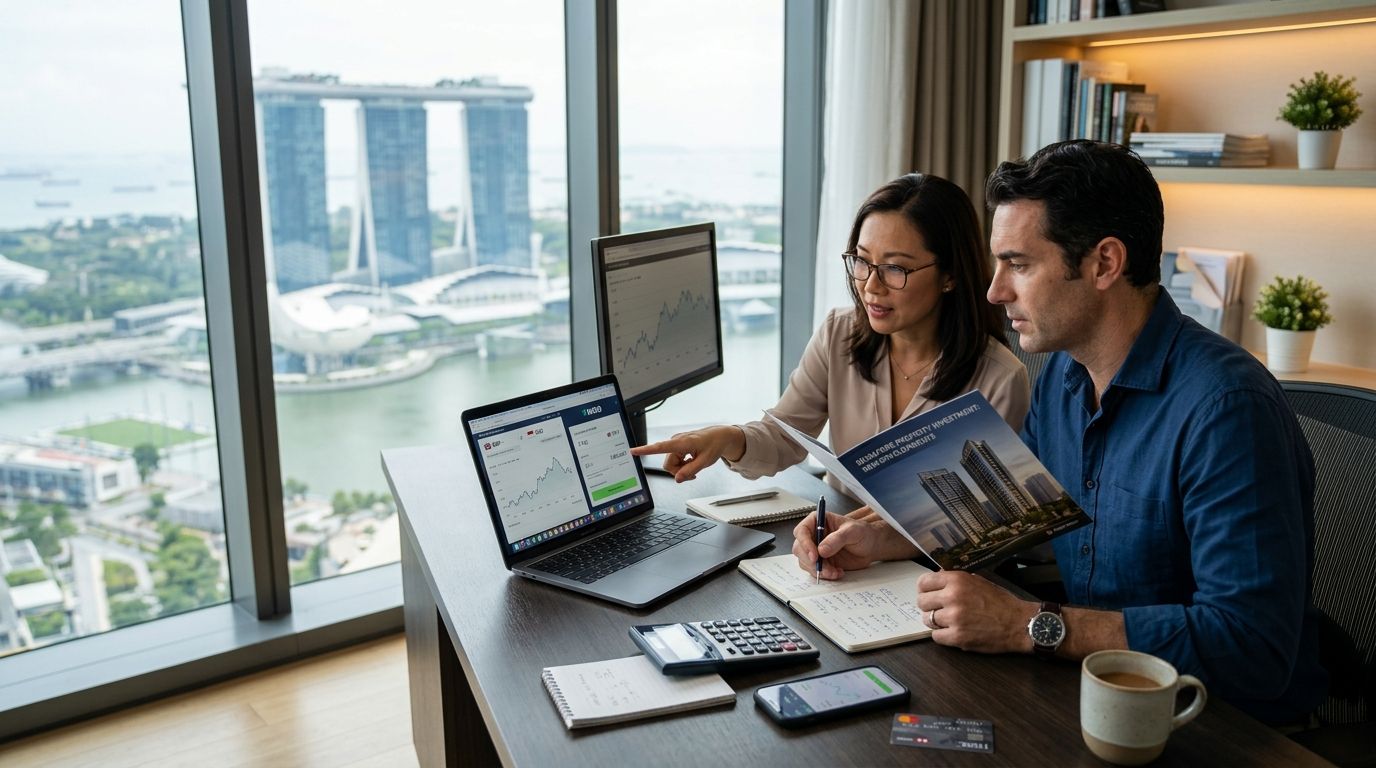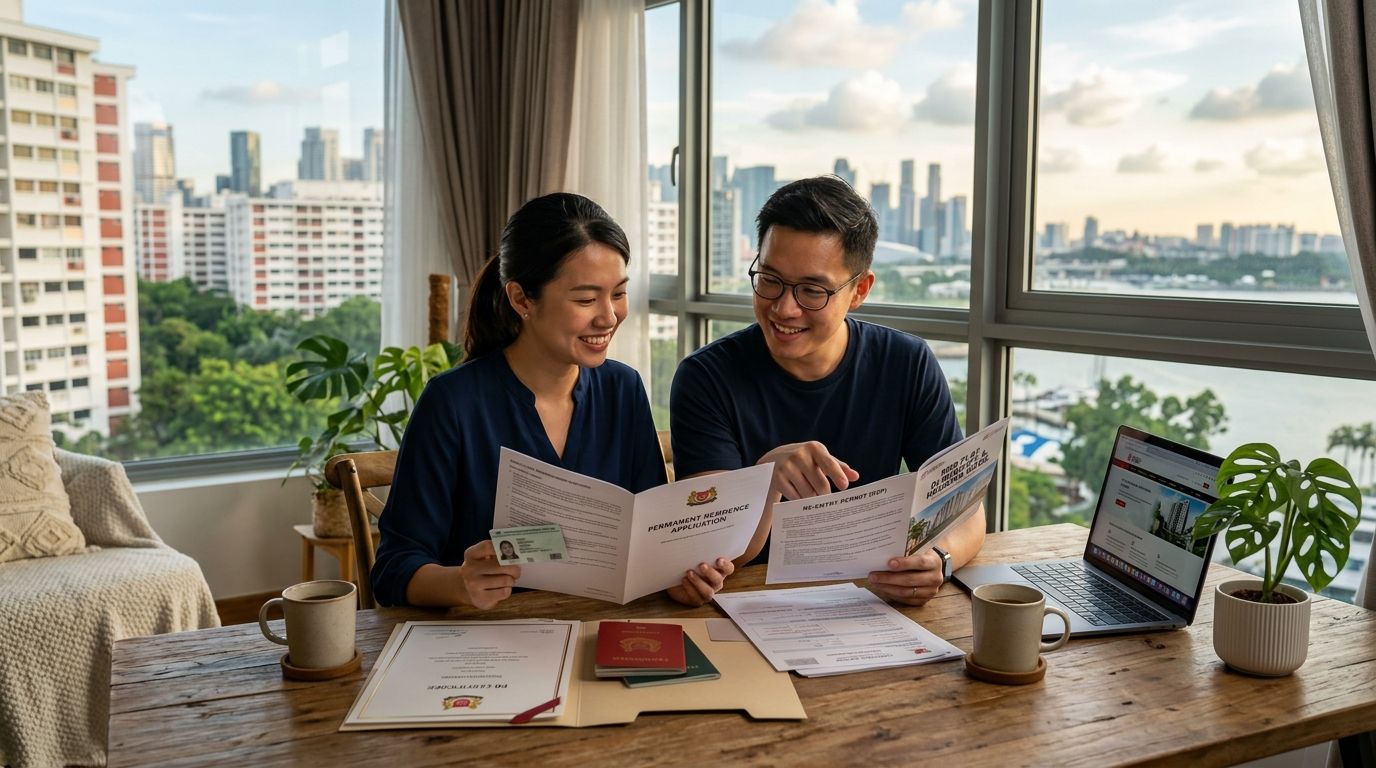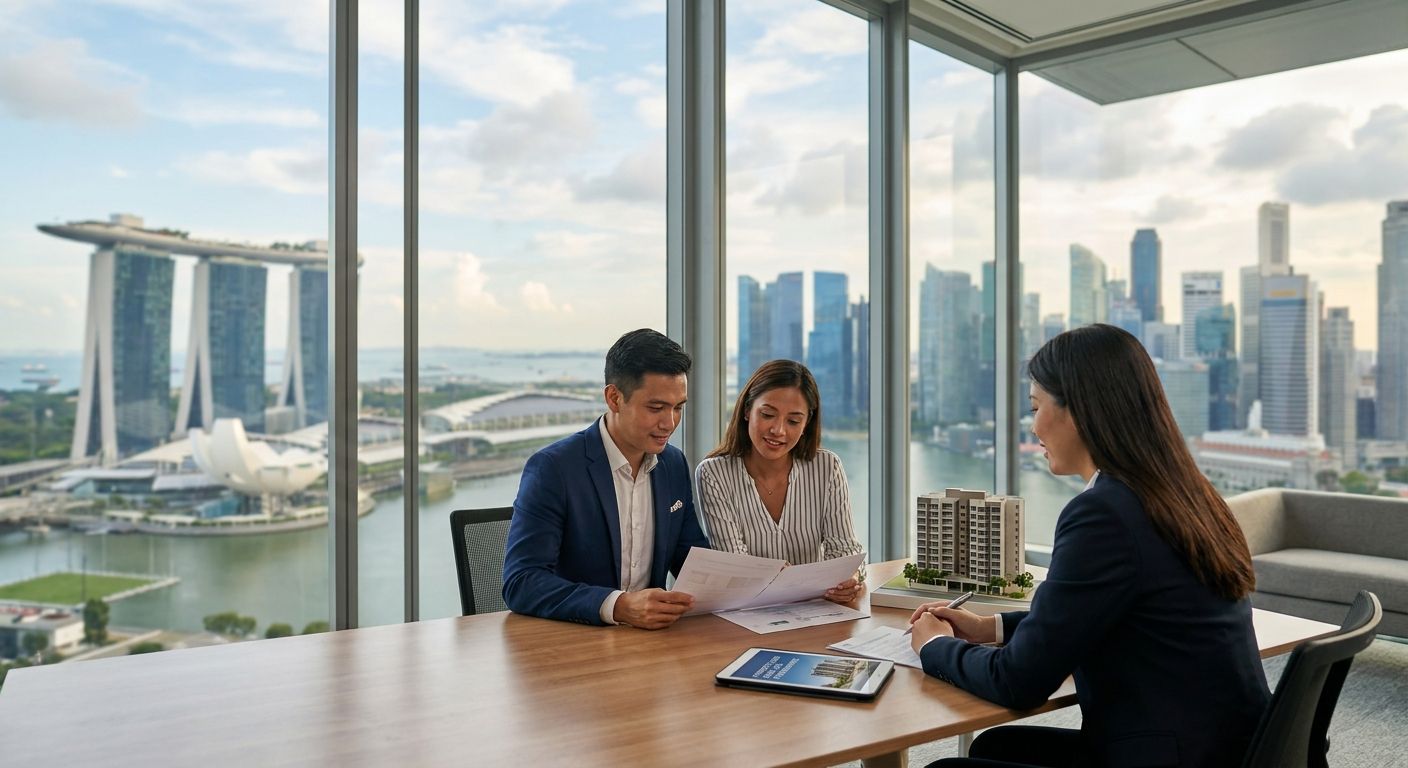
Buying property in Singapore as a foreigner is legal, well-regulated, and more straightforward than most outsiders expect — but the tax bill and the paperwork sequence trip up almost everyone who tries to do it alone.
- Foreigners can buy private condos in Singapore freely in 2026, but landed property needs government approval.
- Additional Buyer's Stamp Duty (ABSD) for foreigners sits at 60% of the purchase price on top of standard stamp duty.
- US citizens are exempt from ABSD under the US-Singapore Free Trade Agreement, paying the same rate as citizens.
- A CEA-registered agent and a conveyancing lawyer are non-negotiable for a foreigner buying property in Singapore.
- Exercising the Option to Purchase within 2-3 weeks of signing it is the deadline that catches out most first-time buyers.
Why this matters
Singapore doesn't ban foreign ownership the way some countries do, but it taxes it heavily and restricts it by property type. Get the sequence wrong — sign an Option to Purchase before you've confirmed financing, or assume a landed house is fair game — and you either lose your option fee or spend months waiting on a government approval you didn't know you needed. I walk foreign buyers through this exact process regularly, and the ones who move fastest are the ones who front-load the eligibility and cost checks before they fall in love with a listing.
What you'll need
- Proof of funds or a mortgage pre-approval from a Singapore bank
- A CEA-registered property agent who works with foreign buyers specifically — see how to engage a property agent in Singapore for what to check before you sign an agreement
- A conveyancing lawyer to handle the sale and purchase agreement
- Your passport and pass details (Employment Pass, Dependant's Pass, or tourist status all qualify for private property)
- 4-8 weeks minimum from shortlisting to completion, longer if financing takes time to clear
- Cash on hand for the 1% option fee, legal fees, and the ABSD, which is due within 14 days of exercising the option
If you're buying as an investment rather than a home, a real estate agent for foreign investors in Singapore will also flag rental yield and resale liquidity before you commit — numbers that matter more to an investor than a resident buyer.
The steps
1. Confirm what you're actually allowed to buy
Foreigners can buy private condominium units and apartments in Singapore without any government approval — this covers the vast majority of the market. HDB flats are off-limits to foreigners entirely, including permanent residents in most cases. Landed property (terrace houses, bungalows, semi-detached homes) requires approval from the Singapore Land Authority under the Residential Property Act, and that approval is not routine. Sentosa Cove is the one landed-property zone where foreigners can buy more freely, subject to conditions.
Common mistake: falling for a landed listing before checking approval odds. Agents who don't specialise in foreign buyers sometimes show these anyway.
2. Work out the real cost, including ABSD
The number that changes everything is Additional Buyer's Stamp Duty. Foreigners pay 60% ABSD on top of the standard Buyer's Stamp Duty, which is tiered up to 6% depending on price. On a S$2 million condo, that's roughly S$1.2 million in ABSD alone before you count the base stamp duty and legal fees.
There's one major exception: US citizens are treated the same as Singapore Citizens for stamp duty purposes under the US-Singapore Free Trade Agreement, meaning no ABSD applies. If you're American, this changes your entire budget calculation — the property buying guide for US expats in Singapore breaks down exactly how that exemption works and what documentation you need to claim it.
Common mistake: budgeting for the property price and forgetting ABSD is due in cash within 14 days of exercising the option, not financeable through most standard mortgages.
3. Get financing pre-approved before you view anything
Foreign buyers can get mortgages from Singapore banks, typically at loan-to-value ratios around 75%, though this varies by bank, income currency, and whether you hold an Employment Pass or are buying from overseas. Get an in-principle approval letter before you view properties — sellers and agents take offers from pre-approved buyers far more seriously.
Common mistake: assuming your home-country mortgage pre-approval carries any weight in Singapore. It doesn't — start from scratch with a local bank or a mortgage broker who works with foreign income.
4. Engage a CEA-registered agent and shortlist properties
Every property agent in Singapore must be registered with the Council for Estate Agencies (CEA). Ask for the registration number and check it against the public register before signing anything. A good agent working with foreign investors will already know which districts have the lowest ABSD-adjusted breakeven periods and which developments have restrictions on foreign quotas in mixed-use buildings.
If you're buying purely for capital appreciation or rental income rather than to live in, the best districts to buy property in Singapore for foreign investors page is worth reading before you shortlist anything — district choice affects both rental demand and resale speed more than most buyers expect.
Common mistake: working with an agent who mainly handles rentals and hasn't closed a foreign-buyer transaction before. Ask directly how many foreign purchases they've handled in the last 12 months.
5. Sign the Option to Purchase (OTP) and pay the option fee
Once you've agreed a price, the seller issues an Option to Purchase, and you pay an option fee — usually 1% of the purchase price. This fee locks the property to you exclusively for a set period, typically 2-3 weeks, during which you must decide whether to exercise the option.
Common mistake: letting the option expire because financing or legal checks weren't finished in time. Missing the exercise deadline forfeits the entire option fee — there's no grace period.
6. Exercise the option and pay the balance deposit
Exercising the OTP means signing it and paying the balance deposit, usually bringing your total upfront payment to 5% or more of the purchase price, plus ABSD due within 14 days. This is also when your lawyer starts the formal conveyancing process, checking the title and preparing the Sale and Purchase Agreement.
Common mistake: transferring ABSD funds late because international wire transfers took longer than expected. Start the transfer the day you exercise the option, not the day before the 14-day deadline.
7. Complete legal due diligence and stamp duty payment
Your conveyancing lawyer handles the title search, checks for outstanding liens, and lodges the stamp duty payment with the Inland Revenue Authority of Singapore. This stage usually takes 8-10 weeks for a resale property, shorter for new launches bought directly from a developer.
Common mistake: skipping an independent lawyer and relying solely on the developer's or seller's legal team. Always instruct your own conveyancing lawyer, even if it costs slightly more.
8. Complete and collect the keys
On completion day, the balance purchase price is paid, the property is transferred into your name, and keys are handed over. For resale units this is usually 8-10 weeks after exercising the option; for new launches it depends on the construction timeline stated in the sale agreement.
Troubleshooting
- My OTP is about to expire and financing isn't confirmed yet. Contact your bank immediately for an expedited approval, and ask the seller's agent whether a short extension is possible — some sellers will grant a few extra days for a fee.
- I didn't realise ABSD applied to me. ABSD applies to almost all foreign buyers of residential property in Singapore, with the US exemption being the main carve-out. Confirm your citizenship status against the current exemption list before you make an offer, not after.
- My agent isn't CEA-registered. Verify registration on the CEA public register before signing any agency agreement — an unregistered agent has no accountability if something goes wrong.
- I want a landed property and got rejected for approval. Landed property approval for foreigners is genuinely rare outside Sentosa Cove. Redirect toward a condo with landed-style features (private lift, larger floor plate) instead of appealing a rejection.
- My bank offered a lower LTV than expected. LTV ratios shift based on your income currency, existing debt, and pass type. Get quotes from at least two banks or a mortgage broker before assuming the first offer is final.
- I'm not sure which district makes sense for resale value. This is where agent expertise pays for itself — foreign-quota buildings, upcoming transport lines, and school catchment zones all move resale speed more than headline price per square foot.
Talk through your buying options
Get guidance on ABSD, financing, and district choice before you make an offer.
Tools and resources
- Real estate agent for foreign investors in Singapore — for buyers prioritising yield and resale liquidity
- How to engage a property agent in Singapore — what to check before signing an agency agreement
- Best districts to buy property in Singapore for foreign investors — district-level demand and resale data
- Property buying guide for US expats in Singapore — the ABSD exemption explained in full
- The CEA public register, to verify any agent's licence before signing anything
What to do next
Once you've confirmed eligibility and budgeted for ABSD, the next decision is what type of property actually fits your goals — home, rental income, or long-term capital growth all point toward different districts and unit types. The best property investment options for foreigners in Singapore guide breaks down which property types perform best under the current ABSD framework in 2026.
FAQ
Can foreigners buy property in Singapore?
Yes, foreigners can buy private condominiums and apartments in Singapore in 2026 without government approval. Landed property requires approval from the Singapore Land Authority and is rarely granted outside Sentosa Cove.
Can foreigners buy HDB flats in Singapore?
No, foreigners cannot buy HDB flats in Singapore under any circumstance. Only Singapore Citizens and, in limited cases, Permanent Residents qualify for HDB purchases.
How much is ABSD for foreigners in Singapore?
Additional Buyer's Stamp Duty for foreigners buying residential property in Singapore is 60% of the purchase price. This is on top of the standard Buyer's Stamp Duty, which is tiered up to 6%.
Do US citizens pay ABSD in Singapore?
No, US citizens are exempt from ABSD under the US-Singapore Free Trade Agreement and pay the same stamp duty as Singapore Citizens. This exemption applies specifically to US passport holders, not other nationalities.
Can foreigners buy landed property in Singapore?
Foreigners generally cannot buy landed property in Singapore without approval from the Singapore Land Authority under the Residential Property Act. Sentosa Cove is the main exception where landed purchases are more accessible, subject to conditions.
How long does it take to buy a condo in Singapore as a foreigner?
From signing the Option to Purchase to completion typically takes 8-10 weeks for a resale condo in Singapore. New launches follow the developer's construction timeline instead.
Do foreigners need approval to buy property in Singapore?
Foreigners do not need approval to buy private condominiums or apartments in Singapore. Approval is only required for landed residential property under the Residential Property Act.
Can foreigners get a mortgage in Singapore?
Yes, Singapore banks offer mortgages to foreign buyers, typically at loan-to-value ratios around 75% depending on income currency and pass type. Getting pre-approved before viewing properties strengthens your negotiating position.
One last thing
Most foreign buyers fixate on the property price and treat ABSD as an afterthought — flip that order. Work out your all-in cost, including the 60% ABSD, before you shortlist a single unit, and you'll skip the heartbreak of falling for a condo that never made financial sense once the stamp duty bill arrived. The buyers who move fastest in 2026 are the ones who front-load the maths, not the ones who front-load the viewings.