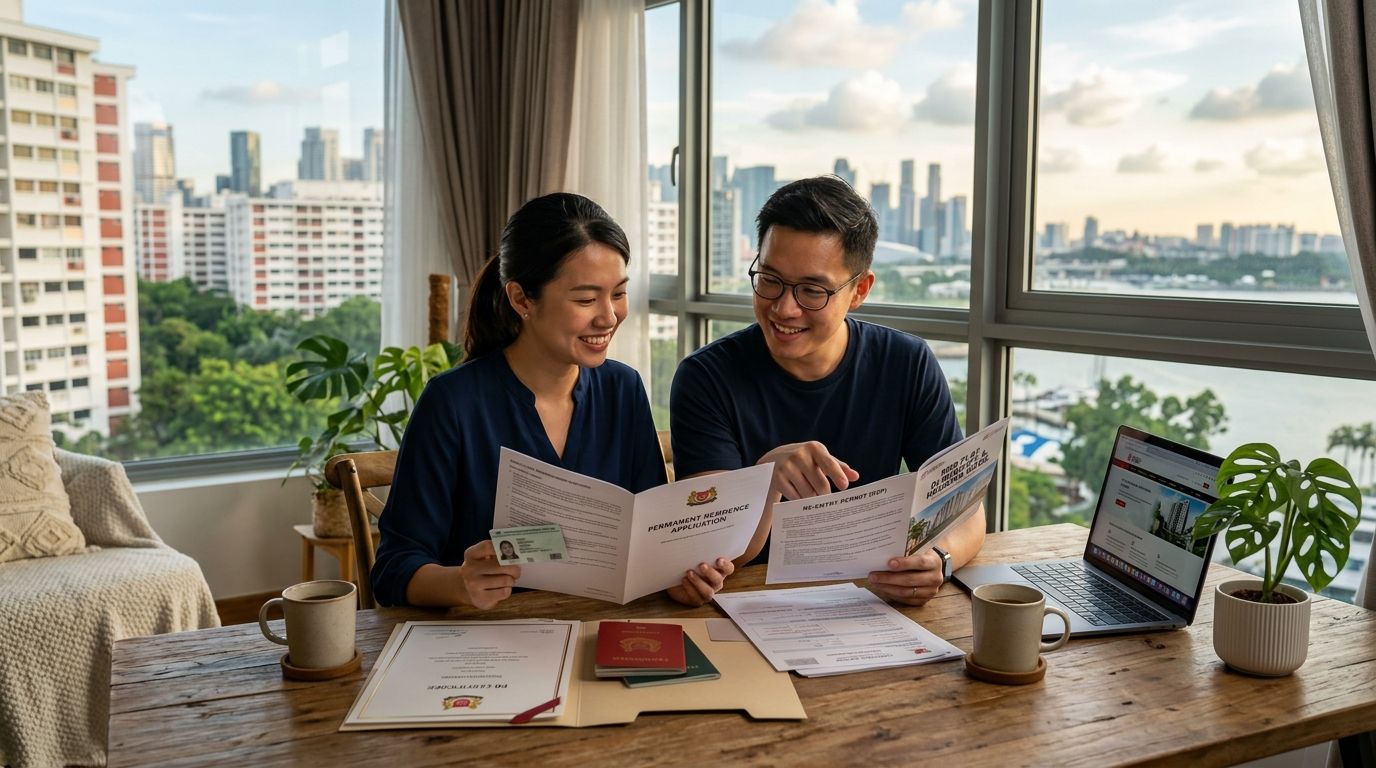
Renewing a rental lease in Singapore as an expat means opening the conversation with your landlord 2 to 3 months before your tenancy expires, agreeing on a new rent and term, and signing a renewal letter or fresh tenancy agreement that gets stamped with IRAS. The number most expats miss isn't the rent itself, it's the fresh stamp duty on the renewal document, calculated at 0.4% of the total rent for the new period.
- Start renewal talks 2-3 months before lease expiry, not after the notice deadline passes.
- Renewal stamp duty runs 0.4% of total rent for the new lease term, payable again even if you never moved.
- Landlords in Singapore can lift rent at renewal, but 2026 market data gives you room to push back.
- A security deposit top-up of 1-2 months' rent is common when the new rent is higher than the old one.
- Missing the notice window can auto-convert your lease to a month-to-month arrangement with less protection.
Why this matters
A lease renewal in Singapore isn't a formality you can leave to the last week. Landlords who want to sell, move back in, or reprice against the current market start planning 3 months out, and if you're still deciding while they're already listing the unit to other tenants, you lose your negotiating position entirely.
Expats get caught out twice: they either renew too late and lose leverage, or they renew without checking the stamp duty and rent-increase mechanics baked into the original tenancy agreement. Both mistakes are avoidable once you know the timeline.
How do you renew a rental lease in Singapore as an expat?
The process is the same whether you're renting a condo, an HDB flat, or a landed property, and it runs in a fairly fixed sequence:
- Check your notice clause. Most Singapore tenancy agreements require written notice 2 months before expiry if either party wants to end the lease. If neither side gives notice, some agreements auto-renew on a monthly basis at the same rent — read your clause before you assume anything.
- Open rent negotiation early. Landlords typically float a renewal rent 6-8 weeks before expiry. If you want to negotiate rent as an expat, this is the window — not the week before the old lease ends.
- Agree on the term. Renewals are usually 1 or 2 years, matching the original lease structure. A shorter renewal (6-12 months) is possible but landlords often price it higher per month.
- Sign a renewal letter or new tenancy agreement. A short renewal letter referencing the original TA works for straightforward renewals at the same terms. If rent, term, or clauses change materially, most agents recommend a fresh tenancy agreement.
- Pay stamp duty again. Renewal documents are stamped separately from the original lease, even if nothing else changed.
- Settle any deposit top-up. If the new rent is higher, landlords commonly ask for the security deposit to be adjusted to match.
| Step | Typical timing before expiry |
|---|---|
| Landlord/agent floats renewal rent | 6-8 weeks |
| Tenant gives renewal or vacate notice | 2 months (per lease clause) |
| Renewal letter or new TA signed | 3-4 weeks |
| Stamp duty paid | Within 14 days of signing |
Renewal stamp duty: 0.4% of total rent
Every tenancy renewal in Singapore attracts its own stamp duty, calculated at 0.4% of the total rent payable over the new lease period, for leases of 4 years or less. This applies whether you're renewing at the same rent or a higher one — it's a fresh document, so it's a fresh duty.
A renewal letter that simply extends the existing lease still needs stamping if it changes the rent or the term. Landlords sometimes assume the original stamping covers the renewal — it doesn't, and unstamped documents create problems if a dispute ever needs the tenancy agreement as evidence.
Notice period: typically 2 months before expiry
Most Singapore residential leases require 2 months' written notice from either party before the tenancy ends, whether you're renewing, extending, or vacating. This clause sits in the original tenancy agreement, not in some universal law, so the exact figure can be 1, 2, or 3 months depending on what you signed.
Miss this window and two things can happen: your lease may auto-convert to a rolling monthly tenancy at the existing rent, or the landlord may treat your silence as intent to vacate and start marketing the unit. Neither outcome favors you if you actually wanted to stay.
Security deposit top-up: 1-2 months' rent
When a renewal comes with a rent increase, landlords commonly ask for the security deposit to be topped up to match the new monthly rent, usually held at 1-2 months' rent for leases of 2 years or less. If your renewal rent stays flat or drops, there's no reason to pay any top-up — that deposit adjustment only tracks the new rent figure.
Why lease renewal outcomes vary
Renewal terms aren't standard across Singapore — they shift based on a handful of factors:
- Market rent movement. If comparable units in your district have gotten cheaper or more expensive since you signed, that number anchors the renewal conversation.
- Landlord's own plans. Owners planning to sell, move back in, or refinance may refuse renewal outright regardless of what you offer.
- Property type. HDB rentals, condos, and landed homes each carry different renewal norms and owner expectations.
- How long you've already stayed. Landlords with a reliable tenant of 2+ years often prefer a smooth renewal over the cost and vacancy risk of finding someone new.
- Diplomatic clause status. If your original lease has a diplomatic clause tied to employment, that clause typically doesn't carry over automatically into a renewal — it needs to be renegotiated.
- Agent involvement. A renewal handled through the original property agent tends to move faster since the paperwork trail and landlord relationship already exist.
“The tenant who starts the renewal conversation first is the tenant who sets the terms.”
If you're weighing whether renewing is even the right call versus buying, that's a separate decision worth working through — see how to choose between renting and buying in Singapore as an expat before you commit to another term.
Do I need a new stamp duty when renewing a lease in Singapore?
Yes, renewal documents in Singapore need their own stamp duty, calculated at 0.4% of the total rent for the new period, separate from whatever you paid on the original lease. This applies even if the rent and term stay identical to before, because IRAS treats the renewal as a distinct chargeable document.
Can my landlord increase rent when renewing my lease?
Yes, landlords can raise rent at renewal as long as the increase isn't restricted by a clause in your existing tenancy agreement. Most Singapore leases don't cap renewal increases, which is why checking comparable listings before the negotiation starts matters more than the number the landlord opens with.
What happens if I don't renew or give notice in time?
If neither you nor your landlord gives the required notice, most Singapore tenancy agreements auto-convert into a monthly rolling tenancy at the existing rent. That arrangement is less stable — either party can typically end it with a single month's notice, which isn't ideal if you've got a family or a job that needs predictable housing.
Renewing a lease well ahead of the deadline avoids that scramble entirely, and if the negotiation gets complicated — rent disputes, unclear clauses, a landlord pushing an unreasonable increase — that's exactly where working with a property agent earns its keep rather than handling it solo.
Get help renewing your lease
I'll review your tenancy agreement and negotiate the renewal for you.
FAQ
How much notice do I need to give to renew a rental lease in Singapore?
Most Singapore tenancy agreements require 2 months' written notice before the lease expires, whether you're renewing or vacating. Check your specific tenancy agreement, since some clauses set 1 or 3 months instead.
Is renewing a lease cheaper than signing a new tenancy agreement with a different landlord?
Renewing is usually cheaper in effort and cost since it skips agent commission on a fresh search and avoids a second security deposit sitting idle. It's not always cheaper in rent — if market rates dropped since you signed, a new tenancy elsewhere might beat your renewal offer.
Can I negotiate the rent down when renewing my lease in Singapore?
Yes, rent negotiation at renewal works in your favor when comparable units nearby have gotten cheaper or when you've been a reliable tenant for 2+ years. Bring recent listing data to the conversation rather than just asking for a lower number.
Do I need a lawyer to renew a rental lease in Singapore?
No, a lawyer isn't required for a standard renewal — a renewal letter or fresh tenancy agreement stamped with IRAS is standard practice. A lawyer becomes worth involving only if the renewal changes major clauses or a dispute is already brewing.
What is a diplomatic clause and does it carry over on renewal?
A diplomatic clause lets a tenant end the lease early, usually after 12 months, if their employment ends or relocates them out of Singapore. It typically doesn't carry over automatically into a renewal and needs to be renegotiated as part of the new agreement.
Can my landlord refuse to renew my lease in Singapore?
Yes, landlords can decline renewal for any reason once the fixed term ends, including plans to sell, move back in, or reprice to a new tenant. There's no automatic right to renew unless your original tenancy agreement specifically grants an option to extend.
What happens to my security deposit when I renew my lease?
Your existing security deposit usually rolls over into the renewal unchanged if rent stays flat. If the renewal rent is higher, landlords commonly ask for a top-up so the deposit matches 1-2 months of the new rent.
One last thing
The renewal letter is the cheapest document you'll sign all year and the one people rush the most. Reading the notice clause on day one of your original tenancy — not week 10 of month 22 — is what actually decides whether you renew on your terms or the landlord's.