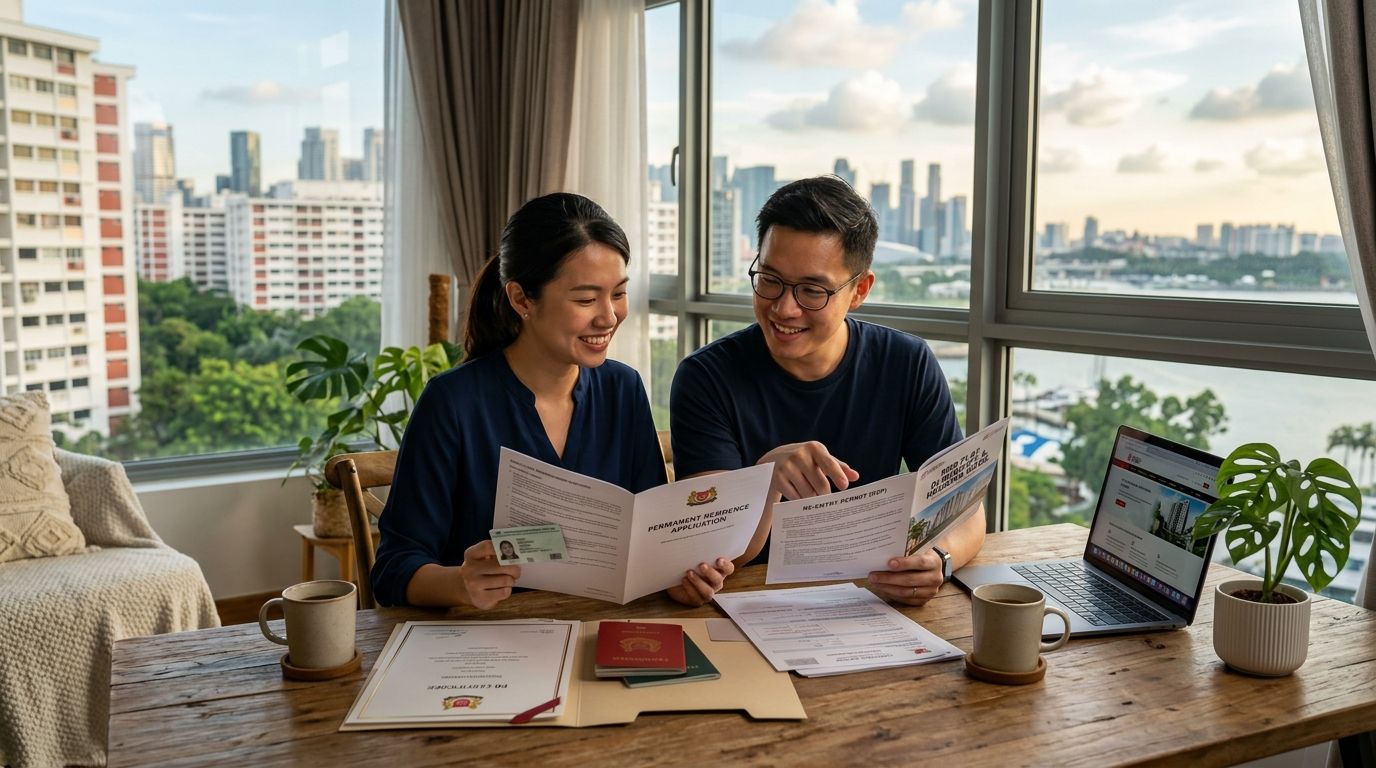
Selling through a licensed conveyancing lawyer before you fly out is the cleanest way to transfer property ownership when leaving Singapore, with legal completion typically taking 8 to 10 weeks after you exercise the Option to Purchase. If you'd rather keep the property in the family, you can transfer title to a co-owner, spouse or child through a sale or a deed of gift instead — but the stamp duty bill and paperwork look very different depending on which route you pick, and on how long you've owned the unit.
- Selling before departure completes in 8-10 weeks after the Option to Purchase in 2026 - the cleanest exit for most owners.
- Seller's Stamp Duty runs from 12% in year 1 down to 4% in year 3, then drops to zero after 3 years of ownership.
- Gifting or selling to family still triggers Buyer's Stamp Duty on market value, paid by the recipient.
- Foreign recipients face Additional Buyer's Stamp Duty up to 60% under current IRAS rules.
- A Power of Attorney signed before you leave lets your lawyer or agent complete without you physically in Singapore.
Why this matters
Most expats leaving Singapore in 2026 assume the exit is just a matter of listing the flat and signing on completion day. It isn't. Your citizenship or Employment Pass status, how you funded the purchase, and who's receiving the property all change the cost and the timeline before a single form gets filed.
Get this wrong and you're looking at a delayed completion, an unexpected Seller's Stamp Duty bill, or a CPF refund shortfall that surfaces after you've already relocated. Planning the transfer route before you book your flight, not after, is what actually keeps this stress-free.
How to transfer property ownership when leaving Singapore
The process runs in a fixed sequence regardless of which route you choose:
- Decide the route - sell outright, transfer to family, or retain ownership and rent it out remotely.
- Engage a lawyer and a licensed agent early, ideally 3-4 months before your departure date. If you haven't worked with one before, engaging a property agent in Singapore the right way saves weeks later.
- Sign a Power of Attorney if you'll be overseas before completion - this lets your lawyer sign on your behalf and is often notarized or apostilled depending on your destination country.
- Clear your CPF usage refund. If CPF savings funded the purchase, CPF requires the principal plus accrued interest back into your account on sale, calculated automatically by your lawyer at completion.
- Settle any outstanding mortgage and confirm the bank's discharge timeline, which typically runs alongside the legal completion window.
- Pay the applicable stamp duty - Seller's Stamp Duty if you're within the holding period, or Buyer's Stamp Duty if you're transferring rather than selling.
- Complete and hand over the title deed or key, with your lawyer lodging the transfer with the Singapore Land Authority.
| Cost item | Who pays | What determines the amount |
|---|---|---|
| Seller's Stamp Duty | Seller | Holding period - 12% in year 1, down to 4% in year 3, 0% after |
| Buyer's Stamp Duty | Buyer or recipient | IRAS tiered schedule - 1% on the first $180,000, rising to 6% above $3,000,000 |
| Additional Buyer's Stamp Duty | Recipient, if applicable | Citizenship/residency status and existing property count |
| CPF refund | Seller | Original CPF sum used plus accrued interest |
| Conveyancing legal fees | Seller and buyer separately | Agreed fixed fee with your appointed lawyer |
Selling within 1 year: 12% Seller's Stamp Duty
Selling a private residential property you've held for less than a year costs you 12% Seller's Stamp Duty on the sale price under current IRAS rules. This is the steepest band and it applies regardless of why you're leaving - a sudden posting change doesn't waive it.
Selling in year 2: 8% Seller's Stamp Duty
Hold the property into its second year and the rate drops to 8% Seller's Stamp Duty. It's still a meaningful hit on a Singapore condo, which is why owners facing a departure inside 2 years of purchase often weigh renting out over selling.
Selling in year 3: 4% Seller's Stamp Duty
By year 3, Seller's Stamp Duty falls to 4%, the lowest band before it disappears entirely. If your relocation date lands close to your 3-year purchase anniversary, waiting a few extra weeks can be worth thousands in saved duty.
Holding past 3 years: 0% Seller's Stamp Duty
Once you've owned the property for more than 3 years, Seller's Stamp Duty drops to zero. Additional Buyer's Stamp Duty clawback provisions from your original purchase, if any, will also have expired by this point for most standard purchases.
Transferring to a family member instead of selling
Gifting or selling below market value to a spouse or child doesn't skip stamp duty - it just shifts who pays it. Buyer's Stamp Duty is calculated on the market value of the property, not the sale price stated in the deed, even for a genuine gift with zero consideration.
If the recipient is a foreigner, a Singapore Permanent Resident who already owns property, or a citizen buying a second or subsequent property, Additional Buyer's Stamp Duty applies on top - up to 60% for foreign recipients under the current schedule. This makes a family transfer a poor default choice unless the recipient is a Singapore citizen buying their first property.
Verdict: transferring to a citizen spouse or child with no other property is workable and often cheaper than selling. Transferring to a foreign family member usually costs more in ABSD than a straight sale would in agent commission and SSD combined.
Retaining ownership and renting out remotely
You don't have to sell or transfer at all. Many departing owners keep the title, appoint a Power of Attorney holder, and rent the unit out through a managing agent. Rental income earned by a non-resident owner is still taxable in Singapore and must be declared to IRAS annually, regardless of where you're living.
This route works best when you're leaving on a fixed-term posting and expect to return, or when the property sits in a strong rental pocket. If corporate relocation is the reason you're leaving, a corporate relocation package built for multinational employees usually bundles this kind of remote-owner management alongside your own housing search on the other end.
Planning your Singapore exit?
Get a transfer route mapped out before you book your flight.
Why the transfer process varies
- Holding period - Seller's Stamp Duty bands run from 12% down to 0% depending on how long you've owned the unit.
- CPF usage - refunds with accrued interest are mandatory if CPF funded any part of the original purchase.
- Recipient's citizenship or residency status - determines whether Additional Buyer's Stamp Duty applies on a family transfer.
- Property type - HDB flats carry Minimum Occupation Period and resale eligibility rules that private condos don't have.
- Outstanding mortgage - lock-in penalties from early redemption can add unexpected cost to a rushed sale.
- Timing before departure - completion typically needs 8-10 weeks after the Option to Purchase, so a late start forces a Power of Attorney arrangement.
Do I need a Power of Attorney to sell my Singapore property from overseas?
Yes, a Power of Attorney is standard practice if you'll be abroad before legal completion. It lets your appointed lawyer sign the transfer documents on your behalf, and it's typically arranged 3-4 weeks before you leave so it can be notarized in time.
Can I gift my Singapore condo to my spouse before I leave?
You can, but Buyer's Stamp Duty still applies on the property's market value even though no money changes hands. If your spouse is a foreigner or already owns another property, Additional Buyer's Stamp Duty up to 60% can apply on top, which often makes a straight sale the cheaper option.
How long does it take to transfer property ownership in Singapore?
A standard transfer takes 8 to 10 weeks from the Option to Purchase being exercised to legal completion. HDB flat transfers can run longer because of HDB's own approval process and eligibility checks on the recipient.
FAQ
How much does it cost to transfer property ownership when leaving Singapore?
Costs range from 0% to 12% in Seller's Stamp Duty depending on your holding period, plus conveyancing legal fees and a CPF refund if CPF savings funded the purchase. Transferring to family instead of selling swaps SSD for Buyer's Stamp Duty on market value, paid by the recipient.
Can a foreigner keep owning a Singapore condo after leaving the country?
Yes, foreigners can retain ownership of eligible private condos after leaving Singapore and rent them out through a managing agent under a Power of Attorney. Rental income still needs to be declared to IRAS as a non-resident owner.
Is it cheaper to sell or gift my Singapore property before relocating?
Selling is usually cheaper once Seller's Stamp Duty has dropped to 4% or 0% after 3 years of ownership. Gifting to a foreign or second-property recipient can trigger Additional Buyer's Stamp Duty up to 60%, which often outweighs any savings.
What happens to my CPF savings when I sell before leaving Singapore?
CPF requires the principal amount used plus accrued interest to be refunded to your CPF account at the point of sale completion. Your conveyancing lawyer calculates and processes this automatically as part of the completion accounts.
Do I need to be in Singapore to complete the sale?
No, a Power of Attorney lets your lawyer complete the sale on your behalf while you're overseas. It needs to be signed and often notarized before you leave, so arrange it 3-4 weeks ahead of departure.
Does an HDB flat transfer work the same way as a private condo?
No, HDB flats carry Minimum Occupation Period rules and resale eligibility checks on the recipient that private condos don't have. These add extra approval steps and can extend the transfer timeline beyond the usual 8-10 weeks.
How long before I leave Singapore should I start the transfer process?
Start 3-4 months before departure so the 8-10 week completion window, CPF refund processing, and any Power of Attorney paperwork all clear before you fly out. Starting later usually forces a rushed sale or an unplanned rental arrangement.
One last thing
The detail most departing owners miss isn't the stamp duty table - it's that HDB flats and private condos follow completely different transfer rules. A private condo transfer is a straightforward conveyancing exercise; an HDB flat transfer involves Minimum Occupation Period checks and HDB's own approval on the recipient's eligibility, which can add weeks to a timeline you've already built around a flight date.
If you're not sure which category your situation falls into, get that confirmed before you set a departure date, not after.