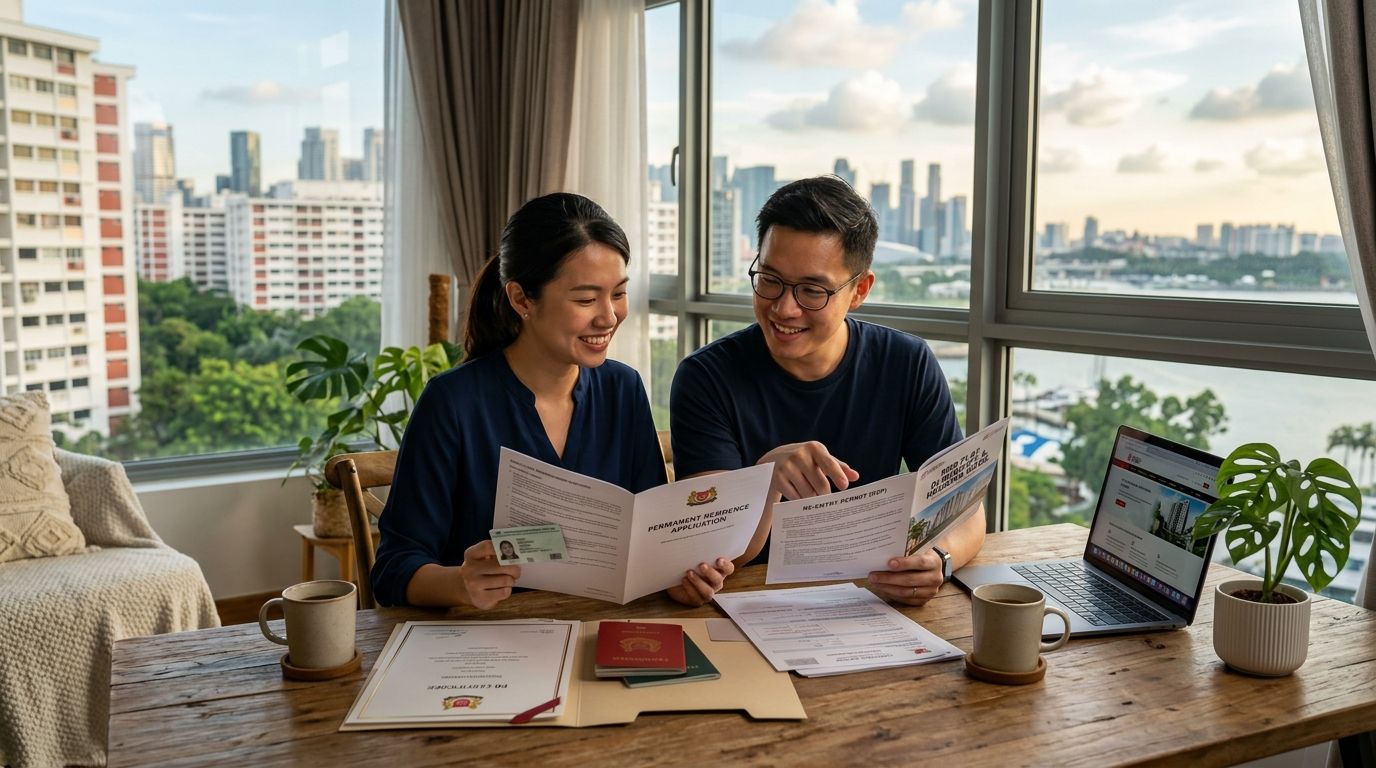
Foreign investors buying or renting in Singapore hit the same wall fast: the rules for non-residents are not the rules everyone else follows, and most agents don't specialise in either.
- A real estate agent for foreign investors in Singapore must know the 60% ABSD rate, HDB restrictions, and financing limits for non-residents — generalist agents often miss these.
- The Ang Moh Property Agent's foreign investor pathway covers buying, renting, and relocation under one process. Consider it your starting point.
- First-time expat buyers and corporate relocatees need different support — match your profile to the right service page before you call anyone.
- Skip agents who can't name your CEA registration number on request or explain ABSD in plain terms.
Why this matters
Singapore treats foreign buyers differently at almost every step — stamp duty, eligible property types, financing, even which flats you're legally allowed to sit in as a tenant versus an owner. Get the wrong agent and you'll find out about a restriction after you've already made an offer, not before.
A real estate agent for foreign investors in Singapore isn't a nice-to-have title. It's the difference between someone who can walk you through property investment for foreign investors in Singapore with the tax exposure laid out upfront, and someone who quotes you a price and lets you discover the 60% Additional Buyer's Stamp Duty on your own at the lawyer's office.
Who this is for
This guide is for foreign nationals — on an Employment Pass, dependant's pass, or simply investing from overseas without residency — who are buying, renting, or relocating into Singapore property and need an agent who understands the non-resident rulebook, not just the local one. If you already hold Singapore PR or citizenship, most of the restrictions below don't apply to you and a general agent will serve you fine.
What to look for in an agent for foreign investors
CEA registration you can actually verify
Every licensed agent in Singapore carries a registration number with the Council for Estate Agencies (CEA), and that register is public. Ask for the number before the first viewing — an agent who hesitates or can't produce it isn't one to trust with a six or seven-figure transaction in 2026.
Real fluency in foreign ownership rules
Foreigners cannot buy HDB flats outright and face restrictions on landed property under the Residential Property Act — condos and apartments in developments without landed titles are the main path open to you. An agent who can explain this in one conversation, without sending you to a lawyer for the basics, is doing their job.
A clear answer on ABSD exposure
Foreign buyers pay 60% Additional Buyer's Stamp Duty on residential property in Singapore, on top of the standard Buyer's Stamp Duty. This single number changes the math on every deal, and your agent should be modelling it into your budget conversation from day one, not after you've fallen for a unit.
Financing knowledge for non-residents
Loan-to-value limits and lender requirements shift for foreign buyers compared to citizens and PRs. An agent who works with foreign investors regularly will already have relationships with banks that handle non-resident mortgages, which saves you weeks of cold-calling.
End-to-end relocation support
If you're moving for a job, buying or renting is only one piece. Corporate relocation packages, school zoning, and lease timing around your work pass all interact — an agent who only handles the transaction and hands you off afterward leaves you to solve the rest alone.
Talk through your Singapore move
I map out ownership rules, ABSD, and financing before you view a single unit.
Top picks by investor profile
Most foreign investors fall into one of five profiles. Matching yours to the right pathway upfront saves weeks — here's how I'd sort them.
The straightforward one — first-time expat buyer. If this is your first property purchase in Singapore, the biggest risk isn't the market, it's missing a step in the ABSD or eligibility process. The first-time expat buyer pathway walks through eligibility, financing, and paperwork in sequence. One concrete detail: foreign buyers need to factor the 60% ABSD into their upfront cash requirement, not just the down payment. Buy.
The renter-first move — tech expats testing the market. Plenty of tech hires land in Singapore on a relocation package and rent for 12 to 24 months before deciding whether to buy. The condo rental route for tech expats gets you into a lease fast without locking you into a purchase decision you're not ready for. Buy if you're still weighing whether Singapore is a multi-year stay.
The long game — retiree investor. Retirees buying for yield or eventual residence face a different risk profile: longer holding periods, different financing appetite from banks, and less tolerance for a bad tenant mix. This pathway needs its own conversation rather than a bolt-on to a standard buyer consult — flag it early with whichever agent you engage. Consider, and ask directly how the agent structures a retiree's ABSD and exit timeline before signing anything.
The corporate case — multinational relocatee. If your employer is footing the move, the transaction gets bundled with visa timing, housing allowance caps, and sometimes a company-approved shortlist of developments. Corporate relocation support that syncs with HR timelines matters more here than finding the cheapest unit. Consider, and loop your HR contact in from the first call.
The specialist case — diplomat or embassy staff. Diplomatic postings come with their own lease terms, notice periods, and sometimes tax treatment that a general agent won't have handled before. This is a narrow enough case that it deserves a specialist conversation rather than a generic buyer or renter process. Consider only if your agent has handled embassy leases before — otherwise, skip and ask your mission's admin office for a referral list first.
What to avoid
- An agent who quotes you a price with no ABSD line item. If the 60% duty isn't in the first conversation, it'll show up as a surprise at the lawyer's desk.
- Any pitch to buy an HDB flat as a non-PR foreigner. This isn't a grey area — it's not legally available to you, and anyone offering it is either confused or dishonest.
- A generalist who treats your work pass timeline as irrelevant. Lease start dates, notice periods, and pass renewal windows need to line up, and an agent unfamiliar with relocation timing will happily ignore this until it costs you a month of double rent.
“If your agent can't explain ABSD in one sentence, find another agent.”
Verdict comparison across profiles
| Profile | Primary risk | Best-fit pathway | Verdict |
|---|---|---|---|
| First-time expat buyer | Missing ABSD or eligibility step | First-time expat buyer service | Buy |
| Tech expat renting first | Locking into a purchase too early | Tech expat condo rental | Buy |
| Retiree investor | Exit timeline and financing mismatch | Retiree investment guidance | Consider |
| Corporate relocatee | HR timeline misalignment | Corporate relocation packages | Consider |
| Diplomat / embassy staff | Non-standard lease terms | Specialist referral | Consider or skip |
FAQ
What does a real estate agent for foreign investors in Singapore actually do differently?
A specialist agent models Additional Buyer's Stamp Duty, foreign ownership restrictions, and non-resident financing into your search from the start, instead of treating your case like a local buyer's transaction. That upfront modelling is what separates a foreign-investor specialist from a generalist agent in 2026.
Can foreigners buy HDB flats in Singapore?
No, foreigners without Singapore permanent residency cannot buy HDB flats outright — they can only rent them. Condos and non-landed private apartments remain the main ownership route open to foreign buyers.
How much is ABSD for foreign buyers in Singapore?
Foreign buyers pay 60% Additional Buyer's Stamp Duty on residential property purchases in Singapore, on top of the standard Buyer's Stamp Duty. This applies regardless of whether it's your first property in the country.
Is it better to rent or buy as a foreign investor in Singapore?
Renting first makes sense if you're within your first 12 to 24 months in Singapore or still uncertain about a long-term stay, since buying triggers the 60% ABSD immediately. Buying makes more sense once your work pass and residency plans are settled.
Do I need a CEA-registered agent to buy or rent in Singapore?
Yes — any licensed property agent in Singapore must be registered with the Council for Estate Agencies, and you can verify their number on the public register before engaging them. Working with an unregistered agent removes your legal protections in a dispute.
Can a foreign investor get a mortgage in Singapore?
Foreign buyers can get mortgages in Singapore, but loan-to-value limits and lender requirements are stricter than for citizens or permanent residents. An agent experienced with foreign investors will already have bank relationships that handle non-resident financing.
What's the biggest mistake foreign investors make when buying property in Singapore?
Underestimating the 60% ABSD in their cash requirement is the most common and costly mistake. Buyers who budget only for the purchase price and standard stamp duty often find themselves short by a significant margin at the point of completion.
One last thing
Most foreign investors focus their due diligence on the property and skip due diligence on the agent — checking a CEA number takes two minutes and it's the single fastest way to filter out anyone unqualified to handle a non-resident transaction in Singapore.