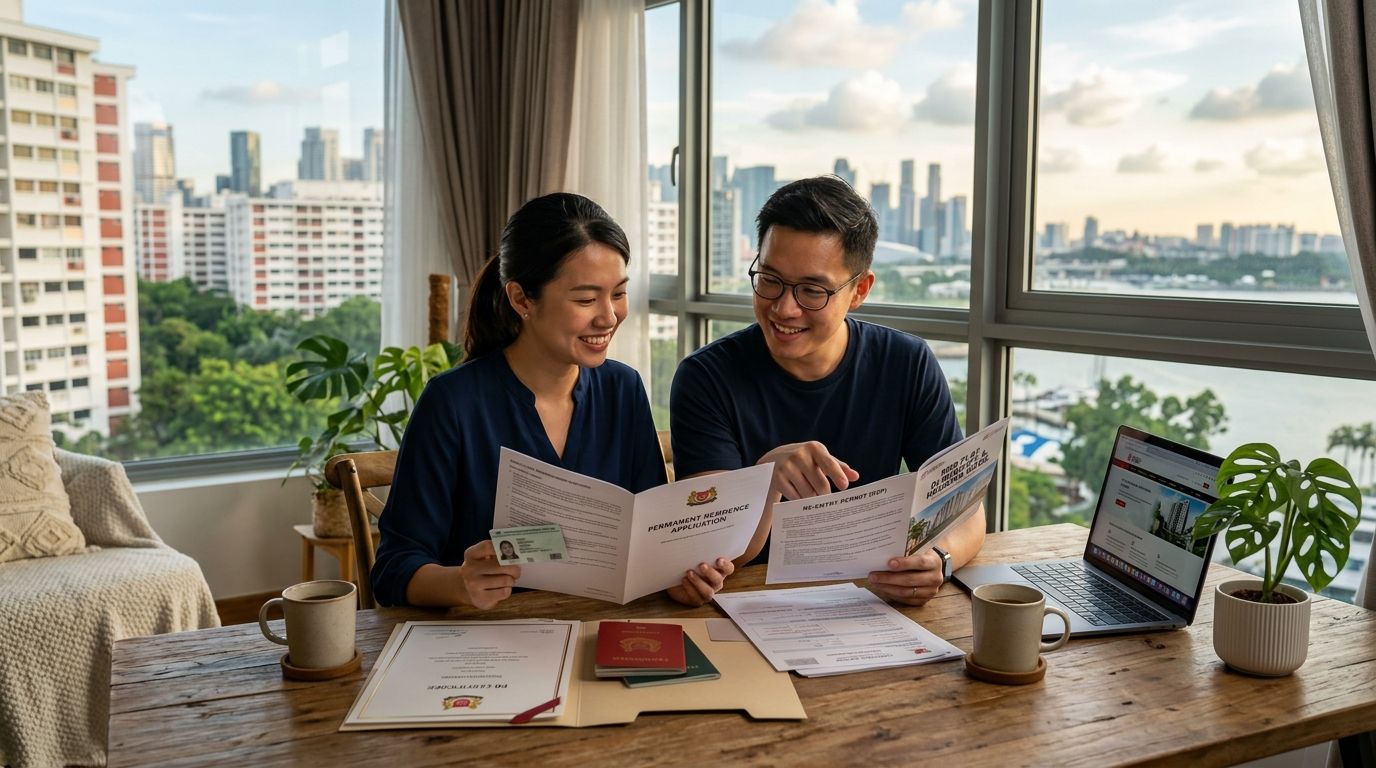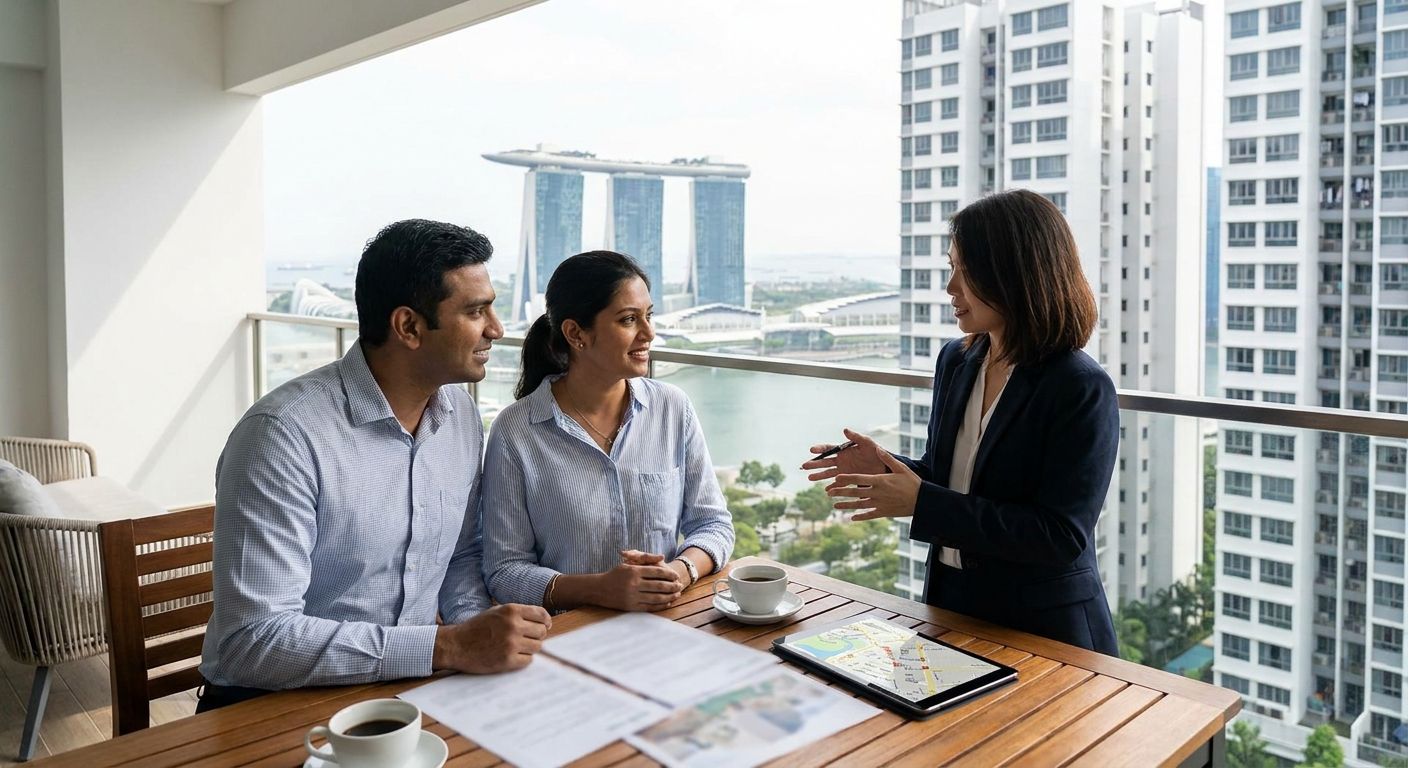
Indian expats buying property in Singapore in 2026 face one rule that catches almost everyone off guard: there is no treaty discount on Additional Buyer's Stamp Duty for Indian nationals, so you pay the full 60% foreigner rate just like anyone else without a US or Swiss passport. That single number reshapes the whole budget conversation before you even look at a floor plan.
What makes this segment different from, say, a UK or Australian expat buyer isn't the paperwork — it's the assumption gap. Many Indian professionals arrive expecting Singapore-India trade ties (CECA) to soften the buyer's stamp duty bill the way the US-Singapore FTA does for American buyers. It doesn't. Understanding that early saves weeks of wasted house-hunting on properties you can't actually afford once tax is added.
- Indian expats pay the full 60% foreign-buyer ABSD in 2026 — India has no property-tax treaty exemption like the US.
- Private condos are the only realistic path for Employment Pass holders without PR; HDB and most landed homes are off-limits.
- Banks generally cap loan-to-value near 75% on a first mortgage for foreigners, so budget cash for the rest plus ABSD.
- A property agent who has closed deals for Indian EP holders before shortens the financing and paperwork sequence by weeks.
Why property buying matters for Indian expats in Singapore
Indian professionals make up one of the larger Employment Pass cohorts in Singapore, concentrated in finance, tech, and pharma roles that come with multi-year postings. That length of stay is exactly why buying gets discussed at all — a two-year rental contract makes less sense once a posting stretches past four or five years.
But the calculation is different from a citizen's or PR's. Every dollar of purchase price for a non-PR foreigner carries an extra 60 cents in ABSD on top of standard Buyer's Stamp Duty, which runs in tiers from 1% up to 6% depending on the price band. On a S$1.8 million condo, that ABSD alone is roughly S$1.08 million-equivalent in tax terms before legal fees and BSD are even added — the number that derails most first-pass budgets.
Step 1: Confirm your residency status and eligibility path
Your Employment Pass, S Pass, or PR application status determines what you're legally allowed to buy before anything else matters.
- Check whether you hold PR status — PRs face lower ABSD (5% on the first property) versus 60% for non-PR foreigners
- Confirm your pass type and remaining validity; buying on a pass close to expiry adds financing risk
- Rule out HDB flats entirely if you're a non-PR foreigner — they're restricted to citizens and PRs
- Check whether your spouse holds Singapore citizenship or PR, which can change the ownership structure and ABSD treatment
- Review whether your employer's relocation package covers any part of the ABSD or legal costs
Step 2: Calculate the real cost including ABSD and BSD
Most Indian expats underestimate the total tax bill because they're mentally comparing Singapore to Mumbai or Bangalore registration costs, which run far lower.
- Add Buyer's Stamp Duty at 1% on the first S$180,000, rising in tiers to 6% on the portion above S$3 million
- Add ABSD at 60% of the full purchase price if you hold no PR status
- Budget separately for legal conveyancing fees and a valuation report
- Factor in property tax post-purchase, which is higher for non-owner-occupied units
- Run the numbers on how to calculate your ABSD before you make an offer, not after
Step 3: Rule out property types that are closed to you
Singapore restricts several housing categories to citizens and PRs, and this trips up buyers who assume Singapore property rules mirror freehold land ownership back home.
- HDB resale flats: off-limits to non-PR foreigners entirely
- Executive Condominiums under 10 years old: also barred to foreigners until they privatise
- Landed property (bungalows, terraces, semi-detached): needs approval from the Land Dealings Approval Unit, rarely granted to individual foreign buyers outside Sentosa Cove
- Private non-landed condos: open to all foreigners regardless of PR status — this is where nearly every Indian expat buyer ends up
Step 4: Get an Approval-in-Principle before you start viewing
Banks assess foreign-income buyers differently, and an AIP tells you your real ceiling before you fall for a unit you can't finance.
- Gather two to three years of income documentation, including appointment letters and payslips in a format Singapore banks recognise
- Expect loan-to-value caps of roughly 75% on a first residential mortgage for foreigners, lower on subsequent properties
- Compare rates across at least three banks — foreign-income pricing varies more than local-income pricing
- Confirm whether your employer's fixed allowances count toward serviceability calculations
- Read through how to qualify for a home loan as a foreigner before submitting a formal application
Step 5: Shortlist districts based on commute, schools, and community
District choice for Indian expat families often comes down to proximity to specific international schools and existing community networks, not just commute time to the CBD.
- Map your daily commute against MRT lines rather than road distance — Singapore traffic during peak hours is unpredictable
- If you have school-age children, check catchment proximity to international schools serving the Indian curriculum community
- Visit at different times of day — evening foot traffic and noise levels change a district's feel significantly
- Compare freehold versus 99-year leasehold pricing in the same district before committing
Step 6: Engage a property agent who understands expat paperwork
The manual route — searching listings yourself and negotiating directly — works, but it adds weeks when you're unfamiliar with Option to Purchase timelines and ABSD payment deadlines.
- Search CEA's public register to confirm any agent's license before engaging them
- Ask directly whether the agent has closed transactions for Indian EP holders or foreign buyers generally
- I run buyers through the full ABSD, legal, and financing sequence upfront so there are no surprises at the Option to Purchase stage — that's the faster path once you've done steps 1-4 yourself
- Confirm the agent's fee structure and who pays it before signing anything
Step 7: Complete the Option to Purchase and legal process
Once you've picked a unit, the paper trail moves fast and the deadlines are strict.
- Pay the option fee to secure the Option to Purchase, typically within a short exercise window
- Engage a conveyancing lawyer to handle the Sale and Purchase Agreement
- Pay BSD and ABSD within 14 days of exercising the option — late payment triggers penalties
- Confirm your mortgage disbursement timeline lines up with the completion date
Step 8: Plan your resale or relocation exit early
Many Indian expats buy assuming a five-year posting, then get reassigned within two — plan the exit before you sign, not after.
- Check the Seller's Stamp Duty holding period before listing, which applies if you sell within a set number of years of purchase
- Keep records of every renovation and upgrade for eventual capital gains conversations
- Review how to sell property in Singapore before relocating overseas well before your posting ends
Comparison: what's actually open to Indian expat buyers
| Property Type | Best For | Foreign Buyer Eligibility | Key Limitation |
|---|---|---|---|
| Private condo (non-landed) | Most Indian EP holders without PR | Open to all foreigners | 60% ABSD applies regardless of nationality |
| Landed property | High-net-worth buyers wanting land | Needs LDAU approval, rarely granted | Approval process can take months and is often rejected |
| HDB resale flat | Citizens and PRs only | Not available to non-PR foreigners | Employment Pass holders without PR are excluded entirely |
| Executive Condo (under 10 years) | Citizens and PRs initially | Barred to foreigners until privatised | Effectively unavailable to fresh EP holders |
“If your ABSD bill is not the single biggest line item in your Singapore property budget, you have not calculated it yet.”
Common mistakes Indian expats make
- Assuming CECA covers property tax — the Singapore-India trade agreement covers services and labour mobility, not ABSD relief; Indian nationals pay the same 60% rate as any other non-PR foreigner in 2026
- Comparing Singapore prices to home-city registration costs — Mumbai and Bangalore stamp duty rates are a fraction of Singapore's combined BSD-plus-ABSD load, and budgeting on that comparison always falls short
- Trying to buy landed property assuming it works like acquiring land back home — LDAU approval for individual foreign buyers is rare outside Sentosa Cove, and most applications don't proceed
- Skipping the Approval-in-Principle step — house-hunting before confirming your loan ceiling wastes viewings on units you can't finance
- Ignoring the exit plan — buying without checking the Seller's Stamp Duty holding period leaves families stuck paying penalty tax if a posting ends early
Get buying support as an Employment Pass holder
Work through ABSD, financing, and district shortlisting with local guidance.
Why this matters
Getting the ABSD number wrong is the single most expensive mistake in this whole process — it's not a filing error, it's a six-figure miscalculation on a mid-range condo. Getting the eligibility rules wrong is the second most expensive, because it wastes months chasing HDB or landed listings that were never available to you. Both are avoidable with the right sequence, and both show up early in this guide for a reason.
FAQ
Do Indian expats get any ABSD discount in Singapore?
No. Indian nationals pay the standard 60% foreign-buyer ABSD rate in 2026, the same as any other foreigner without US or Swiss citizenship. The Singapore-India CECA trade agreement does not extend to property stamp duty.
Can an Indian Employment Pass holder buy an HDB flat?
No. HDB resale flats are restricted to Singapore citizens and permanent residents. Non-PR foreigners, including EP holders, can only buy private non-landed condos.
How much loan can a foreigner get in Singapore?
Banks typically cap loan-to-value at around 75% for a foreigner's first residential mortgage, dropping for subsequent properties. Exact terms vary by bank and depend on income documentation.
Is landed property in Singapore open to Indian expats?
Only with approval from the Land Dealings Approval Unit, which is rarely granted to individual foreign buyers outside Sentosa Cove. Most Indian expats buy private condos instead.
What's the total tax on a S$1.5 million condo for a non-PR Indian buyer?
Buyer's Stamp Duty runs in tiers from 1% to 6% depending on price, plus 60% ABSD on the full purchase price for non-PR foreigners. Combined, this is typically the largest cost after the purchase price itself.
Do I need PR status to buy property in Singapore?
No, but PR status significantly lowers your ABSD rate compared to a non-PR foreigner. Non-PR Employment Pass holders can still buy private condos, just at the higher 60% ABSD rate.
Which districts do Indian expat families typically shortlist?
Choices usually come down to proximity to international schools and MRT access rather than one fixed district. Comparing freehold versus leasehold pricing in the same area matters more than the neighbourhood name.
One last thing
The detail that trips up the most Indian expat buyers isn't the ABSD percentage itself — it's the 14-day payment deadline after exercising the Option to Purchase. Miss it, and penalty interest starts accruing on top of an already six-figure tax bill, so have the ABSD funds confirmed and liquid before you sign anything, not after.