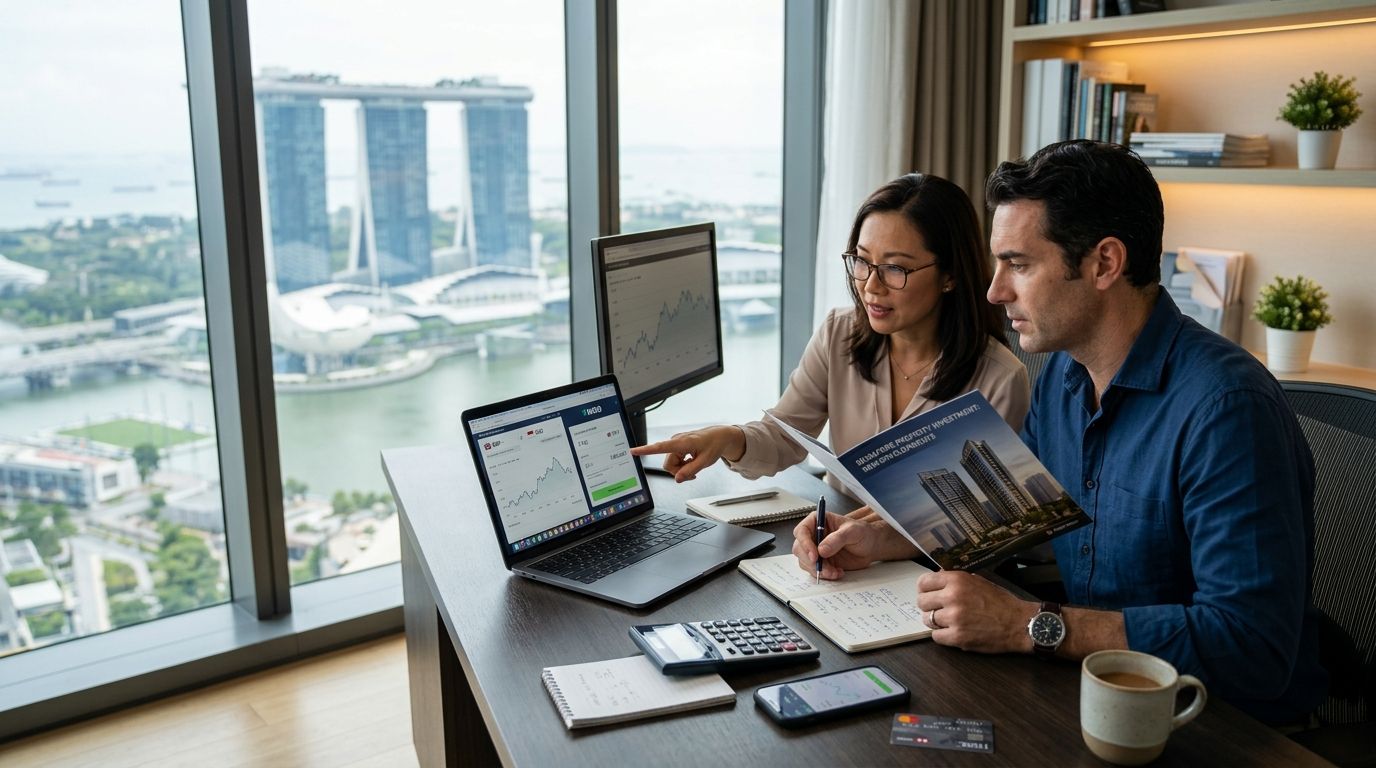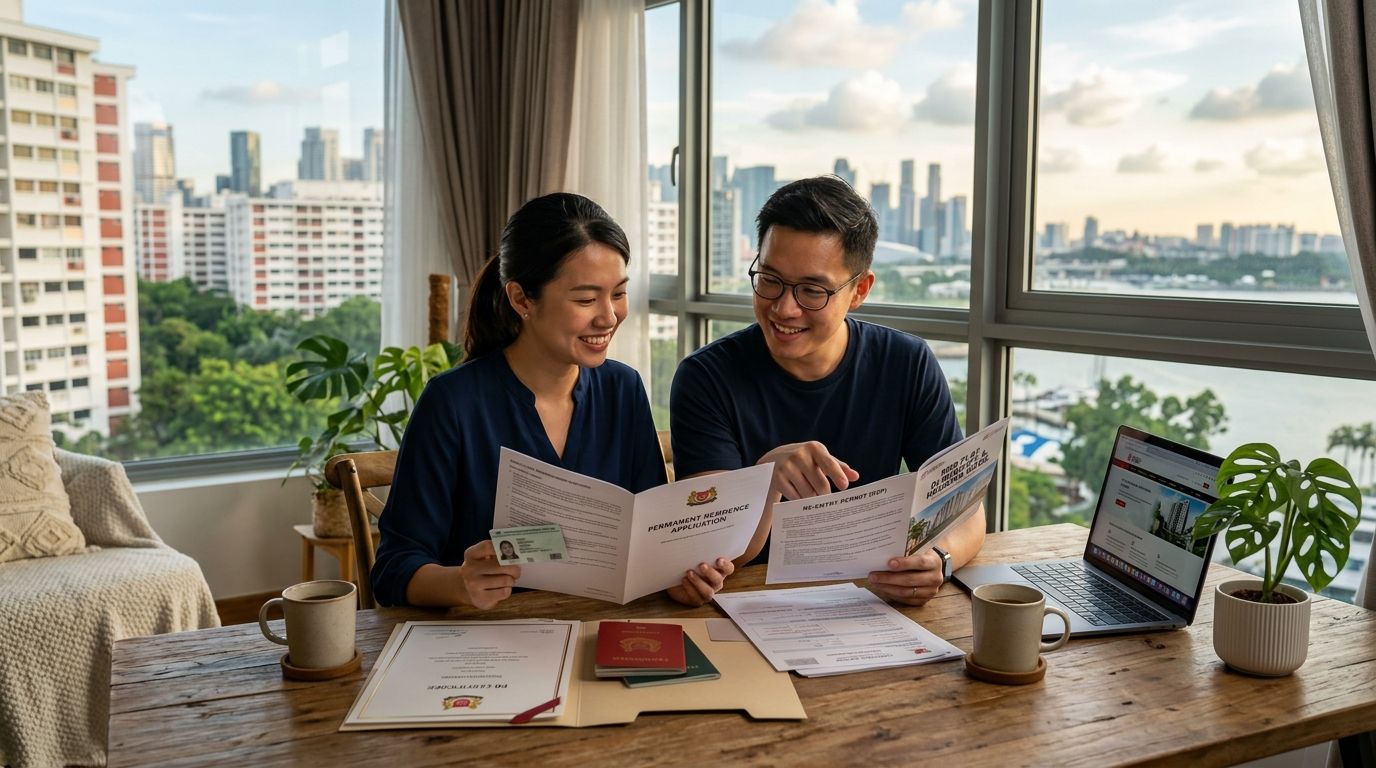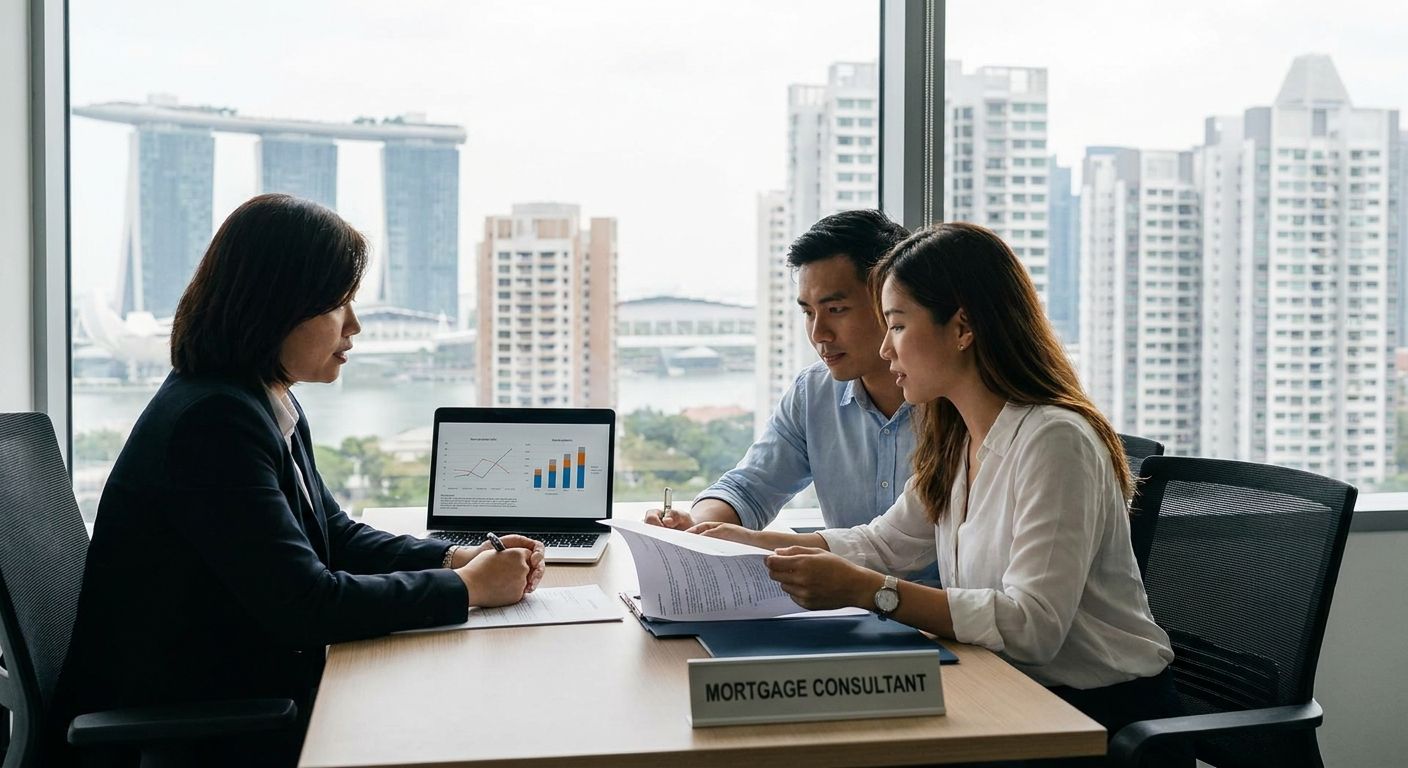
Foreigners qualify for a home loan in Singapore with a Loan-to-Value (LTV) ratio of up to 75% on a first private residential mortgage, which means a minimum cash down payment of 25% since you have no CPF account to draw on. The bigger hurdle isn't the loan at all — it's the 60% Additional Buyer's Stamp Duty (ABSD) due in cash within 14 days of signing the Sale and Purchase Agreement, a cost most first-time foreign buyers underestimate until they're staring at the bill.
- A home loan for foreigners in Singapore caps at 75% LTV on a first private residential mortgage in 2026.
- ABSD for foreigners sits at 60% of purchase price, payable in cash — bigger than the mortgage shortfall itself.
- Total Debt Servicing Ratio (TDSR) is capped at 55% of gross monthly income for every borrower, local or foreign.
- Nationals of the US, Switzerland, Norway, Iceland and Liechtenstein pay ABSD at citizen rates under Free Trade Agreements.
- Foreigners can only finance private condos and apartments — landed property and HDB flats are off-limits without approval.
Why this matters
Banks in Singapore don't reject foreign applicants outright — MAS rules apply the same LTV and TDSR framework to citizens, PRs and foreigners alike. What changes for a foreigner is the cash burden: no CPF to offset the down payment, a steep ABSD bill, and often a shorter loan tenure if a bank treats your income as less stable than a local payslip.
If you're weighing whether financing even makes sense before you commit, the mechanics of qualifying matter less than understanding the full landed cost. That's covered in more depth in how to buy property in Singapore as a foreigner, which walks through the purchase process end to end.
How to qualify for a home loan in Singapore as a foreigner
Qualifying comes down to four checks a bank runs on every application, foreigner or not: property eligibility, LTV limit, TDSR, and income documentation. Here's how a foreign buyer's first private residential loan compares to a citizen's on the same property in 2026.
| Requirement | Singapore Citizen | Permanent Resident | Foreigner |
|---|---|---|---|
| Max LTV (first loan, ≤30yr tenure) | 75% | 75% | 75% |
| ABSD on first property | 0% | 5% | 60% |
| Minimum cash down payment | 5% (rest via CPF) | 5% | 25% (no CPF offset) |
| TDSR cap | 55% | 55% | 55% |
| Eligible property types | HDB, private, landed | HDB (resale, with conditions), private | Private condos/apartments only |
The LTV column looks identical across the board — that's the part most foreigners assume will be their obstacle, and it usually isn't. The real gap is the down payment and ABSD rows, where a foreigner needs roughly five times the citizen's cash outlay to close the same deal.
First home loan: up to 75% LTV
A foreigner's first private residential mortgage in Singapore qualifies for up to 75% LTV in 2026, provided the loan tenure runs 30 years or less and the borrower's age at loan maturity doesn't exceed 65. Miss either condition and the ceiling drops to 55%, which pushes your required cash down payment from 25% to 45% overnight.
Banks calculate this against the lower of purchase price or valuation, not your asking price, so an over-market offer doesn't stretch your borrowing power. If you're on an Employment Pass with a Singapore-based salary, this is the tier you'll almost always land in — it's the standard entry point for Employment Pass holders buying support, and the one most first-time foreign buyers should plan their budget around.
Second home loan: up to 45% LTV
A second outstanding home loan for a foreigner caps at 45% LTV, again assuming tenure stays at or under 30 years and the borrower is 65 or younger at maturity. Push past either limit and the cap falls to 25%. Very few foreign buyers reach this tier given that ABSD already applies at 60% on every residential purchase regardless of count — the tax doesn't step up for a second unit the way it does for citizens, but the financing does tighten.
Third or more home loans: up to 35% LTV
A third or subsequent home loan caps at 35% LTV (15% if tenure or age limits are exceeded). This tier is rare in practice for non-resident foreign buyers — the combined weight of a 60% ABSD bill and a shrinking LTV ratio on every additional unit makes portfolio-building through leverage in Singapore's private market a cash-heavy exercise past the second property.
Why LTV and down payment requirements vary
A handful of factors push your actual qualifying terms above or below the headline 75% figure:
- Loan tenure requested — anything past 30 years drops your LTV ceiling immediately
- Your age at loan maturity — banks measure this against the 65-year mark, not your age today
- Number of existing property loans — first, second and third-plus loans sit on different LTV tiers
- Income currency and source — Singapore-dollar salary from a local employer documents more easily than foreign income
- Employment Pass type and remaining validity — a pass with 12+ months left reads as lower risk than one expiring in 8 weeks
- TDSR headroom — existing debts (car loans, credit cards, overseas mortgages) eat into your 55% ceiling before the new loan is even assessed
Can foreigners get a home loan in Singapore without PR status?
Yes — Permanent Resident status is not required to qualify for a home loan in Singapore as a foreigner. Banks assess Employment Pass, S Pass and dependent-pass holders on the same LTV and TDSR framework, though PR status shifts your ABSD rate from 60% down to 5% on a first property, which changes the total cash needed far more than it changes the loan itself.
Do foreigners pay higher mortgage interest rates than citizens?
No standard rule sets a higher rate for foreigners in Singapore's mortgage market — pricing runs off the same board rates and fixed-rate packages banks offer citizens and PRs. Rate offers vary more by loan size, tenure and bank relationship than by nationality, so it's worth comparing packages across two or three banks rather than assuming a markup exists.
How much cash do I need upfront as a foreign buyer in 2026?
A foreign buyer typically needs 25% of the purchase price as a cash down payment plus 60% ABSD, meaning roughly 85% of the property's value in cash before the mortgage even disburses. On a S$1.5 million condo, that's close to S$1.275 million in upfront cash — a figure that surprises most buyers who only budgeted for the down payment.
Work out your real cash requirement
I map out your LTV, ABSD and TDSR position before you make an offer.
FAQ
What is the maximum home loan LTV for foreigners in Singapore in 2026?
The maximum LTV for a foreigner's first private residential loan in Singapore is 75% in 2026, dropping to 55% if the loan tenure exceeds 30 years or the borrower is over 65 at maturity.
Do foreigners need a Singapore bank account to get a mortgage?
Most banks require a local account for loan servicing and salary crediting, though the account can typically be opened alongside the mortgage application rather than before it.
Is TDSR different for foreigners applying for a home loan?
No, the Total Debt Servicing Ratio caps at 55% of gross monthly income for every borrower in Singapore regardless of nationality, including foreigners.
Can foreigners buy HDB flats with a home loan in Singapore?
No, foreigners cannot buy HDB flats in Singapore; financing is limited to private condominiums and apartments unless special approval is granted for landed property.
Which nationalities get lower ABSD rates in Singapore?
Nationals of the US, Switzerland, Norway, Iceland and Liechtenstein pay ABSD at the same rate as Singapore Citizens under Free Trade Agreement provisions, well below the standard 60% foreigner rate.
How long does mortgage approval take for a foreign buyer in Singapore?
In-principle approval typically comes back within a few business days once income documents and pass details are submitted, though full disbursement timing depends on the property transaction schedule.
Does an Employment Pass improve my home loan approval odds?
Yes, a valid Employment Pass with steady Singapore-dollar income and 12 or more months of remaining validity strengthens an application against a bank's TDSR and risk assessment.
One last thing
Most foreign buyers budget for the 60% ABSD and stop there — few realize that US, Swiss, Norwegian, Icelandic and Liechtenstein nationals are exempt from that rate entirely under standing Free Trade Agreements and pay ABSD at the Singapore Citizen rate instead. If your passport falls into that list, run the numbers again before you assume the loan math above applies to you at full weight — it changes your cash requirement by tens of thousands of dollars on a typical condo purchase in 2026.