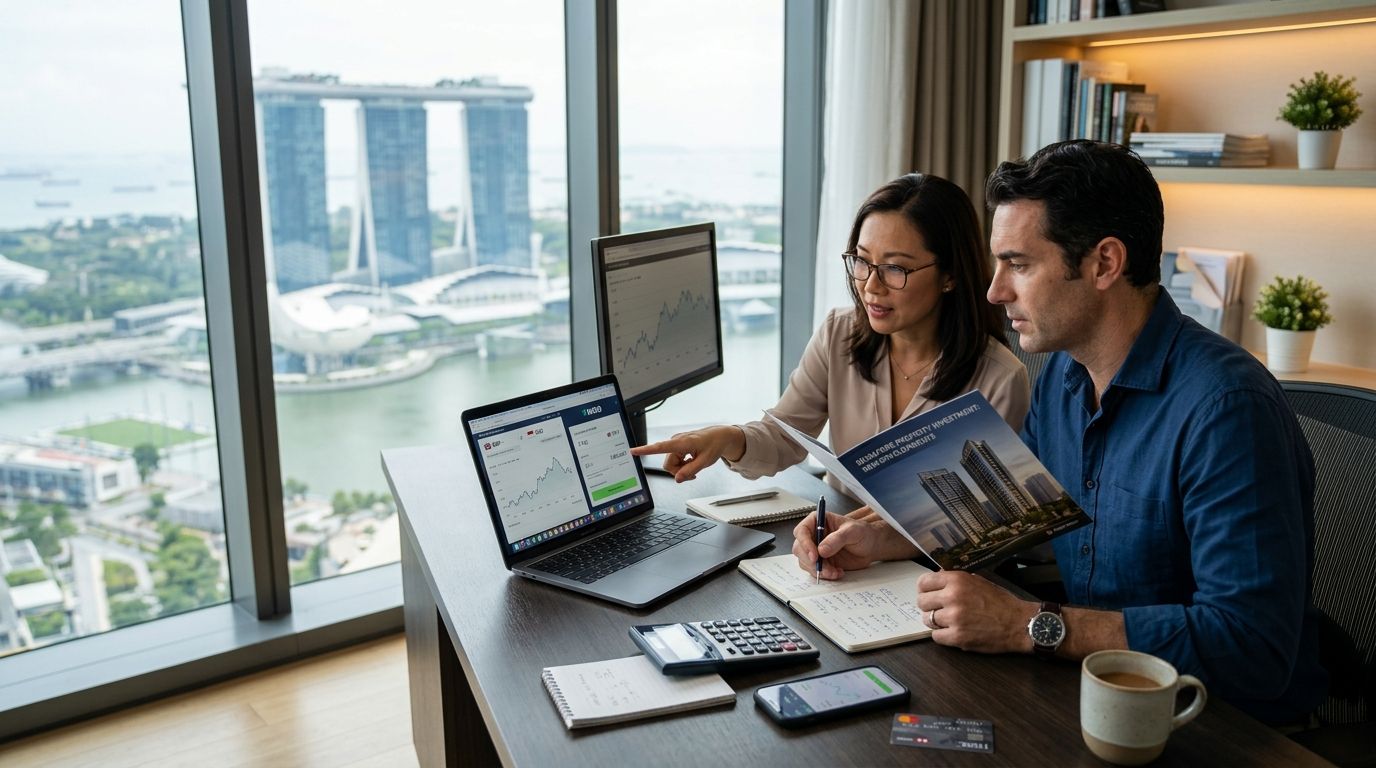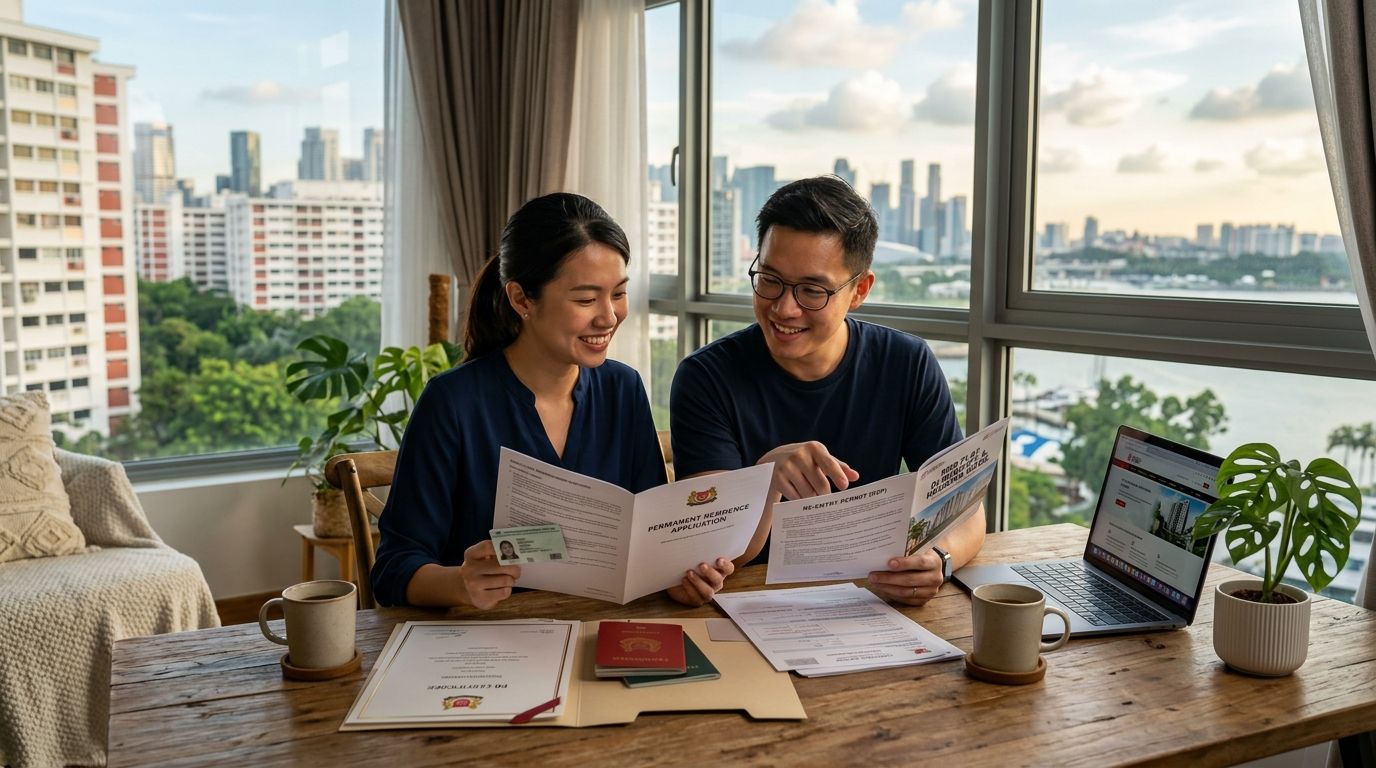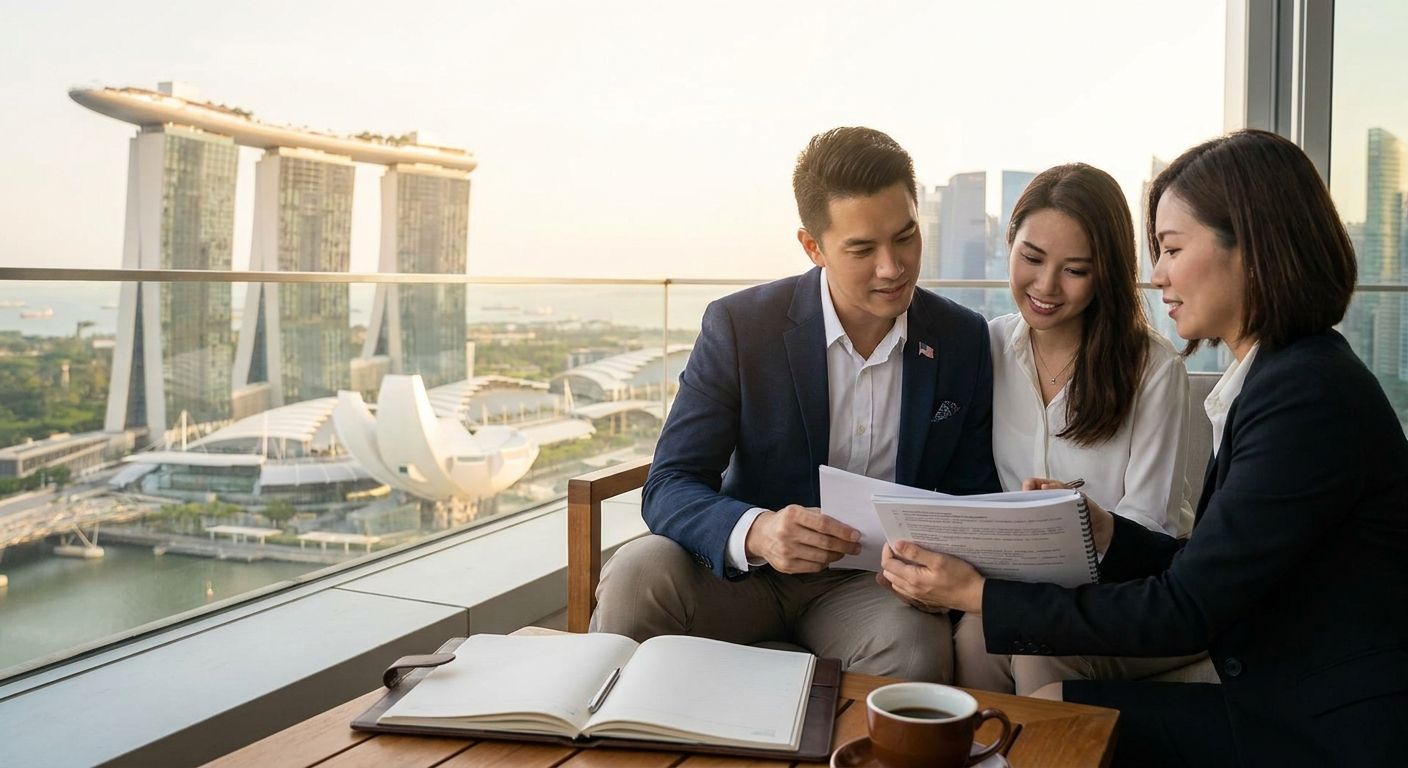
US citizens buying property in Singapore in 2026 get a rare advantage: under the US-Singapore Free Trade Agreement, you pay the same stamp duty as a Singapore Citizen, not the 60% rate that hits other foreign buyers. This guide breaks down what that means for your purchase, where the rules still apply to you, and which path fits your situation.
- US citizens pay 0% ABSD on a first Singapore home under the US-SG Free Trade Agreement, same as citizens.
- Non-treaty foreign buyers face a flat 60% Additional Buyer's Stamp Duty on any residential purchase in 2026.
- Landed property stays off-limits to most foreigners, US passport holders included, outside Sentosa Cove.
- Employment Pass holders can buy private condos with no special approval, but loan terms depend on residency status.
- This property buying guide for US expats in Singapore covers eligibility, financing, and which route actually fits you.
Why this matters
Most foreign buyers in Singapore get quoted a flat 60% stamp duty on top of the purchase price. US citizens don't. The US-Singapore Free Trade Agreement treats you as a Singapore Citizen for Additional Buyer's Stamp Duty purposes, which is the single biggest number in this whole decision.
That treaty status doesn't remove every restriction, though. Buying support for Employment Pass holders still needs to account for visa timelines, bank appetite for non-resident income, and the fact that landed housing is still restricted regardless of your passport.
Who this is for
This is for American passport holders working in Singapore on an Employment Pass, S Pass, or already holding Permanent Residence, plus US citizens buying purely as an investment from overseas. If you're renting and just testing the waters, start with a rental search instead — this guide assumes you're ready to commit capital.
What to look for before you buy
Your ABSD treatment under the USSFTA
Confirm your citizenship status is documented correctly before your Option to Purchase is signed — stamp duty is calculated at the point of exercise, and getting this wrong costs tens of thousands of dollars. A US citizen buying a first residential property pays 0% ABSD in 2026, the same rate a Singapore Citizen pays, versus 60% for a buyer from a country without treaty protection.
Loan eligibility as a non-resident earner
Banks in Singapore lend against income, not passport, but non-resident income gets more scrutiny and sometimes a lower loan-to-value cap. Expect a first mortgage capped around 75% loan-to-value if you have no other outstanding home loans, and bring US tax returns and pay slips a bank can actually verify.
Property type restrictions
Condos and apartments are open to foreign buyers, US citizens included. Landed property — terrace houses, bungalows, semi-detached homes — still requires Singapore Land Authority approval for non-citizens outside Sentosa Cove, and that approval is not something the USSFTA changes.
FATCA and US tax reporting
Owning Singapore property doesn't cancel your US tax obligations. Rental income and eventual capital gains need reporting to the IRS, and depending on how the purchase is structured, FBAR or FATCA disclosure may apply — this is a conversation for your US accountant, not your Singapore agent.
Exit liquidity and holding period
Seller's Stamp Duty applies if you sell within the first few years of ownership, on a sliding scale that drops the longer you hold. Buyers planning a short posting in Singapore should model a 3-4 year minimum hold before assuming an easy exit.
Talk through your buying options
Get guidance built around your visa status and timeline in Singapore.
Top picks by buyer situation
The standard case: Employment Pass holder buying to live in
If you're on an Employment Pass and plan to stay in Singapore for several more years, buying a condo makes sense once the numbers work. You pay 0% ABSD as a US citizen on your first property, the same as a local buyer, and there's no special government approval needed for a private condo unit. The catch is loan tenure — banks tie maximum tenure to your age and pass validity, so a shorter EP runway can mean a shorter loan term. Buy if you're committed to 5+ years in Singapore and your EP has a clear renewal path.
The wildcard: foreign investor buying without residency
Buying from overseas, or on a Dependent's Pass with no local income, is a different game entirely. Financing gets harder without Singapore-based income, and rental yield needs to cover holding costs since you're not living in the unit yourself. A real estate agent for foreign investors can model actual net yield after property tax and maintenance before you commit. Consider this route only after you've run the numbers on rental yield versus a 75% LTV cap and non-resident financing terms.
The safe pick: first-time expat buyer with local guidance
If this is your first Singapore property purchase, the paperwork alone — Option to Purchase, exercise deadlines, ABSD payment timing within 14 days — trips up buyers who go it alone. A real estate agent for first-time expat buyers walks through CEA-registered process end to end, which matters more than most first-timers expect. Buy with a registered agent involved from the first viewing, not after you've already found a unit.
The long game: retiree buying for eventual settlement
US retirees eyeing Singapore long-term face a different calculus: less urgency, more focus on holding costs, healthcare proximity, and eventual estate considerations. Property investment guidance for retirees should weigh a smaller condo against ongoing maintenance fees versus a larger unit bought for family visits. Consider if your Singapore ties are long-term; skip buying outright if you're still testing whether Singapore is where you want to retire — rent for a year first.
What to avoid
- Assuming landed property is open to you. US citizenship gives you ABSD parity, not Residential Property Act exemption — landed housing outside Sentosa Cove still needs Land Dealings Unit approval, and approval is rare.
- Comparing Singapore mortgage terms to a US 30-year fixed. Local loan tenure ties to age and pass validity, and rates float with SORA, not a fixed US-style benchmark.
- Skipping a CEA-registered agent to save on commission. The paperwork timelines around Option to Purchase and ABSD payment are unforgiving, and a missed 14-day stamp duty deadline triggers penalties.
Verdict comparison across buyer routes
| Buyer route | ABSD rate (US citizen) | Landed eligible | Typical loan cap | Verdict |
|---|---|---|---|---|
| EP holder, living in | 0% first home | No (condo only) | Up to 75% LTV | Buy |
| Foreign investor, overseas | 0% first, 20% second | No (condo only) | Lower LTV, non-resident income | Consider |
| First-time expat buyer | 0% first home | No (condo only) | Up to 75% LTV | Buy |
| Retiree, long-term | 0% first, 20% second | No (condo only) | Depends on income proof | Consider |
FAQ
Can US citizens buy property in Singapore in 2026?
Yes, US citizens can buy private condos and apartments in Singapore in 2026, and pay 0% Additional Buyer's Stamp Duty on a first property under the US-Singapore Free Trade Agreement. Landed housing still requires separate government approval regardless of citizenship.
What is the best property type for a US expat buyer in Singapore?
A private condo is the most accessible option for US expats, since landed housing needs Singapore Land Authority approval that's rarely granted to foreigners. HDB flats are generally off-limits to non-citizens except under specific eligibility schemes.
Is ABSD lower for US citizens than other foreigners in Singapore?
Yes, US citizens pay Singapore Citizen ABSD rates under the USSFTA: 0% on a first property and 20% on a second, versus a flat 60% for buyers from countries without a similar treaty.
How much does buying property in Singapore cost for a US expat?
Costs depend on the property price, loan amount, and stamp duty owed, which for US citizens mirrors Singapore Citizen rates rather than the foreigner rate. Legal fees, agent commission, and valuation costs are separate line items to budget for.
Do Employment Pass holders need special approval to buy a condo?
No, Employment Pass holders don't need special government approval to buy a private condo in Singapore. Loan tenure and approval depend more on your pass validity and income documentation than on the purchase itself.
Should a US expat buy or rent first in Singapore?
Renting first makes sense if you're unsure how long you'll stay in Singapore, since Seller's Stamp Duty applies on a sliding scale for properties sold within the first few years. Buying makes more sense once your Employment Pass or PR status gives you a clear multi-year runway.
Does US property ownership in Singapore affect US taxes?
Yes, rental income and capital gains from a Singapore property still need reporting to the IRS, and FATCA or FBAR disclosure may apply depending on how the purchase is structured. A US-qualified accountant, not a Singapore property agent, should confirm your specific filing obligations.
One last thing
The USSFTA advantage is easy to miss because most online guides talk about "foreign buyer stamp duty in Singapore" as if it's one flat number. It isn't, for you. Confirm your citizenship documentation is airtight before your Option to Purchase is exercised in 2026 — that's the moment the 0% rate either applies cleanly or gets contested.
Buying property as a US expat in Singapore comes down to three things: your visa runway, your loan eligibility as a non-resident earner, and making sure your ABSD paperwork reflects US citizenship correctly from day one.