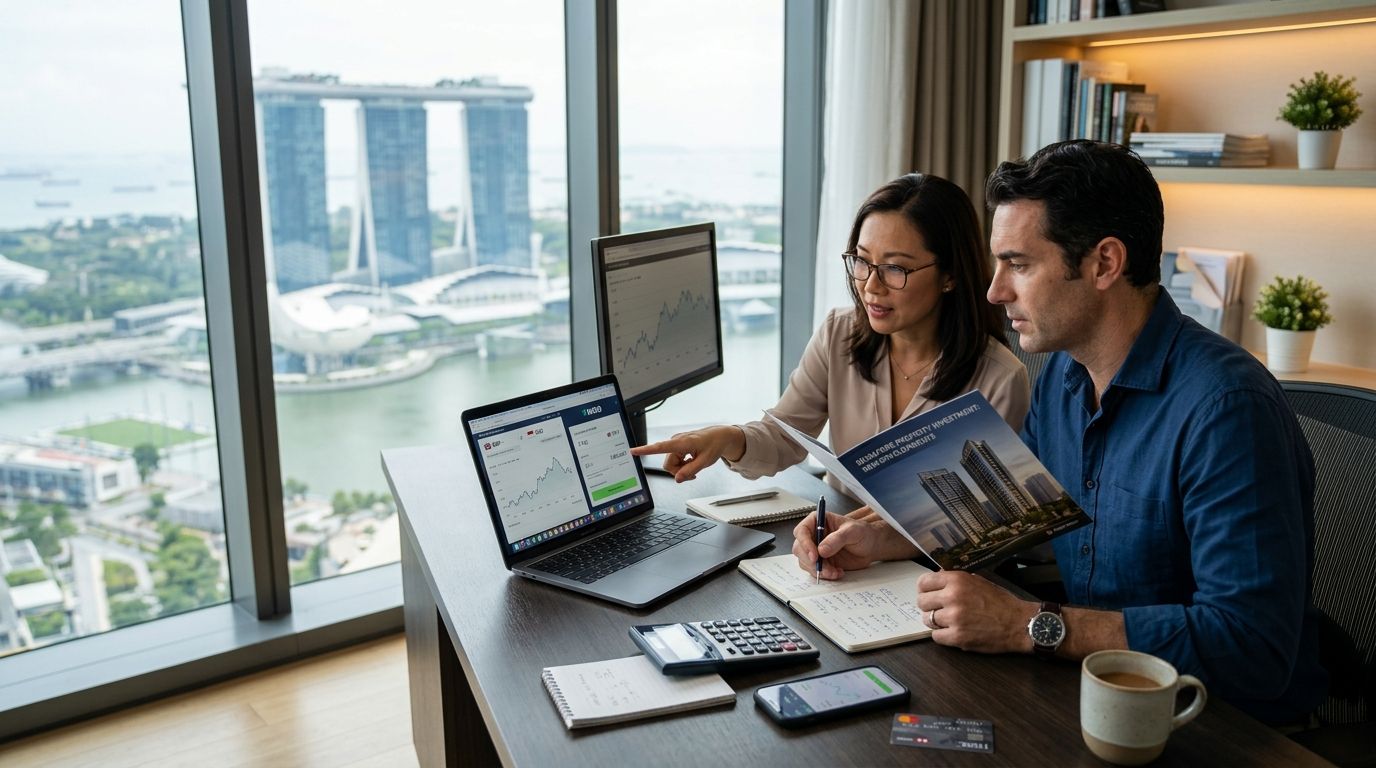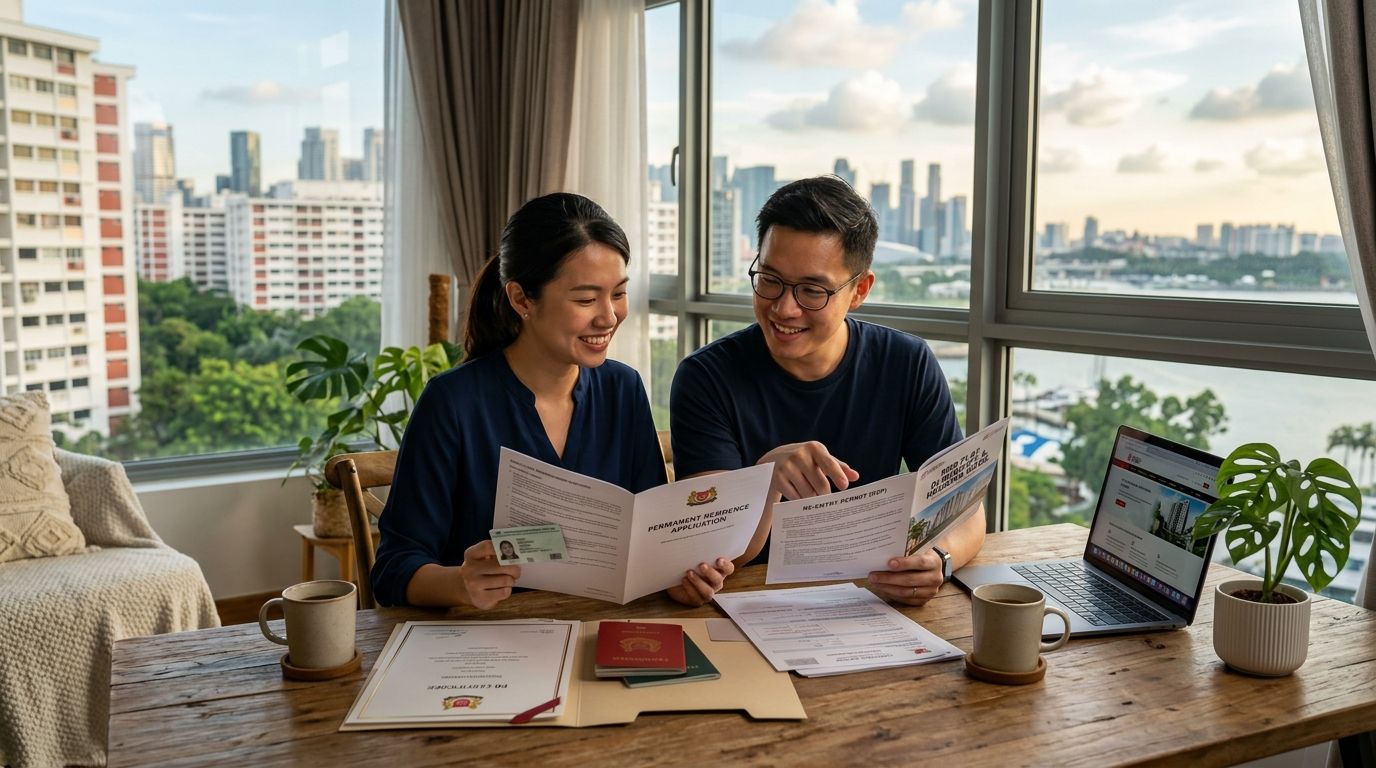
An en bloc sale forces every owner in a development, including foreign owners, to sell once the required consent threshold is met — and as a foreign owner you have the same legal standing as a Singaporean or PR owner under the Land Titles (Strata) Act, no fewer rights, no separate process. The catch that trips up most overseas owners isn't the vote itself, it's what happens after: how proceeds get transferred out, what Additional Buyer's Stamp Duty (ABSD) does to your next purchase, and how fast you need to move once the Strata Titles Board approves the sale.
- En bloc sale foreign property owner Singapore: you vote and get paid the same way as any citizen owner under the Land Titles (Strata) Act.
- Consent thresholds are 80% for developments over 10 years old and 90% for those 10 years or younger.
- Singapore has no capital gains tax, so en bloc proceeds aren't taxed as a capital gain.
- Foreigners buying a replacement property pay 60% ABSD as of the 2023 revision — factor this in before you sign anything.
- Objecting owners can appeal to the Strata Titles Board, but a foreign owner has no special veto beyond that process.
Why this matters
En bloc sales move fast once the majority signs. If you're based in London, Sydney, or Dubai and your only local footprint is a lawyer's inbox, missing a notice period or an objection deadline can cost you leverage on sale price or timing. I've seen overseas owners find out about a collective sale weeks after the sale committee formed, simply because the mailing address on file was outdated.
The other issue is money movement. Singapore doesn't restrict capital outflows and there's no capital gains tax on the sale, so the proceeds themselves aren't the hard part in 2026. The hard part is deciding what to do next — reinvest in Singapore and absorb 60% ABSD as a foreigner, or take the proceeds elsewhere and lose your foothold in the market entirely.
How to navigate an en bloc sale as a foreign property owner
The process runs on a fixed legal sequence regardless of who owns the unit. Here's how it plays out and where a foreign owner needs to pay closer attention.
| Stage | What happens | What a foreign owner should watch |
|---|---|---|
| Sale committee forms | Owners elect a committee, appoint a marketing agent and valuer | Confirm your contact details are current with the MCST |
| Collective Sale Agreement (CSA) signing | Owners sign to authorise the sale on agreed terms | Read the share value and sale proceeds formula before signing |
| Consent threshold reached | 80% (if development is over 10 years old) or 90% (10 years or younger) of share value and strata area must consent | Confirm which threshold applies — it changes based on the development's age, not yours |
| Tender or auction | Marketing agent runs the sale process | You have no separate role here unless you're on the committee |
| Strata Titles Board application | Committee applies for an order if the threshold is met but not unanimous | Objections must be filed within the statutory window — don't miss it |
| Completion and payout | Proceeds distributed per each owner's share value | Confirm how funds will be wired to you overseas and in what currency |
The consent threshold is the single number that decides whether you have a real say or not. Once it's hit, a dissenting minority — foreign or local — can only object through the Strata Titles Board, not block the sale outright.
80% consent threshold: developments over 10 years old
Most older condos and estates fall under this bracket. Once owners representing at least 80% of share value and 80% of total strata area sign the Collective Sale Agreement, the sale committee can proceed to apply for a Strata Titles Board order if needed. This is the threshold that applies to the majority of en bloc attempts in Singapore because most eligible developments are past the 10-year mark by the time an en bloc committee forms.
90% consent threshold: developments 10 years old or younger
Newer developments need a higher bar — 90% of share value and strata area. This threshold exists specifically to slow down premature en bloc attempts on buildings that haven't aged enough to justify redevelopment. If you bought into a newer project, an en bloc sale is statistically less likely in the near term, but not impossible if the site value has jumped.
Why en bloc outcomes vary for foreign owners
A handful of factors decide whether the process is smooth or a headache from overseas:
- Development age — sets whether you're under the 80% or 90% threshold
- Your registered mailing address — outdated details mean you miss committee notices and voting deadlines
- Currency and banking setup — how fast your bank can receive a large SGD wire affects how quickly you can redeploy the funds
- Whether you plan to reinvest in Singapore — triggers the 60% ABSD calculation for foreign buyers
- Legal representation — an overseas owner without a Singapore-based lawyer or agent tracking the timeline is the one most likely to miss an objection window
- Share value allocation — smaller or less favourably positioned units can receive a lower payout share even in a large collective sale
“The moment your development hits the 80% or 90% threshold, your only real leverage is the objection window at the Strata Titles Board — after that, the sale proceeds regardless of how you voted.”
Related questions
Do I need to be in Singapore to vote on an en bloc sale?
No, you don't need to be physically present — you can sign the Collective Sale Agreement and any subsequent documents through a lawyer holding your power of attorney. Most overseas owners handle the entire process remotely through their appointed solicitor, and the sale committee's marketing agent communicates by email once your contact details are registered correctly.
Will I pay tax on my en bloc sale proceeds as a foreign owner?
No, Singapore has no capital gains tax, so en bloc proceeds paid to a foreign owner in 2026 aren't taxed as a capital gain here. You should still check your home country's tax rules on foreign property disposals, since that obligation sits outside Singapore's tax system entirely.
What happens if I want to buy another property with the proceeds?
As a foreign buyer, you pay 60% ABSD on top of the purchase price under the current 2023 revision still in effect in 2026, which changes the return math significantly compared to reinvesting locally as a citizen or PR. Run the ABSD math before you decide whether to redeploy the sale proceeds in Singapore or elsewhere — the ABSD calculation for foreign buyers changes the breakeven point on any new purchase.
What to do before your development's en bloc committee forms
If your unit hasn't gone en bloc yet but you suspect it might, get ahead of the paperwork now rather than after the CSA lands in your inbox. Confirm the MCST has your current overseas address and email, and line up a Singapore lawyer who can act under a power of attorney if you can't sign in person. If the sale does go through, transferring ownership and proceeds when you're leaving Singapore involves separate paperwork from the en bloc payout itself — don't assume one process covers both.
Overseas landlords in particular tend to underestimate how much coordination an en bloc sale needs when you're not physically in Singapore to sign documents on short notice. Working with property agents experienced with overseas landlords closes that gap — someone local tracking notices, deadlines, and payout logistics on your behalf.
Get guidance on your en bloc sale
I help foreign owners track deadlines, proceeds, and next steps from overseas.
FAQ
What consent threshold applies to an en bloc sale in Singapore?
The threshold is 80% of share value and strata area for developments over 10 years old, and 90% for developments 10 years old or younger. This applies to every owner regardless of nationality.
Do foreign owners have fewer rights in an en bloc sale?
No, foreign owners have identical rights to citizen and PR owners under the Land Titles (Strata) Act. Voting, objection rights, and payout share value all work the same way.
Is en bloc sale money taxed in Singapore?
No, Singapore has no capital gains tax, so en bloc proceeds paid to a foreign owner aren't taxed as a capital gain in 2026. Check your home country's rules separately, since Singapore's tax exemption doesn't extend abroad.
How much ABSD will I pay if I reinvest en bloc proceeds in Singapore?
Foreign buyers pay 60% ABSD on a new Singapore property purchase under the 2023 revision still in force in 2026. Run this into your reinvestment math before committing to another purchase.
Can a foreign owner block an en bloc sale?
No single owner, foreign or local, can block a sale once the 80% or 90% threshold is met. Objections go to the Strata Titles Board within the statutory window, not to the sale committee.
Do I need to be in Singapore to complete en bloc paperwork?
No, you can sign through a lawyer holding your power of attorney while based overseas. Most foreign owners handle the entire sale remotely once their solicitor is appointed.
What happens to my proceeds if I'm leaving Singapore for good?
Proceeds are wired to your nominated account with no capital controls on the transfer. If you're also winding down other Singapore holdings, ownership transfer and en bloc payout are handled as separate processes.
Who decides how much each owner gets in an en bloc sale?
Payout is based on each unit's share value as registered with the MCST, not the purchase price you originally paid. Larger or better-positioned units typically carry a higher share value and larger payout.
One last thing
The part most foreign owners get wrong isn't the vote — it's assuming the payout is the finish line. If you're planning to buy again in Singapore, the 60% ABSD hit changes the math enough that some owners are better off parking the proceeds and renting for a year while they weigh options, rather than rushing into a replacement purchase. Run the numbers before you sign anything new.