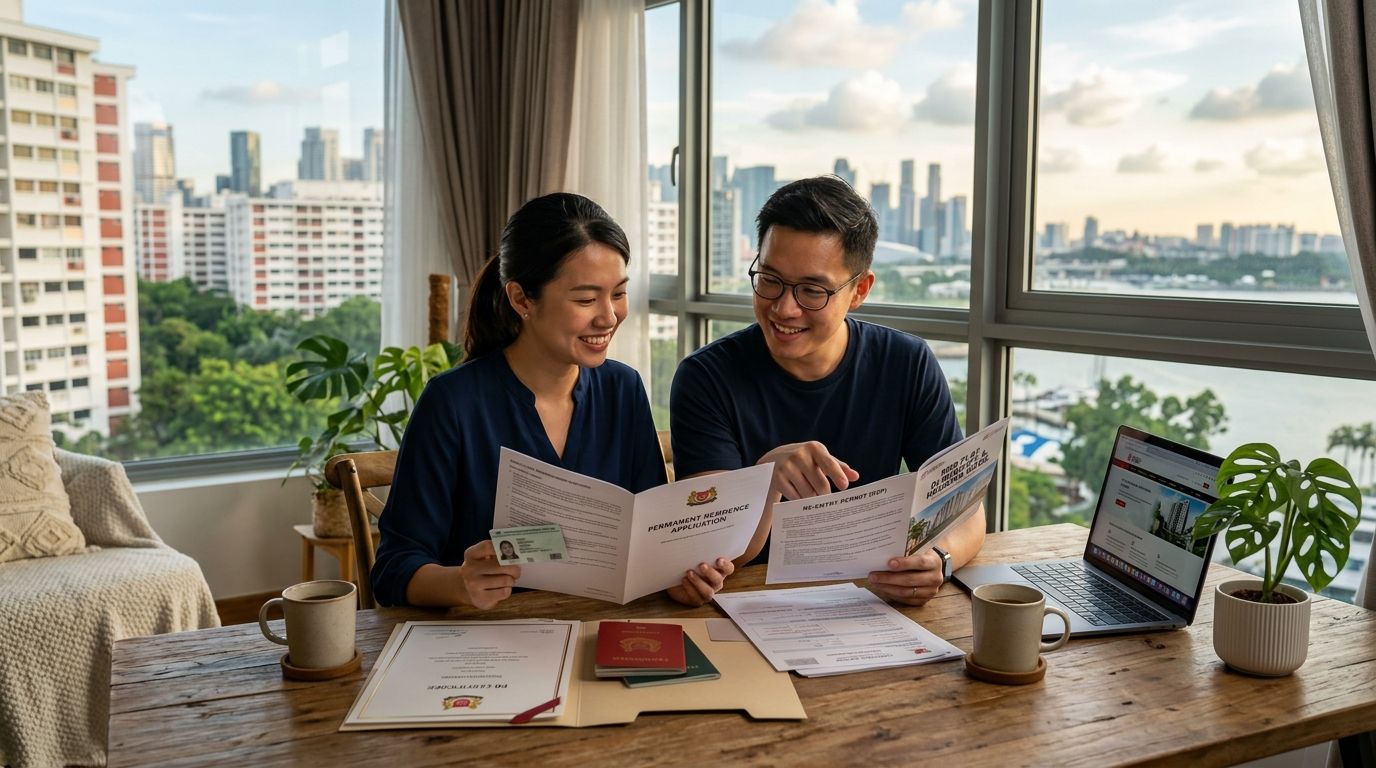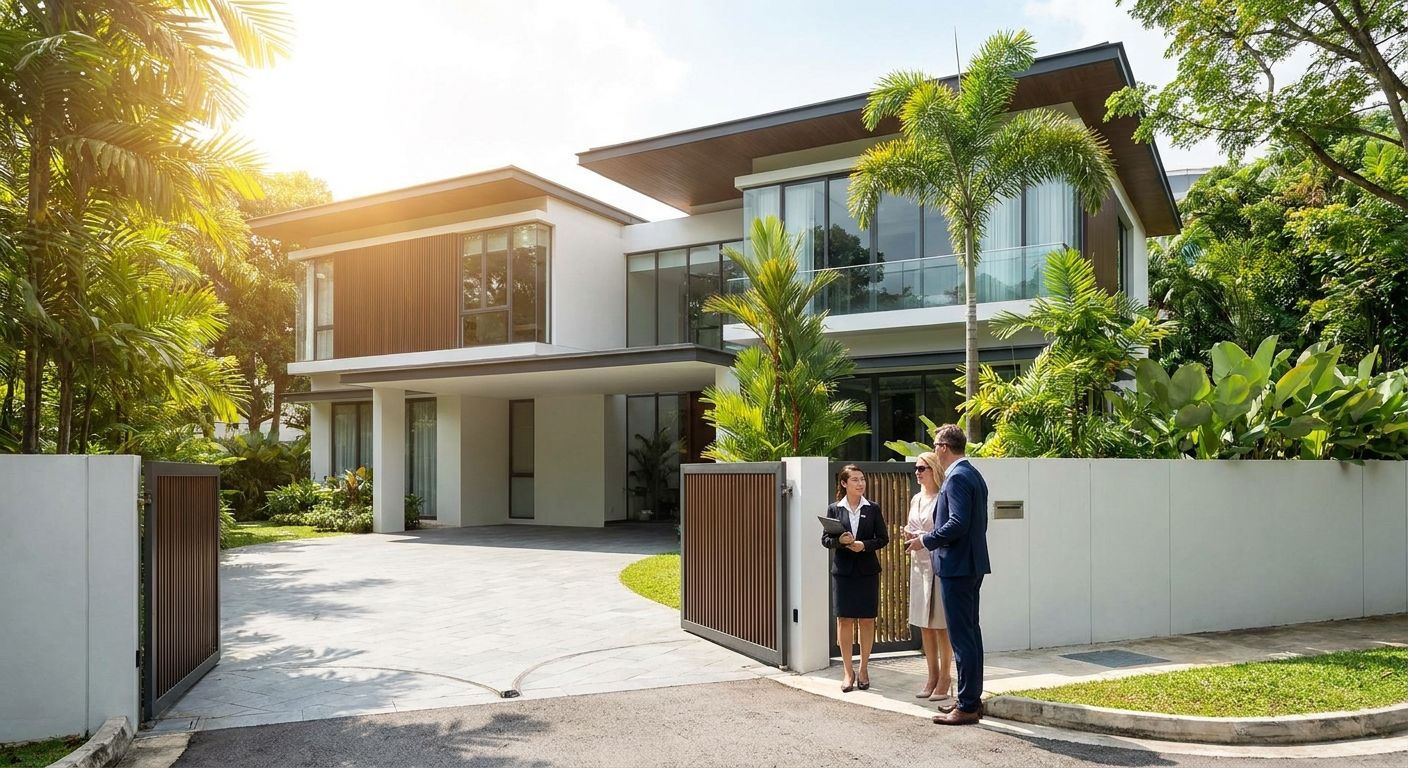
Foreigners cannot buy a Good Class Bungalow (GCB) in Singapore without approval from the Singapore Land Authority's Land Dealings Approval Unit (LDAU), and that approval is granted only in exceptional cases. The purchase price is only the starting cost — foreign buyers also pay 60% Additional Buyer's Stamp Duty on top, and the LDAU application itself can take months with no guarantee of a yes.
- Foreigners need LDAU approval under the Residential Property Act to buy a GCB in Singapore in 2026.
- Approval goes almost exclusively to applicants who show exceptional economic contribution to Singapore.
- Foreign buyers pay 60% Additional Buyer's Stamp Duty on top of the purchase price.
- GCBs sit on plots of at least 1,400 sq m across 39 gazetted GCB Areas.
- Singapore Permanent Residents face the same approval process, though a longer PR track record helps.
Why this matters
A Good Class Bungalow isn't just a big house — it's a category of landed property protected under Singapore's Residential Property Act, capped at roughly 2,800 plots citywide. The government treats landed land as a scarce national resource, which is why the rules for foreigners are tighter here than for any condo purchase. If you're weighing a GCB against a regular landed home or a condo, the guide to buying property in Singapore as a foreigner covers the baseline rules before you get into GCB-specific territory.
Most of the enquiries I get on this topic come from foreigners who've lived in Singapore for years, built a business here, and assumed that long residency alone unlocks landed ownership. It doesn't. The approval process looks at your contribution to Singapore, not your years on an Employment Pass.
How to buy a Good Class Bungalow as a foreigner in Singapore
There is no direct purchase path. Every foreigner — including Singapore Permanent Residents — must apply to the LDAU for approval before a GCB purchase can proceed, and the application is assessed case by case under criteria that favour applicants who've made a measurable economic contribution to Singapore.
| Route | Who it's for | Approval likelihood | Verdict |
|---|---|---|---|
| Direct foreign national purchase | Non-resident buyers with no PR status | Very low | Skip unless you have an exceptional economic case |
| Singapore PR purchase | PR holders, especially 5+ years | Low to moderate | Possible with strong local ties |
| Joint purchase with a citizen spouse | Foreigner married to a Singapore citizen | Moderate | The most realistic route for most applicants |
| Naturalise then buy | Foreigners open to citizenship | High — no LDAU approval needed | Long-term option only |
There's no shortcut through a company or trust structure either — the Residential Property Act's restrictions follow the beneficial owner, not the entity name on the title.
Foreign buyer route: 60% ABSD plus LDAU approval
Assuming approval is granted, a foreign buyer still pays 60% Additional Buyer's Stamp Duty on the purchase price, on top of standard Buyer's Stamp Duty. That rate has applied to foreign buyers since April 2023 and remains in force in 2026. Run the numbers before you commit — the ABSD calculation guide for foreign buyers breaks down how the duty stacks against other property types. Verdict: budget for it upfront, because financing rarely covers stamp duty.
Singapore PR route: 5-year residency test
PR applicants generally need a longer track record — LDAU assessments lean toward PRs who've held that status for five years or more and can show they've settled their lives in Singapore, not just their tax residency. A shorter PR history doesn't disqualify you outright, but it weakens the case. Verdict: hold, and build your residency and contribution record before applying.
Citizen-spouse route: joint ownership approval
When a foreigner is married to a Singapore citizen, a joint purchase application tends to fare better than a solo foreign application, because the citizen spouse's status carries weight in the LDAU's review. It still isn't automatic — the application goes through the same approval unit and the same scrutiny. Verdict: your best realistic shot if you qualify, but file the paperwork properly and expect questions.
Why GCB approval is hard to get
- Supply is fixed. GCBs sit across only 39 gazetted GCB Areas, mostly in districts 10, 11, 21 and 23, and the plot count doesn't grow.
- Minimum plot size is 1,400 sq m. That size requirement alone keeps GCBs out of reach for most landed-home buyers, foreign or local.
- The bar is economic contribution, not wealth. Having the cash isn't the test — LDAU wants evidence you've contributed to Singapore's economy, through investment, employment creation, or comparable impact.
- No financing workaround exists. Banks won't lend against a GCB purchase that hasn't cleared LDAU approval, so the sequence matters — approval first, financing second.
- Company and trust structures don't bypass the rule. The restriction tracks the beneficial owner, so incorporating a Singapore entity doesn't open the door.
- The 60% ABSD applies regardless of approval difficulty. Getting approved doesn't reduce the stamp duty bill — it just lets you proceed to pay it.
“Approval for a GCB purchase isn't about how much cash you have — it's about what you've built in Singapore.”
Can Singapore PRs buy a GCB more easily than other foreigners?
Singapore PRs face the same LDAU approval process as any other foreigner, though a PR of five years or more with demonstrated local ties generally has a stronger case than a recent PR or a non-resident applicant. PR status alone isn't approval — it's one factor the LDAU weighs alongside your economic contribution.
How much is ABSD on a GCB for foreigners in 2026?
Foreign buyers pay 60% Additional Buyer's Stamp Duty on a GCB purchase in 2026, the same rate that applies to any residential property bought by a non-citizen since the April 2023 revision. That's calculated on the higher of the purchase price or market value, before standard Buyer's Stamp Duty is added on top.
Can I buy a GCB through a company to avoid the foreigner restriction?
No — a company or trust structure does not bypass the Residential Property Act's foreigner restriction, because approval requirements follow the beneficial owner behind the entity. The LDAU reviews who actually controls and benefits from the purchase, not just whose name sits on the title deed.
If you're weighing whether a GCB approval process is worth pursuing versus other landed or non-landed options open to foreigners, that's a conversation worth having with someone who's filed these applications before — not something to figure out from a search result. I work through the best property investment options for foreigners in Singapore with clients who want landed exposure without betting everything on a GCB approval that may not come through.
Weighing a GCB purchase or an alternative?
I help foreign buyers map out realistic landed and condo options in Singapore.
FAQ
Can a foreigner buy a Good Class Bungalow in Singapore in 2026?
A foreigner can only buy a Good Class Bungalow in Singapore with approval from the Land Dealings Approval Unit (LDAU), and that approval is rare in 2026. Applicants typically need to show a significant economic contribution to Singapore before the application is even considered.
What is the minimum plot size for a GCB?
A Good Class Bungalow sits on a minimum plot size of 1,400 sq m under Singapore's planning guidelines. That requirement, combined with the fixed number of gazetted GCB Areas, keeps overall supply small.
How many GCB Areas are there in Singapore?
There are 39 gazetted Good Class Bungalow Areas in Singapore, concentrated mostly in districts 10, 11, 21 and 23. The boundaries are fixed, which is part of why GCB land rarely comes to market.
Do Singapore PRs need approval to buy a GCB?
Yes, Singapore Permanent Residents go through the same LDAU approval process as other foreigners to buy a GCB. A PR of five years or more with demonstrated local ties generally has a stronger case than a recent PR.
How much ABSD does a foreigner pay on a GCB?
A foreign buyer pays 60% Additional Buyer's Stamp Duty on a GCB purchase in 2026, on top of standard Buyer's Stamp Duty. That rate applies to any residential property bought by a non-citizen, not just GCBs.
Can I buy a GCB jointly with my Singapore citizen spouse?
Yes, a joint purchase with a Singapore citizen spouse is generally the most realistic route for a foreigner, though the application still goes through LDAU review. Approval isn't automatic just because one party is a citizen.
Is it easier to buy a GCB after becoming a Singapore citizen?
Yes, Singapore citizens do not need LDAU approval to buy a Good Class Bungalow, which makes naturalisation the only route that removes the approval requirement entirely. It's a long-term decision, not a quick workaround.
Can a company buy a GCB to avoid the foreigner restriction?
No, buying through a company or trust does not avoid the restriction because LDAU approval requirements follow the beneficial owner behind the structure. The unit reviews who actually controls and benefits from the property.
One last thing
The detail that surprises most applicants: LDAU approval decisions don't come with a published checklist. There's no fixed income threshold or investment figure that guarantees a yes — the assessment is discretionary, case by case, which is exactly why a well-prepared application with clear evidence of economic contribution matters more than the size of your bank balance. Most foreign buyers who chase a GCB without that groundwork spend months on an application that was never going to clear.