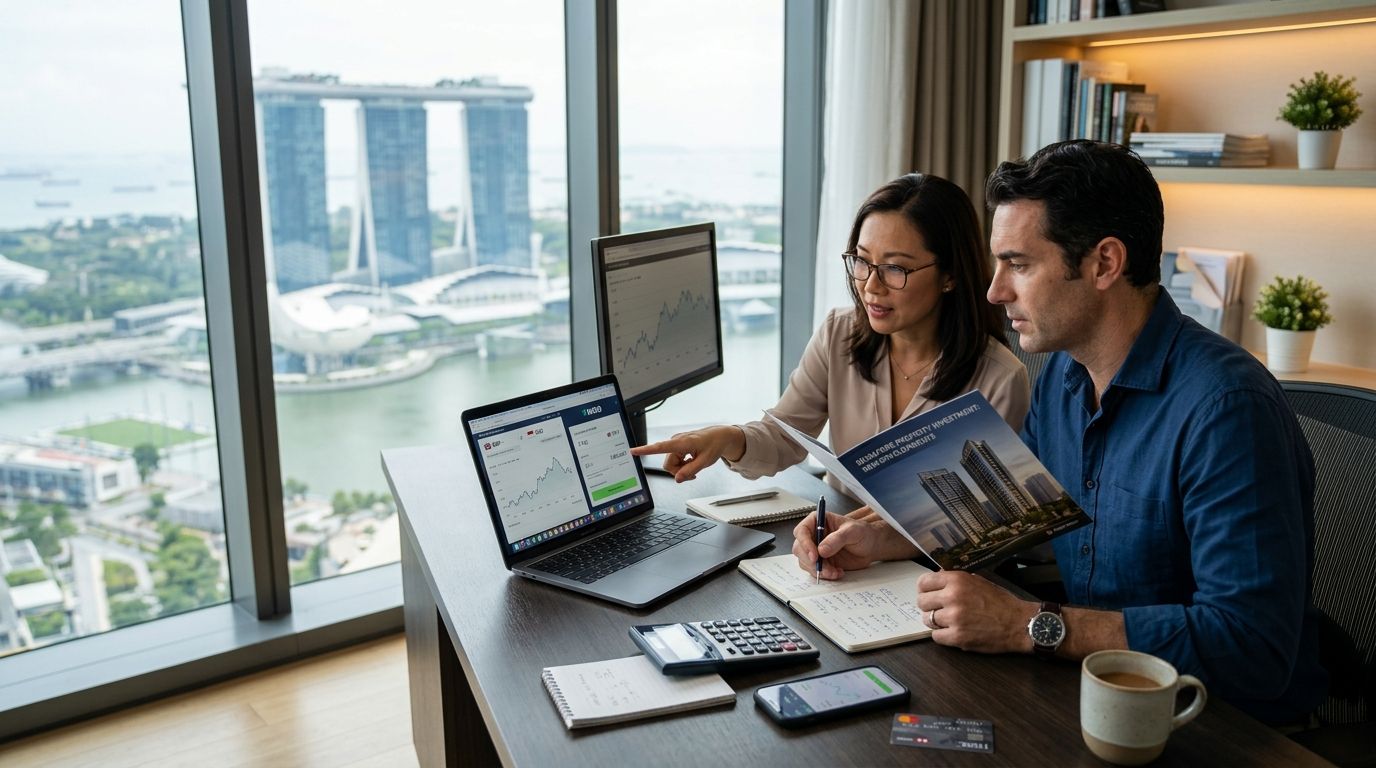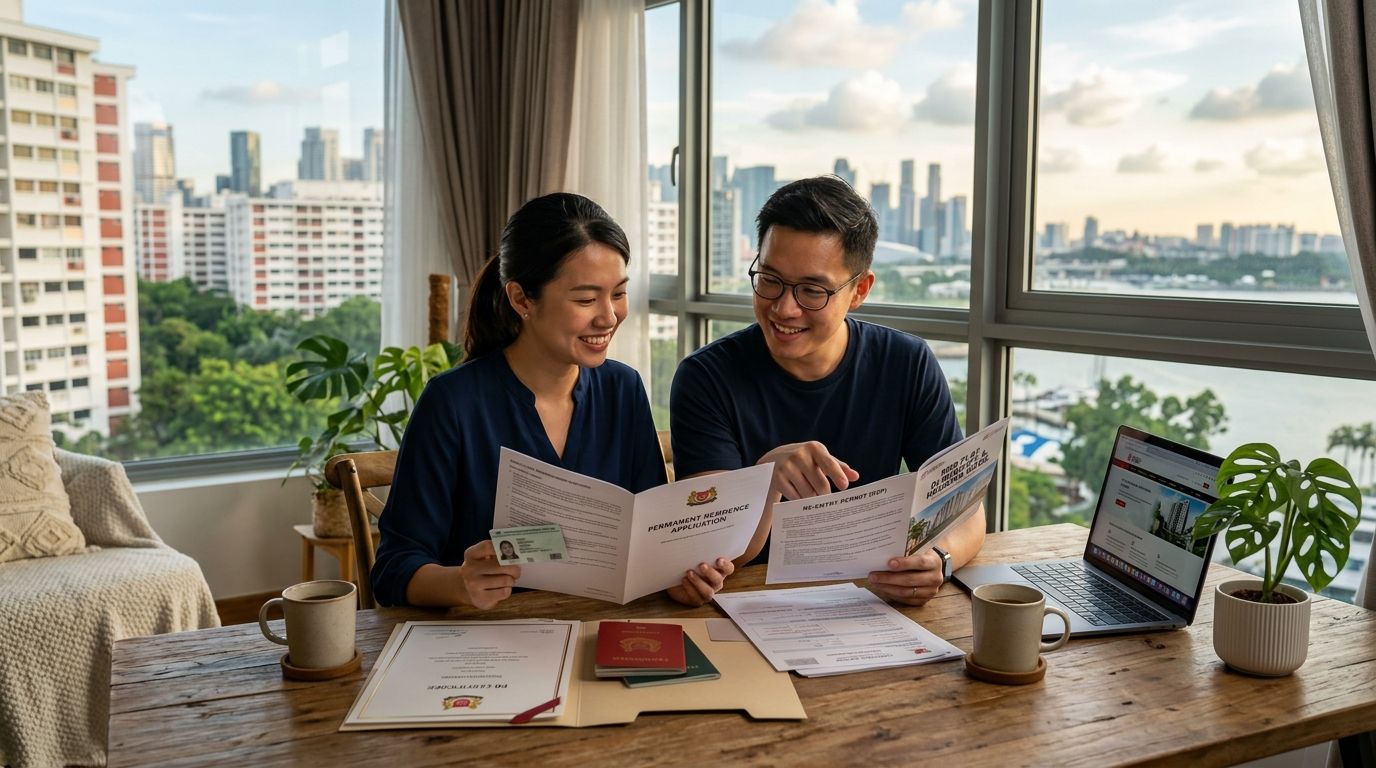
Foreigners can buy a shophouse in Singapore in 2026 without approval under the Residential Property Act, as long as the unit is zoned for pure commercial use. The exception that trips people up: a shophouse with an approved residential upper floor stops counting as purely commercial, and Additional Buyer's Stamp Duty comes straight back into the picture.
- Fully commercial shophouses need no government approval for foreign buyers in Singapore in 2026 — landed-property rules under the Residential Property Act don't apply.
- Mixed-use shophouses with residential upper floors trigger Additional Buyer's Stamp Duty on the residential-use portion, commonly 60% for foreign individual buyers.
- Buyer's Stamp Duty applies to every shophouse purchase on a tiered scale, regardless of the buyer's nationality.
- GST at 9% can apply on top of the purchase price if the seller is a GST-registered entity.
- TDSR loan limits don't apply to commercial property financing, but banks lend smaller quantums and shorter tenures than they do for condo mortgages.
Why this matters
Most foreigners buying property in Singapore run straight into the Residential Property Act — it blocks non-citizens from buying landed houses, terrace units, and bungalows without Singapore Land Authority approval, and it caps them to condos and apartments otherwise. Shophouses sit outside that Act entirely when zoned as commercial property, which is why they've become a workaround for foreign investors who want a tangible Singapore asset without the approval process that applies to buying property in Singapore as a foreigner in the landed segment.
That freedom comes with a trade-off: shophouses are commercial-grade transactions. You're dealing with URA zoning records, conservation status, and — if the unit has a residential component — a stamp duty bill that looks nothing like a condo purchase. Get the zoning wrong before you sign the Option to Purchase and the ABSD exposure can blindside you months later.
Can a foreigner buy a shophouse in Singapore?
Yes — a foreign individual or foreign company can buy a shophouse in Singapore in 2026 with no Singapore Land Authority approval required, provided the property is zoned and approved for commercial use only. The process runs differently from a condo purchase in a few specific spots:
- Pull the URA zoning and land use records first. Confirm whether the shophouse is approved for commercial use only, or whether the upper floors carry approved residential use — this single detail decides your ABSD bill.
- Check conservation status. Most shophouses in districts like Chinatown, Joo Chiat, Kampong Glam, and Tanjong Pagar fall under URA conservation guidelines, which restrict exterior alterations regardless of who owns the unit.
- Engage a lawyer before exercising the Option to Purchase. Conveyancing on commercial property carries different clauses than residential contracts, particularly around tenancy handover if the shophouse is tenanted.
- Confirm the ABSD position with IRAS if there's any residential-use component. Don't rely on the listing agent's word — get it apportioned in writing.
- Line up commercial financing. Banks assess shophouse loans differently from home loans, and not every bank lends against every shophouse type.
- Complete stamp duty and legal handover. Buyer's Stamp Duty is payable regardless of zoning; GST may apply separately if the seller is GST-registered.
Commercial-only shophouses vs mixed-use shophouses
The zoning classification is the single biggest variable in a shophouse purchase. Here's how the two common types compare for a foreign buyer:
| Shophouse type | Foreign approval needed | ABSD exposure | Best for |
|---|---|---|---|
| Fully commercial (retail/office/F&B use throughout) | No | None | Investors wanting pure commercial exposure — Buy |
| Mixed-use (commercial ground floor, approved residential upper floor) | No, but treated partly as residential for tax purposes | Applies to the residential-use portion, commonly 60% for foreign buyers | Owner-operators wanting a live-work setup — Verify with IRAS before committing |
Verdict: a fully commercial shophouse is the cleaner buy for a foreign investor in 2026 — no approval process, no ABSD, and financing that banks understand well. A mixed-use unit can still work, but only after you've confirmed the exact ABSD apportionment with IRAS in writing.
“If the shophouse still has a residential-use upper floor, you're not buying commercial property — you're buying a hybrid, and ABSD treats it that way.”
Why shophouse purchase rules vary
The rules that apply to your specific shophouse depend on a handful of factors, and no two shophouse listings look identical on paper:
- Zoning and approved use — commercial-only vs mixed commercial-residential changes your entire tax exposure.
- Conservation status — a URA-conserved shophouse restricts what you can change on the facade and roofline, unrelated to ownership nationality.
- Seller's GST registration — if the seller is GST-registered, GST at 9% applies on the purchase price on top of stamp duty.
- Ownership structure — buying in a personal name vs through a company changes financing terms and, in some cases, ABSD treatment.
- District and tenancy status — a tenanted shophouse in the CBD carries different due diligence than a vacant unit in a conservation district.
Do foreigners need approval to buy a shophouse in Singapore?
No, foreigners do not need Singapore Land Authority approval to buy a shophouse in Singapore in 2026, as long as the property is zoned for commercial use only. That approval requirement is specific to landed residential property under the Residential Property Act — it doesn't extend to commercial-use shophouses, which is one reason they're a common entry point for foreign buyers who can't otherwise touch landed housing here.
Can foreigners get a mortgage for a shophouse purchase?
Yes, foreign buyers can get commercial property financing for a shophouse purchase from Singapore banks, and the Total Debt Servicing Ratio framework that caps residential home loans doesn't apply to commercial loans. Banks still assess each shophouse individually — loan quantum and tenure vary by lender, by the property's conservation status, and by whether the buyer is purchasing personally or through a company, so it's worth checking how to qualify for a home loan in Singapore as a foreigner against commercial lending terms before assuming the numbers transfer.
Should foreign investors buy a shophouse through a company?
Buying through a company is common among foreign shophouse investors because it can simplify financing and ownership transfer, though it changes your stamp duty and tax treatment compared to a personal purchase. The right structure depends on your investment horizon and whether you plan to hold the shophouse long-term or resell — worth working through with a lawyer before you commit to buying Singapore property through a company rather than in your own name.
Talk through a shophouse purchase
Get zoning, ABSD and financing checked before you make an offer.
FAQ
Do foreigners pay ABSD on shophouses in Singapore?
Foreigners don't pay Additional Buyer's Stamp Duty on a shophouse that's zoned purely commercial. ABSD only applies to the residential-use portion of a shophouse, so a mixed-use unit with an approved residential upper floor can carry an ABSD bill commonly around 60% of that portion's value for foreign buyers in 2026.
Is a shophouse considered residential or commercial property?
A shophouse is classified based on its approved use, not its appearance — a unit approved for retail, office, or F&B use throughout is commercial property, while one with an approved residential upper floor is treated as mixed-use. Check the URA use classification before assuming either way.
Are shophouses in Singapore freehold or leasehold?
Shophouses in Singapore come in both freehold and leasehold tenure, and tenure varies significantly by district and by the original land grant. Always confirm tenure through the title deed rather than assuming from location alone.
Can foreigners buy conservation shophouses in Singapore?
Yes, foreigners can buy conservation shophouses in Singapore, but any exterior renovation or structural change needs approval under URA conservation guidelines regardless of the owner's nationality. Interior works have more flexibility, but the facade and roofline are protected.
Does GST apply when buying a shophouse in Singapore?
GST at 9% can apply when buying a shophouse in Singapore if the seller is a GST-registered entity, and it's charged on top of the purchase price and Buyer's Stamp Duty. It doesn't apply if the seller is an individual who isn't GST-registered.
How is a shophouse different from buying a condo as a foreigner?
A shophouse purchase runs on commercial property rules — no Residential Property Act approval, different financing terms, and stamp duty that depends on zoning — while a condo purchase for a foreigner follows the standard residential ABSD and TDSR framework. The two processes rarely overlap beyond the basic conveyancing steps.
Can a foreign company buy a shophouse in Singapore?
Yes, a foreign-owned company can buy a commercial-use shophouse in Singapore without the approval that applies to landed residential property. Financing terms and stamp duty treatment differ from a personal purchase, so structure the entity before making an offer, not after.
One last thing
The detail most foreign buyers miss isn't the ABSD math — it's that a shophouse's approved use can be different from what the current tenant is actually doing inside it. A ground floor listed as a cafe with staff quarters upstairs doesn't automatically mean the upper floor has approved residential status; sometimes it's just storage the landlord never declared. Pull the URA use classification yourself before you exercise the Option to Purchase in 2026 — don't take the listing description at face value.