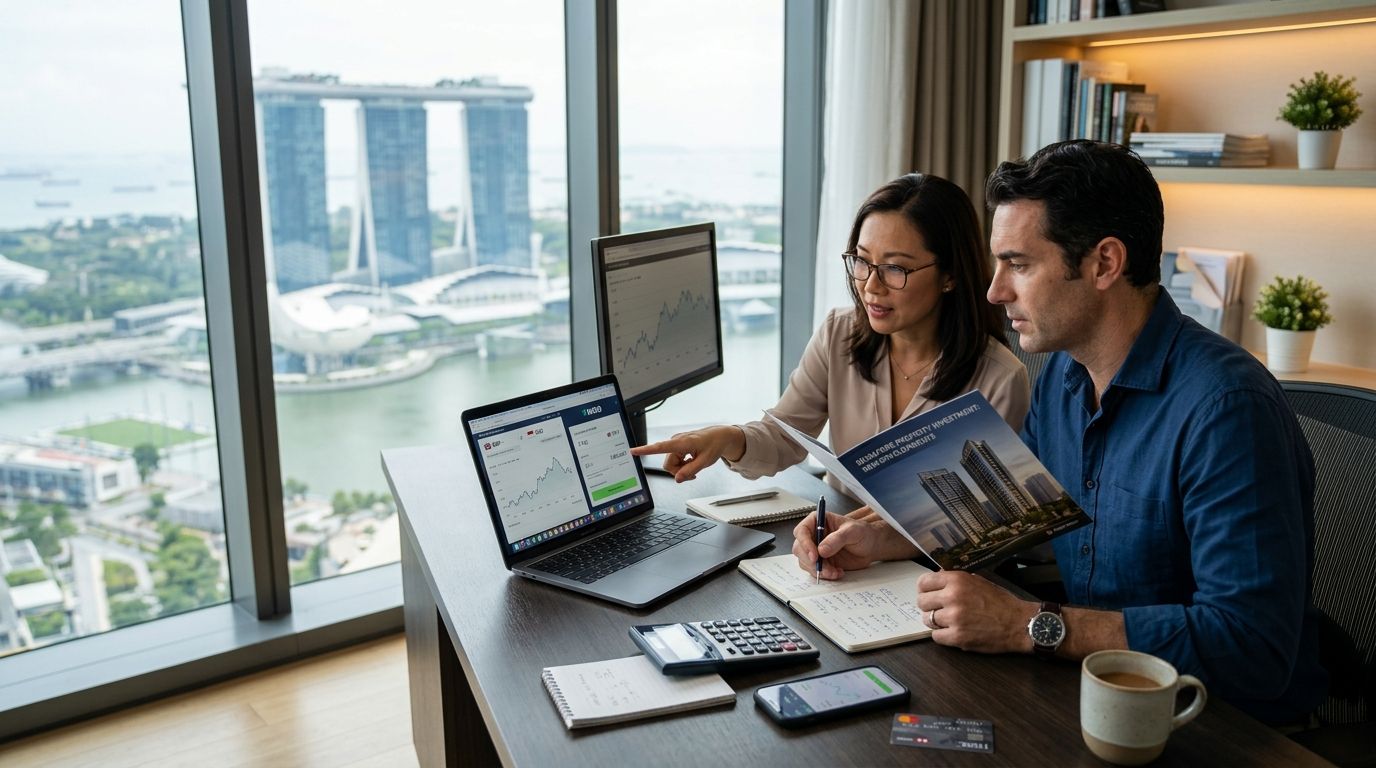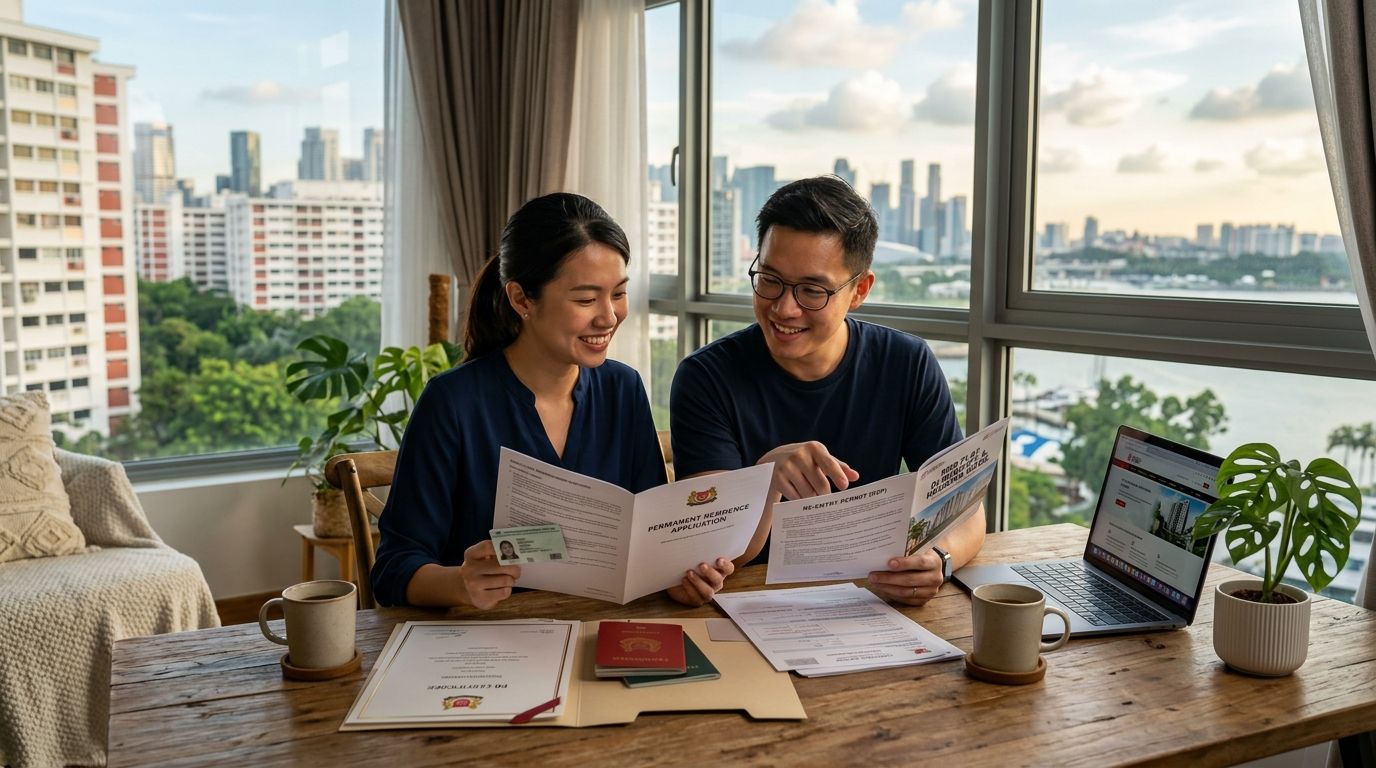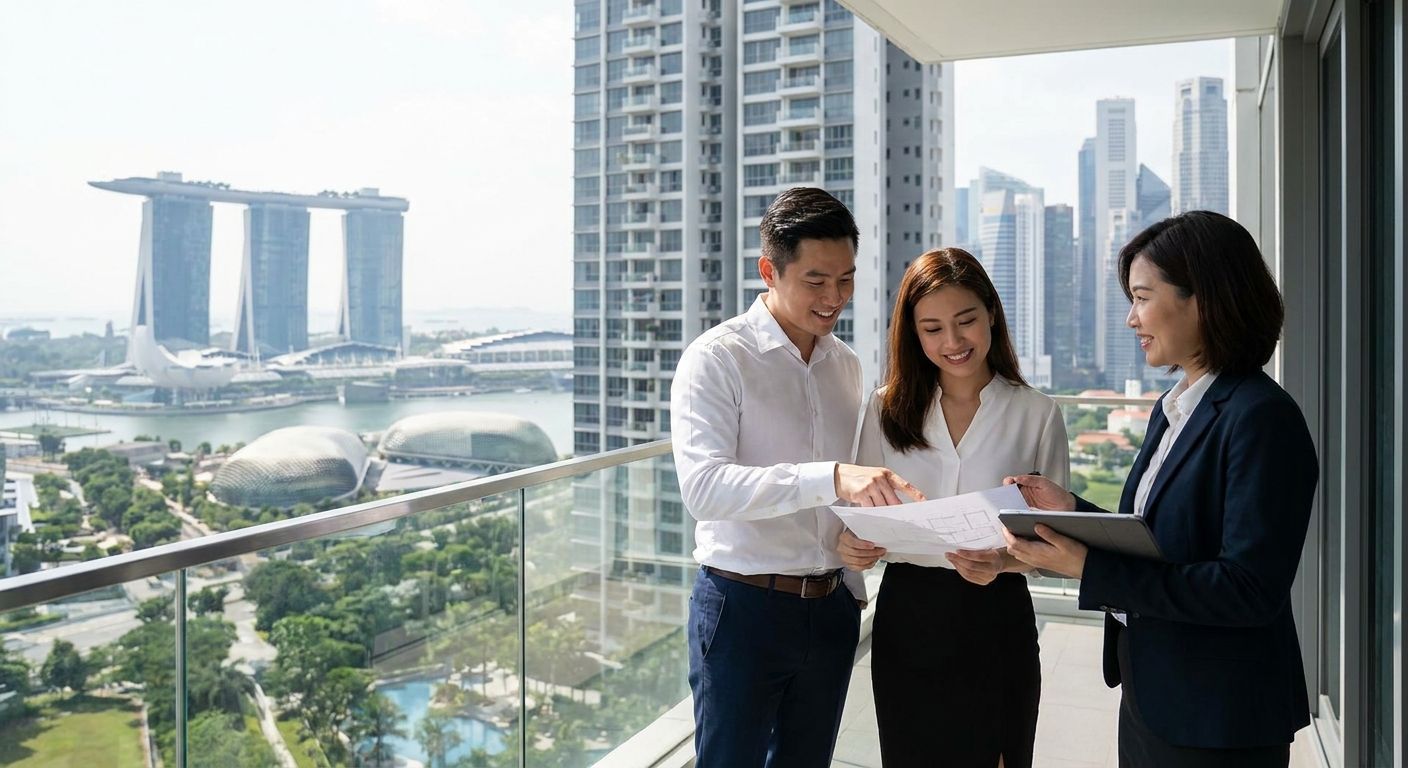
Chinese national buyers purchasing property in Singapore in 2026 count as non-resident foreigners under Singapore law, which means private condos and apartments are wide open to you, HDB flats are closed to you entirely, and most landed houses need government approval you likely won't get. On top of that sits a 60% Additional Buyer's Stamp Duty and, separately, China's own limit on how much money you can move out of the country in a single year.
- This property buying guide for Chinese nationals in Singapore covers who can buy what, and the verdict is private condos yes, HDB no.
- Foreign Buyer's Stamp Duty (ABSD) sits at a flat 60% in 2026, layered on top of Buyer's Stamp Duty that runs 1% to 6%.
- China's SAFE quota caps individual outward remittance at $50,000 USD a year - map your transfers before you sign an Option to Purchase.
- Marrying a Singapore citizen does not automatically waive the 60% ABSD - remission has conditions and a clawback period.
- Work with a Singapore agent and lawyer who have actually closed deals with mainland Chinese buyers before, not just handled expat leases.
Why this matters for Chinese national buyers
Most foreign buyer guides in Singapore are written for Americans, Brits, or Indian professionals on an Employment Pass, and the tax math is the same for everyone. What's different for Chinese nationals is the money side: getting funds out of China legally, in a size that matches a Singapore condo price, on a timeline that matches an Option to Purchase deadline.
A UK or Australian buyer wires money from an account with no annual outbound cap. A Chinese national is working against China's State Administration of Foreign Exchange (SAFE) quota of $50,000 USD per person per year, and that number does not stretch to cover a typical Singapore condo down payment on its own. Get this wrong and you're the buyer who signs an Option to Purchase and then can't fund it on time.
The second difference is exit planning. Many Chinese buyers are thinking about their children's schooling, a Singapore-based business, or simply a stable asset outside the yuan - which changes what "best district" and "best property type" mean compared to a buyer who's here for a three-year corporate posting and gone.
Confirm what you're actually allowed to buy
Check this before you fall in love with a listing, not after.
- Private non-landed condos and apartments: open to any foreigner, no approval needed.
- HDB flats: closed to you completely unless you hold Singapore PR status and meet the family nucleus rules - a Chinese national on any visa short of PR cannot buy one.
- Landed houses (bungalows, terraces, semi-detached): restricted under the Residential Property Act; foreigners need approval from the Singapore Land Authority, which is granted case by case and rarely for straightforward personal use.
- Sentosa Cove landed property: one of the few pockets where foreigners can hold landed title without the same blanket approval barrier - but stock is limited and prices sit at the top of the market.
- Commercial and mixed-use units: no ABSD applies here, which is why some Chinese investors look at shophouses or commercial strata instead of residential.
The full mechanics, including what counts as "foreigner" under the Act, are in my guide to buying property in Singapore as a foreigner.
Budget for the full stamp duty stack, not just the price tag
The purchase price is the smallest number in this deal once tax lands.
- Buyer's Stamp Duty (BSD) is tiered from 1% on the first $180,000 up to 6% on any amount above $3,000,000.
- Additional Buyer's Stamp Duty (ABSD) for foreigners is a flat 60% of the purchase price, unchanged since the April 2023 revision.
- ABSD is due within 14 days of exercising the Option to Purchase - not at completion, so the cash needs to already be in Singapore.
- Legal fees, valuation, and agent commission sit on top and are usually a few thousand dollars, not a percentage that moves with price.
- If you're buying jointly with a Singapore citizen spouse, ask about ABSD remission early - it has conditions and a clawback if the citizen spouse disposes of another property within a set window.
Plan around China's capital controls before you plan around Singapore's bank
This is the step most guides skip, and it's the one that actually derails Chinese buyers.
- Confirm your $50,000 USD annual SAFE quota status and whether you've already used part of it this year.
- Spread remittances across family members' quotas legitimately if the purchase price requires it, and keep documentation for each transfer.
- Time transfers across a calendar year boundary if your Option to Purchase deadline allows it - quotas reset annually.
- Work only through licensed banks on both ends; informal transfer arrangements create title and financing problems later.
- Build a 2-3 month buffer between when you start moving money and when ABSD and the balance purchase price fall due.
Sort your financing options as a foreign buyer
Don't assume a Singapore bank mortgage works the same way it does back home.
- Loan-to-value limits for foreigners are lower than for citizens and PRs, so expect to fund a larger cash portion upfront.
- Banks want documented, verifiable overseas income - payslips and tax filings that match what you're declaring.
- Some private banks offer mortgages tied to assets you already hold in Singapore, which can bypass income-verification friction.
- Paying cash removes the loan question entirely but concentrates your capital-control problem into one larger transfer.
The qualification criteria foreign buyers actually get judged on are laid out in my guide to qualifying for a home loan in Singapore as a foreigner.
Shortlist districts and property types that suit your actual goals
What "best district" means changes depending on why you're buying.
- If you're buying for your children's schooling, prioritize proximity to the schools you've already shortlisted over prestige of address.
- If you're buying as a store of value outside the yuan, freehold status matters more for resale liquidity down the line than a marginally better floor plan.
- New launches offer progressive payment schedules that ease the capital-control timing problem; resale units close faster but need full funding sooner.
- Core Central Region addresses carry higher entry prices and higher ABSD-adjusted cost, but also the deepest resale pool if you need to exit.
Engage a property agent who has actually closed deals with mainland Chinese buyers
This is where most Chinese buyers get burned - not on the property, on the process.
- Ask directly how many Chinese national clients the agent has closed transactions for, not just expats generally.
- Confirm the agent coordinates timing with your remittance bank and your lawyer, not just the seller's agent.
- Check they can communicate in Mandarin or through WeChat if that removes friction for you - this matters more than it sounds.
- Make sure they explain the Option to Purchase timeline in plain terms before you sign anything, including exactly when ABSD is due.
A good agent for a Chinese national buyer in 2026 is judged on how well they manage the money timeline, not just how many units they show you. I lay out what to look for in a real estate agent for foreign investors in Singapore.
Buying as a Chinese national in Singapore
I coordinate the stamp duty, financing, and remittance timeline in one conversation.
Complete due diligence before signing the Option to Purchase
Once you exercise the OTP, the clock is running and the ABSD bill follows within 14 days.
- Engage a Singapore-qualified conveyancing lawyer independent of the seller's or developer's lawyer.
- Verify title, outstanding mortgages, and any caveats lodged against the unit.
- Confirm ABSD remission conditions in writing if you're relying on a Singapore citizen spouse's exemption.
- Know the timeline: the Option to Purchase typically runs about two weeks, and completion on a resale unit usually follows eight to ten weeks after that.
Property options for Chinese national buyers in Singapore
| Option | Best for | Foreign ownership rule | Key limitation |
|---|---|---|---|
| Private condo (resale) | buyers who want to move fast and see real rental comparables | Open to all foreigners | 60% ABSD applies in full |
| Private condo (new launch) | buyers who want a progressive payment schedule that eases remittance timing | Open to all foreigners | Completion is years out; ABSD is still due upfront |
| Landed house (outside Sentosa Cove) | buyers set on land ownership | Requires Singapore Land Authority approval, rarely granted | Approval can take months with no guarantee |
| Sentosa Cove landed | buyers wanting land without the blanket approval barrier | Foreigners can buy without the standard approval requirement | Limited stock, high entry price |
| HDB resale flat | not an option for a Chinese national without PR | Closed to non-PR foreigners entirely | Not available at any budget |
Verdict for most Chinese national buyers in 2026: a freehold or 99-year leasehold private condo in a district with a deep resale pool is the practical choice - it's the option every step above actually applies to without a permissions fight.
Common mistakes Chinese national buyers make
- Budgeting only the purchase price, then discovering the 60% ABSD is due within 14 days of exercising the Option to Purchase, with no room to negotiate the timing.
- Assuming money moves as freely as it does domestically in China, then hitting the $50,000 USD SAFE quota wall mid-transaction.
- Buying at a new launch showroom under sales-event pressure without comparing resale prices for similar units nearby.
- Assuming a long-term visa or family ties create HDB eligibility - only PR status with the family nucleus rules met opens that door, and it still doesn't apply to a foreign national alone.
- Skipping independent legal review because the developer's or seller's lawyer "seems straightforward" - conflicts of interest show up in the fine print, not the sales brochure.
FAQ
Can a Chinese national buy property in Singapore in 2026?
Yes, a Chinese national can buy private condos and apartments in Singapore in 2026 without approval, but not HDB flats and not most landed houses without government sign-off.
How much is ABSD for a Chinese national buyer?
The Additional Buyer's Stamp Duty for a foreign buyer, including Chinese nationals, is a flat 60% of the purchase price, unchanged since the April 2023 revision and still in effect in 2026.
Can Chinese nationals buy HDB flats in Singapore?
No, HDB resale flats are closed to non-PR foreigners entirely. A Chinese national needs Singapore PR status and to meet the family nucleus rules before HDB ownership is even possible.
How does China's capital control affect buying property in Singapore?
China's SAFE quota limits individual outward remittance to $50,000 USD per person per year, which rarely covers a full Singapore condo purchase on its own and needs to be planned around well before the Option to Purchase deadline.
Can foreigners get a mortgage in Singapore?
Yes, but foreign buyers face lower loan-to-value limits than citizens and PRs, and banks require documented overseas income before approving financing.
Does marrying a Singapore citizen remove the 60% ABSD?
Not automatically. ABSD remission for a jointly purchased matrimonial home has conditions attached, including a clawback period if the citizen spouse disposes of another property within a set window.
Can a Chinese national buy landed property in Singapore?
Only with approval from the Singapore Land Authority in most of the country, which is granted case by case, or on Sentosa Cove where the approval barrier is lower and stock is limited.
One last thing
The detail Chinese buyers miss most often isn't the 60% ABSD - most people know that number going in. It's that marrying a Singapore citizen doesn't wipe out the ABSD automatically; remission has conditions and a clawback period tied to the citizen spouse's other property, and finding that out after the Option to Purchase is signed is the expensive way to learn it. Get the remission terms in writing before you rely on them.