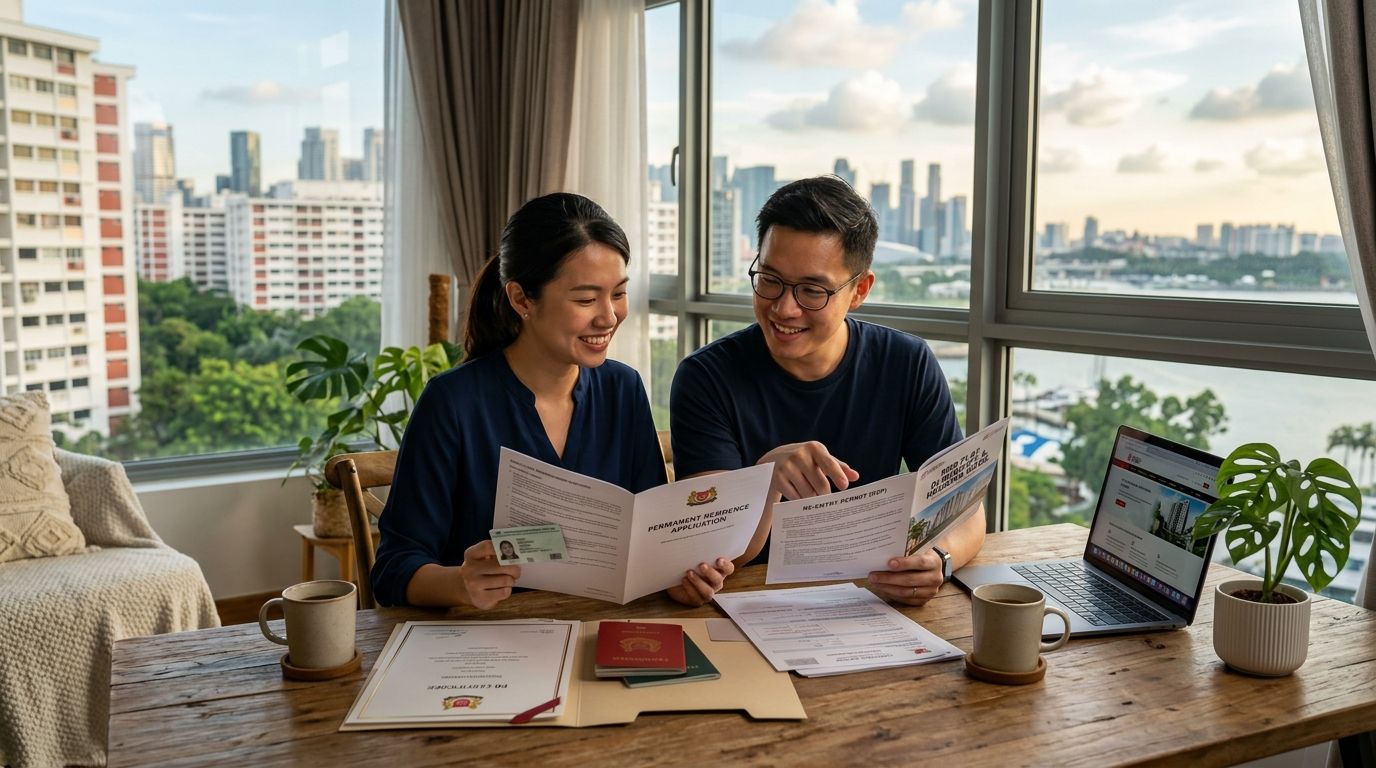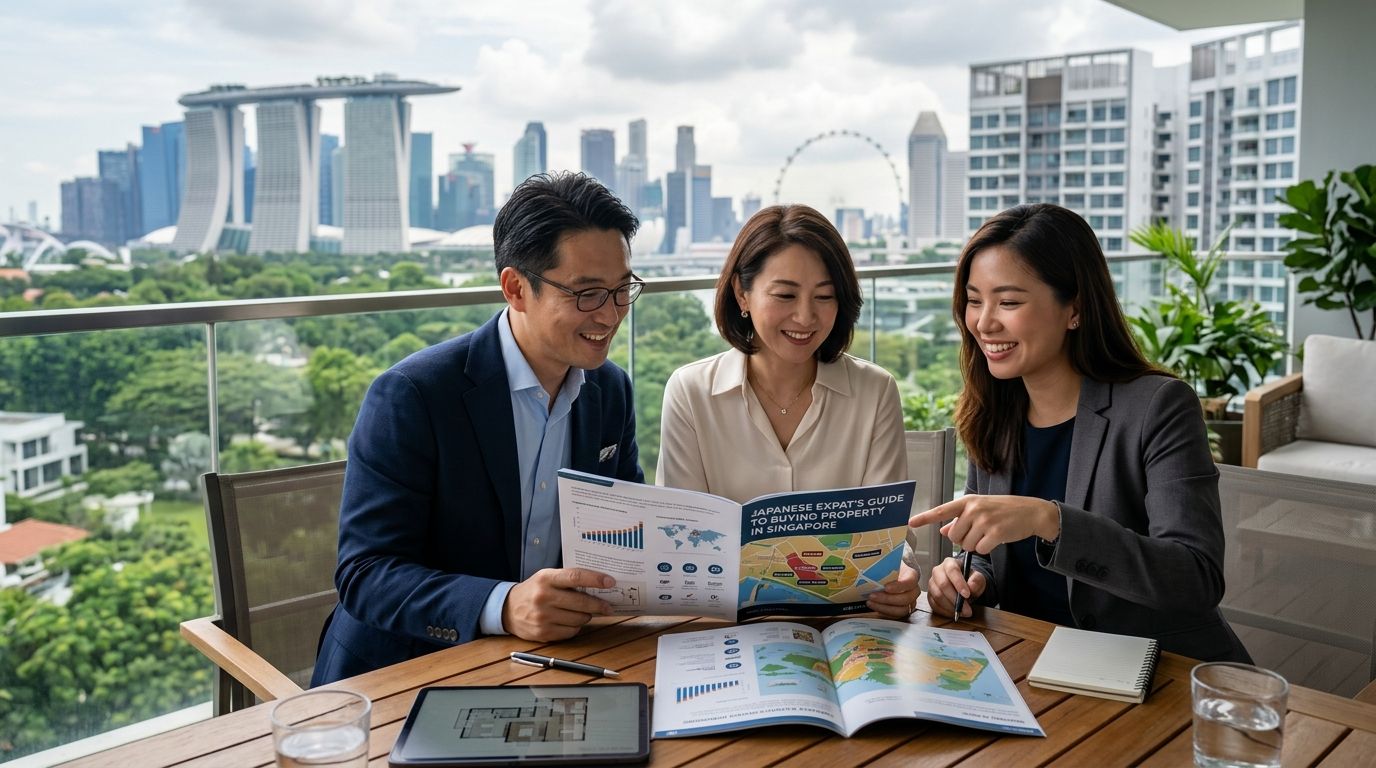
Japanese expat property buying in Singapore means navigating a 60% foreign buyer stamp duty, freehold condo restrictions, and financing rules that differ sharply from what you'd face back in Tokyo or Osaka. Unlike American buyers, who get treated like Singapore citizens under a trade agreement exemption, Japanese nationals pay the full foreigner rate on every residential purchase here in 2026 — and I want you walking in knowing that number before you fall for a unit.
- Japanese nationals pay the full 60% Additional Buyer's Stamp Duty on Singapore residential property in 2026 — there's no trade-agreement exemption like US buyers get.
- Foreigners can buy condos and apartments freely but need government approval for landed homes outside Sentosa Cove.
- Financing for non-residents typically caps loan-to-value lower than what citizens and PRs get, so budget more cash upfront.
- Districts near the Japanese School Singapore in Clementi and expat clusters in River Valley and Novena see steady demand from this buyer group.
- A CEA-registered agent who's handled Japanese clients before saves you from ABSD miscalculations and legal missteps.
Why this matters for Japanese expats
Japan isn't on Singapore's short list of Free Trade Agreement countries — the US, Iceland, Liechtenstein, Norway and Switzerland — whose nationals are taxed like Singapore citizens for stamp duty purposes. That single fact changes your entire budget. A Japanese buyer purchasing a S$2 million condo pays an Additional Buyer's Stamp Duty on top of the standard Buyer's Stamp Duty, and I've seen clients discover this only after they've made an offer.
Most Japanese expats I work with arrive on an Employment Pass tied to a regional HQ posting, often with a company that's had a Singapore presence for years. That stability matters to banks assessing your loan, and it shapes which districts make sense — proximity to the Japanese School Singapore, Japanese supermarkets in Liang Court or Suntec, and Japanese-speaking clinics tends to weigh heavily in where families settle.
Confirm your eligibility before you fall in love with a unit
What you're allowed to buy depends entirely on your residency status, not your nationality alone.
- Employment Pass or S Pass holders: eligible to buy private condos and apartments, not HDB flats
- Singapore Permanent Residents: eligible for resale HDB flats after a three-year PR waiting period, plus private property
- Landed property (bungalows, terrace houses): requires Singapore Land Authority approval, rarely granted outside Sentosa Cove
- Sentosa Cove landed homes: the one landed category foreigners can buy with fewer restrictions
- Check your specific pass conditions against the rules on buying property in Singapore as a foreigner before you shortlist anything
Budget for the 60% stamp duty line item
This is the step that catches Japanese buyers off guard most often, because nothing comparable exists in Japan's property tax structure.
- Run the full calculation early, not after you've signed an Option to Purchase
- Factor in the standard Buyer's Stamp Duty on top of ABSD — it's a separate charge
- Confirm whether your company's relocation package covers any part of this cost
- Compare buying against renting first if the ABSD math doesn't pencil out yet — the guide on calculating Additional Buyer's Stamp Duty for foreign buyers walks through the exact formula
- Ask whether structuring the purchase differently changes your exposure — it rarely eliminates ABSD but can affect timing
Get financing pre-approved before you shop
Banks in Singapore assess foreign buyers differently than citizens, and pre-approval tells you your real ceiling.
- Non-residents typically face a lower loan-to-value ratio than citizens and PRs
- Your Employment Pass validity period affects loan tenure — a shorter pass can mean a shorter loan term
- Income documentation from a Japanese employer needs translation and often notarization
- Compare at least two or three banks before committing, since foreigner rates vary more than citizen rates
- The step-by-step on qualifying for a home loan in Singapore as a foreigner covers documentation banks ask for most
Choose freehold vs leasehold with your timeline in mind
Japan doesn't really have a leasehold concept at this scale, so this trips up a lot of first-time buyers from Tokyo.
- Freehold condos hold value better over a 20-30 year horizon but cost more per square foot
- 99-year leasehold units are the majority of the private market and depreciate faster past year 60
- If your posting is open-ended, freehold protects resale value when you eventually leave
- If you're on a fixed 3-5 year assignment, leasehold in a strong district often makes more financial sense
- Factor in en-bloc redevelopment potential — older leasehold estates sometimes get bought out collectively
Shortlist districts near Japanese community anchors
Where you buy shapes daily life more than the unit itself, especially with school-age kids.
- Districts near the Japanese School Singapore in Clementi suit families prioritizing the Japanese curriculum
- River Valley and Orchard-adjacent condos put you near Japanese supermarkets and restaurants
- Novena and Newton work well for shorter commutes to CBD-based regional offices
- Check the roundup of condos near international schools for expat families if school proximity is your main filter
- Visit at different times of day — traffic near school pickup zones changes the picture completely
Engage a CEA-registered agent who knows the foreigner process
Do-it-yourself is possible in Singapore's transparent market, but the paperwork sequence — Option to Purchase, exercise period, Sale and Purchase Agreement, ABSD payment deadline — has hard cutoffs that penalize mistakes.
- Confirm the agent is registered with the Council for Estate Agencies (CEA)
- Ask for references from other Japanese or Japanese-speaking clients if language support matters to you
- A good agent flags ABSD, loan timelines, and legal deadlines before you're locked into an Option to Purchase
- I handle this end-to-end for clients relocating from Japan, and it's usually the difference between a stress-free closing and a scramble in the final week
Complete legal due diligence before you commit
The legal side in Singapore moves faster than in Japan, and deadlines are unforgiving once you've exercised the Option to Purchase.
- Engage a conveyancing lawyer the same week you sign the Option to Purchase
- Confirm the ABSD payment deadline — typically within 14 days of exercising the option
- Review the Sale and Purchase Agreement clause by clause, not just the price and completion date
- Check for any outstanding management fees or disputes tied to the unit before completion
Comparison: property types for Japanese buyers in Singapore
| Property Type | Best For | Foreigner Eligibility | Key Limitation |
|---|---|---|---|
| Private condo (leasehold) | Shorter postings, 3-5 years | Open to EP/S Pass holders and PRs | Value depreciates faster after year 60 of the lease |
| Private condo (freehold) | Open-ended assignments, resale value | Open to EP/S Pass holders and PRs | Higher upfront price per square foot |
| Sentosa Cove landed home | Buyers wanting a landed lifestyle | One of the few landed categories foreigners can buy | Smaller resale pool, niche market |
| HDB resale flat | Long-term PRs with local family ties | PR only, after 3-year wait | Not available to Employment Pass holders at all |
Verdict: for most Japanese Employment Pass holders in Singapore in 2026, a leasehold condo in a district near the Japanese School Singapore or River Valley is the practical starting point — Sentosa Cove and freehold units suit buyers with a longer runway and bigger budget.
Get buying guidance for your move
I'll walk you through ABSD, financing, and district shortlisting before you sign anything.
Common mistakes Japanese expats make
- Assuming FTA treatment: unlike US nationals, Japan has no stamp duty exemption — budgeting without the full 60% ABSD derails deals late
- Underestimating the loan-to-value gap: expecting citizen-level financing terms and getting caught short on cash at completion
- Skipping the Sale and Purchase Agreement review: relying on the agent's summary instead of a lawyer's line-by-line read
- Overlooking lease decay: buying a leasehold unit past its 60-year mark without checking how that affects future resale or bank financing
- Comparing to US expat rules: reading a guide written for US expats buying property in Singapore and assuming the same ABSD treatment applies
FAQ
How much stamp duty do Japanese nationals pay to buy property in Singapore?
Japanese nationals pay the full 60% Additional Buyer's Stamp Duty on residential property in 2026, on top of the standard Buyer's Stamp Duty. Japan isn't part of the Free Trade Agreement exemption that covers US, Swiss, Norwegian, Icelandic, and Liechtenstein buyers.
Can Japanese expats buy HDB flats in Singapore?
No, Employment Pass and S Pass holders cannot buy HDB flats. Only Singapore Permanent Residents qualify for resale HDB flats, and only after a three-year PR waiting period.
Is it better to rent or buy as a Japanese expat in Singapore?
For assignments under five years, renting usually beats buying once you factor in the 60% ABSD and resale costs. Buying makes more sense for open-ended postings or when you plan to keep the property as a long-term investment.
Can Japanese buyers get a landed house in Singapore?
Landed property outside Sentosa Cove requires Singapore Land Authority approval, which is rarely granted to foreigners. Sentosa Cove is the main landed category open to foreign buyers with fewer restrictions.
How does financing differ for Japanese expats versus Singapore citizens?
Non-resident foreigners typically get a lower loan-to-value ratio than citizens and PRs, meaning more cash needed upfront. Loan tenure can also be tied to your Employment Pass validity period.
Which districts do Japanese expat families prefer in Singapore?
Districts near the Japanese School Singapore in Clementi, plus River Valley and Novena for Japanese supermarkets and shorter CBD commutes, see the most demand from this group in 2026.
Do I need a CEA-registered agent to buy property in Singapore?
It's not legally required but strongly recommended, since agents registered with the Council for Estate Agencies know the ABSD deadlines and paperwork sequence that trip up foreign buyers.
What happens if I miss the ABSD payment deadline?
Late ABSD payment triggers penalty interest and can jeopardize the transaction entirely. The deadline is typically within 14 days of exercising the Option to Purchase, so confirm it with your lawyer immediately after signing.
One last thing
The detail most Japanese buyers miss isn't the 60% ABSD — most people find that number eventually. It's that the ABSD deadline sits inside the Option to Purchase exercise window, not after your loan closes, so the cash needs to be ready weeks before you'd assume in a Japanese property transaction. I plan for that upfront with every client so it never becomes a last-minute scramble.