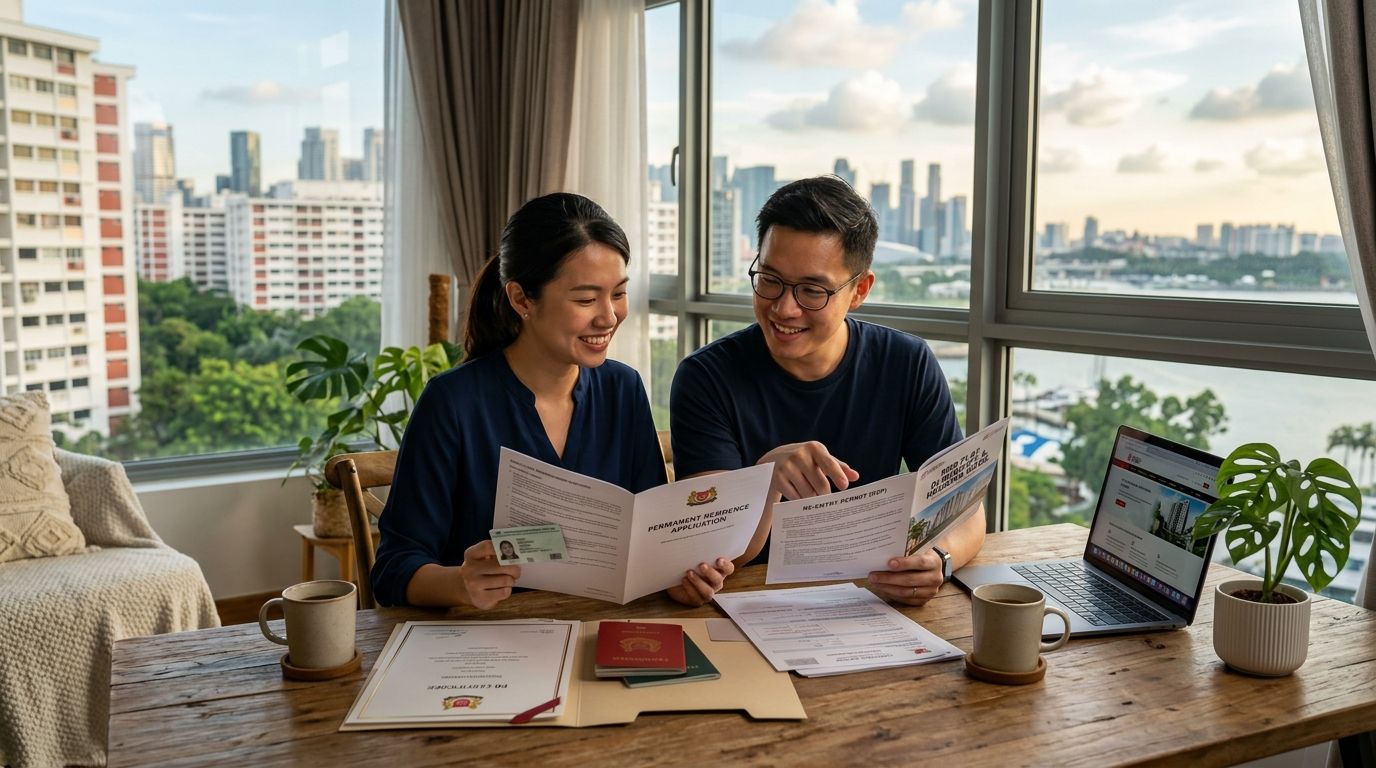
Middle East investors buying property in Singapore are parking capital in one of the few Asian markets where ownership rules are published, taxes are predictable, and rental income clears in a currency the Monetary Authority of Singapore manages against a basket of trading partners rather than a single peg. Investors from the UAE, Saudi Arabia, Qatar, and Kuwait face a different cost stack than a Singaporean or PR buyer — a 60% Additional Buyer's Stamp Duty, restricted access to landed housing, and financing rules built around foreign income verification rather than local payslips.
That cost stack scares off buyers who don't plan for it and barely dents the ones who do. The difference between the two groups usually comes down to picking the right best property investment options for foreigners before signing anything.
- Singapore charges foreign buyers a 60% Additional Buyer's Stamp Duty as of 2026, so price it in before you shortlist.
- Landed property stays off-limits for foreigners except in Sentosa Cove, and even that needs Singapore Land Authority approval.
- Company-held purchases change your financing and stamp duty math versus buying as an individual.
- Property investment for Middle East investor Singapore deals works best when financing is confirmed before you tour units, not after.
- No capital gains tax applies on Singapore property sales in 2026, which is the main reason the 60% ABSD still pencils out for long holders.
Why property investment matters for Middle East investors
Gulf wealth has historically leaned on real estate as a hedge against currency and political risk closer to home, and Singapore sells exactly that: a AAA-rated sovereign backdrop, English-language contracts, and a court system foreign owners can actually use if a dispute comes up. None of that is unique to 2026, but the 60% ABSD rate is recent enough that a lot of Middle East buyers are still pricing deals off older, lower numbers.
The other constraint that matters here is access. Landed housing — bungalows, terraces, semi-detached homes — is restricted to Singapore citizens under the Residential Property Act, with foreigners needing Singapore Land Authority approval and Sentosa Cove as close to the only exception. That single fact reroutes most Middle East capital into condominiums, whether new launch or resale, which is why the shortlisting step below matters more for this segment than for a domestic buyer who has the whole market open to them.
Singapore remains one of the few Asian markets where a Middle East investor can buy, hold, and exit property with full transparency and no capital gains tax — the tradeoff is a stamp duty bill that has to be funded up front, not amortized.
How to invest in Singapore property as a Middle East investor
Confirm what you're actually allowed to buy
Eligibility rules in Singapore aren't uniform across property types, and assuming they are is the fastest way to waste three weeks on a unit you can't purchase.
- Condominium and apartment units: open to foreign buyers with no special approval needed
- Landed housing (bungalows, terraces): restricted to citizens, with narrow exceptions
- Sentosa Cove landed property: the main route to landed ownership for foreigners, subject to Singapore Land Authority sign-off
- Good Class Bungalows: closed to foreign buyers entirely, citizens only
- HDB flats: off-limits to foreigners unless you hold Singapore PR status
Price in the full cost of buying as a foreigner
The headline purchase price is the smallest number in the transaction once stamp duties land. Budget for these line items before you commit to a unit:
- Additional Buyer's Stamp Duty at 60% for foreign buyers in 2026
- Buyer's Stamp Duty on top of ABSD, calculated on a tiered scale
- Legal conveyancing fees for the sale and purchase agreement
- Property agent commission where applicable
- Ongoing property tax, billed annually on the annual value of the unit
Work through how to calculate Additional Buyer's Stamp Duty for foreign buyers before you make an offer, not after.
Decide whether to buy as an individual or through a company
Middle East investors consolidating several Singapore assets often ask about buying through an entity rather than a personal name, and the answer depends on what you're optimizing for.
- Personal ownership: simpler paperwork, standard ABSD treatment, easier resale later
- Company ownership: useful for consolidating multiple units or aligning with a family office structure
- Corporate ABSD rates run higher than the individual foreign-buyer rate, so this only pays off at scale
- Financing terms for company-held property differ from individual mortgages and usually need separate bank underwriting
Run the numbers against structuring a Singapore property purchase through a company before you pick a structure and stay locked into it.
Shortlist the right property type and district
With landed housing closed off, most Middle East capital lands in condominiums, and the district choice does more work than the unit finishes.
- New launch condos for buyers prioritizing capital appreciation and lower entry-point renovation costs
- Resale condos in established districts for buyers who want a tenant in place quickly
- Districts near the CBD and Orchard Road for rental demand from finance and consulting expats
- Freehold versus 99-year leasehold tenure, which affects resale value on a longer hold
- Proximity to international schools if the property is meant for eventual family use, not just rental income
Line up financing before you shortlist
Foreign buyers get offered lower loan-to-value ratios than citizens and PRs, and banks want foreign income documentation sorted before they'll issue an in-principle approval.
- Confirm loan-to-value terms with more than one bank — they vary by lender for foreign applicants
- Have income and asset documentation translated and notarized ahead of the application
- Ask whether the bank offers multi-currency mortgage options if your income is in a Gulf currency
- Get an in-principle approval before you make any offer, not after
Bring in a property agent who works with foreign investors regularly
You can search listing portals and cross-reference URA transaction data yourself, and some Middle East investors do exactly that for the first pass. Where it gets slower is verifying developer track records, checking for encumbrances, and negotiating price on a unit you're viewing over video call from Dubai or Riyadh.
- Public listing portals and URA caveats for a first-pass shortlist
- Developer sales galleries for new launch units, direct
- A real estate agent for foreign investors in Singapore for due diligence, negotiation, and closing coordination when you're buying remotely
- Legal counsel independent of the seller's side for the sale and purchase agreement
Run due diligence on the unit and the developer
A unit that looks right on a floor plan can still carry problems that only show up on inspection or in the title search.
- Title search to confirm the seller actually owns what they're selling
- Physical inspection or a video walkthrough with someone you trust on the ground
- Developer track record on past project completions and defect rates
- Maintenance fund health for resale condos with an active management corporation
- Outstanding mortgage or lien checks against the unit
Plan your holding and exit strategy from day one
How you plan to exit changes what you should buy today, and this is the step Middle East investors skip most often.
- Rental hold: target districts with strong expat tenant demand and stable vacancy rates
- Medium-term flip: new launch units carry appreciation potential but tie up capital during construction
- Long-term legacy hold: freehold units in established districts age better than leasehold stock
- Eventual sale from overseas: confirm the process for transferring property ownership when leaving Singapore before you need it
Which Singapore property option fits your goals
| Option | Best for | Key limitation |
|---|---|---|
| New launch condo | Investors prioritizing capital appreciation | Completion timeline sits with the developer, not the buyer |
| Resale condo | Buyers wanting a tenant in place quickly | Older units may need renovation before renting out |
| Sentosa Cove landed property | High-net-worth buyers wanting landed living | One of the only landed routes open to foreigners, and still needs Singapore Land Authority approval |
| Company-held property | Investors consolidating multiple Singapore assets | Corporate ABSD and financing rules differ from individual ownership |
| Good Class Bungalow | Ultra-high-net-worth domestic buyers | Restricted to Singapore citizens, not available to foreign buyers |
Talk to an agent who handles foreign investors
Get help shortlisting, financing, and closing from wherever you are.
Common mistakes Middle East investors make
- Pricing the deal off old ABSD figures. The 60% rate has been in effect since April 2023 and still catches buyers who ran their numbers a few years back.
- Assuming landed property is on the table. Most Middle East investors discover the Residential Property Act restriction after they've already fallen for a bungalow listing.
- Financing after the offer, not before. Banks move slower on foreign income verification, and an offer without an in-principle approval behind it loses to a cash-ready bidder.
- Buying through a company by default. The corporate ABSD rate is higher, and it only makes sense once you're holding multiple assets, not for a single unit.
- Skipping the on-ground inspection. A video walkthrough is not a substitute for someone checking the maintenance fund and the unit's physical condition before you wire a deposit.
FAQ
Can Middle East investors buy property in Singapore?
Yes, foreigners including Middle East investors can buy condominium and apartment units in Singapore without special approval. Landed property stays restricted to citizens, with Sentosa Cove as the main exception, and it requires Singapore Land Authority sign-off.
What is the Additional Buyer's Stamp Duty for foreign investors in 2026?
Foreign buyers pay a 60% Additional Buyer's Stamp Duty on top of the standard Buyer's Stamp Duty. This rate has applied since April 2023 and still catches investors working from older figures.
Can foreigners buy landed property in Singapore?
Generally no. Landed housing is restricted to Singapore citizens under the Residential Property Act, with Sentosa Cove the practical exception for foreign buyers, subject to government approval.
Is it better to buy Singapore property through a company or as an individual?
Individual ownership is simpler and carries the standard foreign-buyer ABSD rate, while company ownership only makes financial sense once you're consolidating several Singapore assets under one structure, since corporate ABSD runs higher.
Do Middle East investors need to be in Singapore to buy property?
No, remote purchases are common, but they lean harder on a property agent and independent legal counsel to handle inspections, negotiation, and closing on your behalf.
Is Singapore property a good investment for Gulf investors in 2026?
Singapore offers no capital gains tax, a transparent legal system, and a currency managed against a basket rather than tied to one economy, which is why the 60% upfront stamp duty still pencils out for long-term holders.
What financing options exist for foreign property buyers in Singapore?
Foreign buyers typically get lower loan-to-value ratios than citizens or PRs and need income documentation verified upfront. Terms vary by bank, so comparing more than one lender before shortlisting units is worth the time.
How long does buying property in Singapore as a foreigner take?
Once financing is in principle and a unit is shortlisted, the sale and purchase agreement, due diligence, and stamp duty payment typically move through in a matter of weeks rather than months, assuming documentation is ready in advance.
One last thing
The 60% ABSD rate gets all the attention, but the detail that actually changes outcomes for Middle East investors is the loan-to-value gap between citizens and foreigners — it shows up after the offer is accepted, not before, and it's the number that turns a comfortable deposit into a financing scramble. Confirm your bank's terms before you fall for a unit, not after.