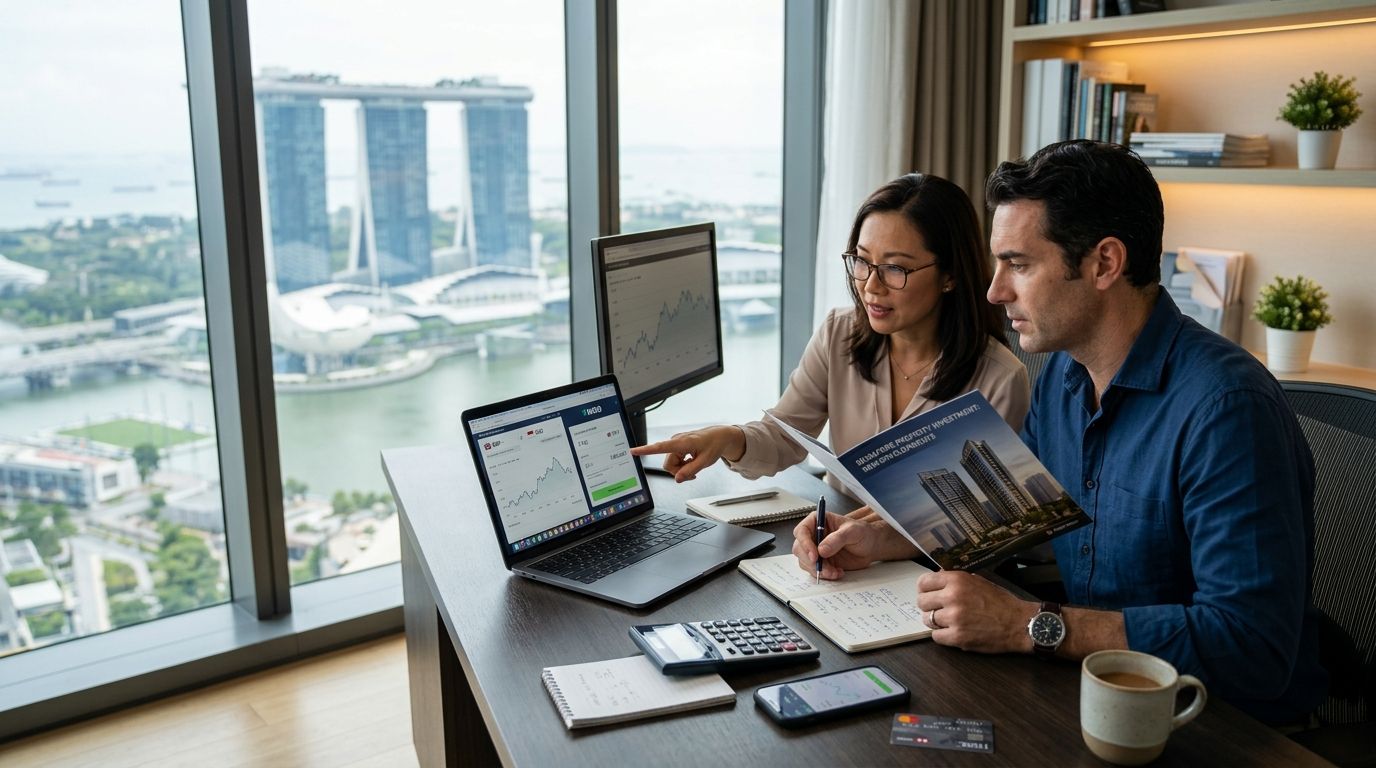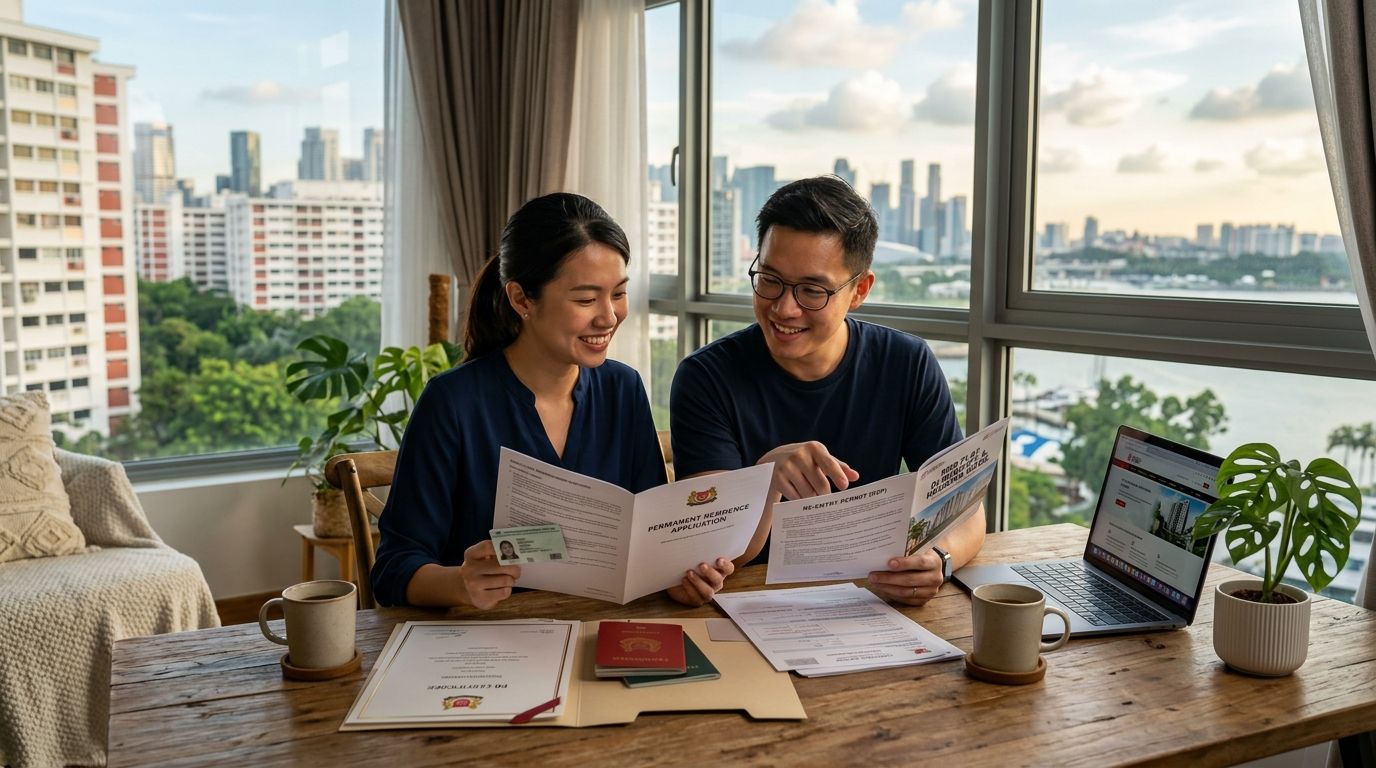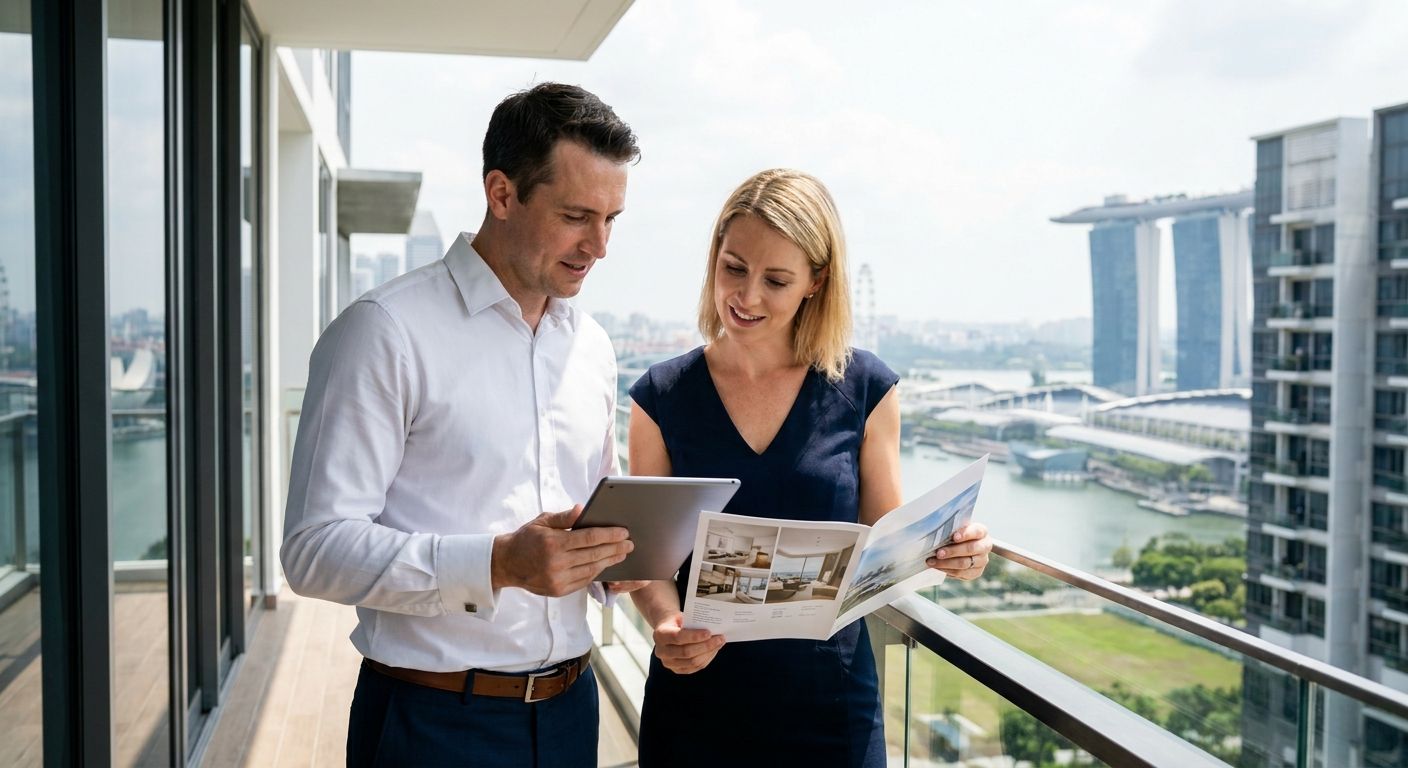
Australian expats buying property in Singapore face one blunt reality upfront: the Australia-Singapore Free Trade Agreement does nothing for your stamp duty bill. You still pay the foreigner rate. Everything else in this guide is built around that fact and around what an Employment Pass, S Pass, or Dependant's Pass holder from Sydney, Melbourne or Perth actually needs to do differently from a Singaporean or PR buyer.
- This property buying guide for Australian expats in Singapore starts with one fact: Australians pay the full 60% foreigner ABSD, same as most other nationalities.
- Non-landed private condos are open to foreign buyers with no approval needed; landed homes need Singapore Land Authority sign-off outside Sentosa Cove.
- Foreign buyers in 2026 typically borrow at a lower loan-to-value cap than citizens, so pre-approval before you shortlist saves weeks.
- Budget for Buyer's Stamp Duty on top of ABSD - both apply to every foreign purchase regardless of visa type.
- Engage a property agent for foreign investors early; approval timelines and financing checks move faster with someone who does this daily.
Why property buying matters for Australian expats
Most Australians relocating to Singapore arrive on an Employment Pass tied to finance, tech, or energy sector roles, and many come from a home market where buying is the default move once you're settled. Singapore doesn't work that way for foreigners. The purchase process, the financing ceiling, and the tax bill are all structured differently for non-residents, and Australia gets no special carve-out the way US nationals do under their own trade agreement.
That means the standard research most Australians do before buying - comparing suburbs, checking a mortgage calculator, assuming a bank will match 80% loan-to-value - doesn't transfer. The single biggest mistake I see from Australian buyers is treating this like a bigger version of a Sydney purchase. It isn't. The rules, the timeline, and the total cost stack are Singapore-specific, and getting them wrong before you sign an Option to Purchase is expensive to unwind.
Confirm your pass status and eligibility first
Before you look at a single listing, confirm what your visa status actually allows. Foreigners can buy private, non-landed residential property in Singapore without government approval - that's the path most Australian expats take.
- Check whether you hold an Employment Pass, S Pass, Dependant's Pass, or Permanent Residence - each carries different loan and tax implications
- Confirm you're not relying on an HDB flat as your target; foreigners generally can't buy HDB resale units
- Read the eligibility basics on how to buy property in Singapore as a foreigner before you start viewings
- Note that landed property (terrace houses, bungalows, semi-detached) needs Singapore Land Authority approval unless it's in Sentosa Cove
- If you're not yet in Singapore, factor in that some banks and lawyers require in-person signing for parts of the process
Understand ABSD and stamp duty costs before you set a budget
This is the step Australian buyers underestimate most. Additional Buyer's Stamp Duty (ABSD) is charged on top of the purchase price, and it's steep.
- Foreign buyers, including Australians, pay ABSD at the standard foreigner rate - 60% as of the last revision in April 2023 - because Australia isn't among the small group of countries (the US, Switzerland, Norway, Iceland, Liechtenstein) with a trade clause exempting their nationals from that tier
- Buyer's Stamp Duty (BSD) applies on top of ABSD, calculated on a progressive scale that rises with purchase price
- Legal conveyancing fees, valuation fees, and agent commission add further cost - build these into your total, not just the headline price
- Run the full number - price plus ABSD plus BSD plus fees - before you fall for a specific unit, not after
- If you're financing part of the purchase, your loan approval amount and your ABSD bill are calculated separately, so don't assume one covers the other
Decide between condo, landed, and HDB before you shortlist
Most of the confusion in this guide disappears once you settle this question early. Here's how the main options compare for an Australian buyer in 2026.
| Property Type | Best For | Foreigner Eligibility | Key Limitation |
|---|---|---|---|
| Non-landed private condo | Most Australian expats buying a home or an investment unit | Open to foreign buyers, no approval needed | ABSD at the full foreigner rate still applies |
| Landed property (terrace, bungalow, semi-D) | Buyers who specifically want land, not just a unit | Requires Singapore Land Authority approval outside Sentosa Cove | Approval is discretionary and often tied to owner-occupation |
| HDB resale flat | Not a realistic path for most Australian expats | Foreigners generally can't buy; only PRs married to a citizen qualify in narrow cases | Effectively closed to non-PR Australian buyers |
| Sentosa Cove landed home | High-budget buyers wanting land without the approval hurdle | Open to foreign buyers without Land Dealings approval | Small, specific market with limited stock |
Verdict: for the majority of Australian expats, a non-landed private condo is the only realistic first purchase in Singapore - landed property approval is possible but not something to plan a timeline around.
Get pre-approved for a home loan as a foreigner
Don't shortlist units before you know what a bank will actually lend you. Foreign buyers in Singapore typically sit at a lower loan-to-value ceiling than citizens or PRs, and your Employment Pass income gets assessed differently from a local payslip.
- Get a formal pre-approval, not a verbal estimate, before you make an offer
- Compare at least two or three banks - foreign-buyer loan terms vary more than citizen terms do
- Read through how to qualify for a home loan in Singapore as a foreigner to understand what documents banks ask for
- Check whether your pass type or employer affects your Total Debt Servicing Ratio calculation
- If your income is partly in AUD, ask how the bank converts and stress-tests that income before approving
Shortlist districts and property types that fit your life, not just your budget
Once financing is confirmed, narrow down where you're actually looking. District choice matters more in Singapore than most first-time foreign buyers expect - school zones, CBD commute, and expat density all shift pricing and resale demand differently.
- Compare districts popular with foreign investors on best districts to buy property in Singapore for foreign investors
- Decide whether you're buying to live in or to hold as a rental investment - the two goals point to different districts
- Check proximity to international schools if you're relocating with family
- Factor in your own commute pattern before locking in a district based on price alone
- Visit at different times of day - traffic and noise in Singapore vary sharply by hour, especially near CBD-adjacent condos
Engage a property agent and inspect before you commit
This is where doing it alone starts costing you time rather than money. A property agent who works specifically with foreign investors knows which developments have approval issues, which units sit in ABSD-heavy cooling zones, and which sellers are motivated.
- Engage an agent who specifically handles foreign buyer transactions, not a generalist
- Inspect the actual unit, not just the show flat - finishes and layouts vary between units in the same block
- Ask for the last three transacted prices in the same development before you negotiate
- Confirm the seller's timeline - a motivated seller moves faster on price than one testing the market
- Get a second opinion on valuation before signing the Option to Purchase
Talk to a foreign-buyer specialist
I help Australian expats confirm eligibility, financing and shortlist without the guesswork.
Plan your exit before you sign
Most Australian postings in Singapore have a defined end date, even if it's a soft one. Buying without a resale or rental exit plan is the second-biggest mistake I see after underestimating ABSD.
- Decide before you buy whether you'll rent the unit out or sell if your posting ends early
- Understand that ABSD paid on purchase isn't refunded on a normal resale - it's a sunk cost, not a deposit
- Read how to transfer property ownership when leaving Singapore well before your contract ends, not after you've booked flights
- Keep your legal and tax paperwork organized from day one - it saves weeks when you eventually sell or transfer
Common mistakes Australian expats make
- Assuming the Australia-Singapore trade relationship reduces stamp duty - it doesn't; ABSD applies at the full foreigner rate regardless of the FTA
- Budgeting only for the purchase price and discovering ABSD, BSD, legal fees and agent commission after they've made an offer
- Trying to buy an HDB flat as an investment, not realizing foreigners are excluded from that market almost entirely
- Financing through an Australian bank's Singapore offer without checking local loan-to-value caps for foreign buyers first
- Skipping an exit plan, then scrambling to sell or transfer ownership when a posting ends earlier than expected
“The biggest mistake Australian buyers make in Singapore is pricing the property but not the ABSD sitting on top of it.”
FAQ
Can Australian expats buy property in Singapore?
Yes, Australian expats can buy non-landed private condos in Singapore without government approval. Landed property requires Singapore Land Authority approval unless it's in Sentosa Cove.
Do Australians get a lower ABSD rate under the Australia-Singapore Free Trade Agreement?
No. Australia is not among the countries with an ABSD exemption clause, so Australian buyers pay the standard foreigner rate, which was set at 60% as of the April 2023 revision.
Can foreigners buy HDB flats in Singapore?
Generally no. Foreigners cannot buy HDB resale flats unless they are Permanent Residents married to a Singapore citizen, and even then conditions apply.
How much deposit do foreigners need to buy property in Singapore?
Foreign buyers typically face a lower loan-to-value ceiling than citizens or PRs, meaning a larger cash deposit is required upfront. Get formal bank pre-approval before shortlisting to confirm your actual figure.
Is buying better than renting for an Australian expat in Singapore?
It depends on how long your posting runs and how the ABSD cost stacks against renting for that period. Shorter postings usually favor renting given the sunk ABSD cost on a purchase.
Which Singapore districts do Australian expats buy in most?
Districts near the CBD, Orchard Road, and international schools attract the most foreign buyer interest, though the right district depends on whether you're buying to live in or to rent out.
How long does it take to buy property in Singapore as a foreigner?
A straightforward non-landed condo purchase can move from Option to Purchase to completion in 8 to 12 weeks, depending on financing and legal conveyancing timelines.
One last thing
The detail that surprises most Australian expats isn't the tax bill - it's that ABSD is calculated and paid before the deal even completes, not amortized over the mortgage. That upfront cash requirement, on top of your deposit, is what catches people out in 2026 far more than the headline purchase price does.